Silver Lake Dunes: Michigan’s Only Dune Ride
Silver Lake is the place many Michigan riders picture when they hear “dune riding,” but it isn’t an open beach where you can simply unload and go. The ORV area has designated boundaries, access requirements, changing sand conditions, and rules that can catch first-timers off guard. This guide explains how to plan a safer, smoother ride and what to check before you leave home.
What makes Silver Lake Dunes different
Michigan’s designated public dune-riding destination
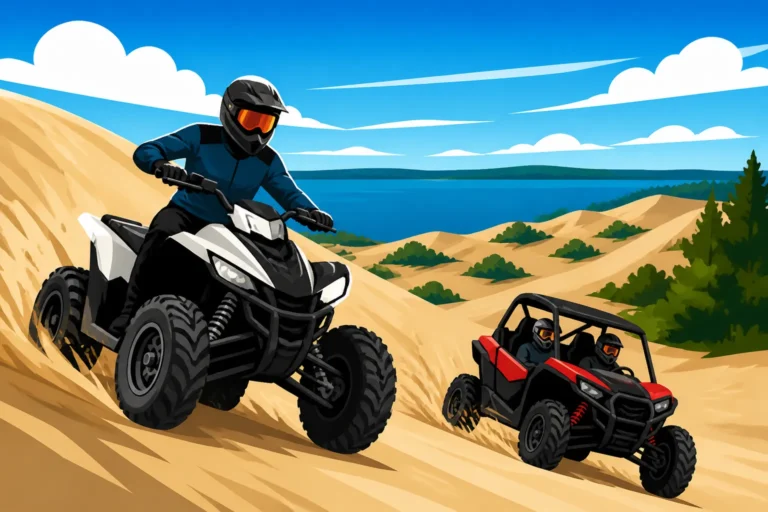
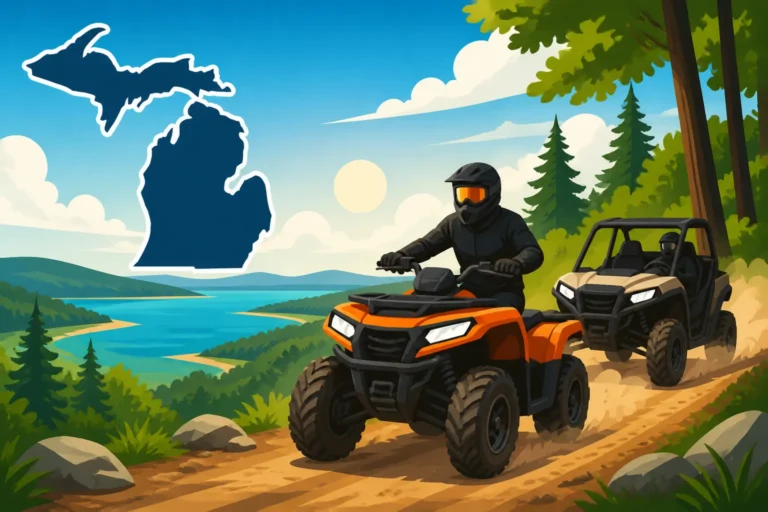
Silver Lake State Park, near Mears on Lake Michigan’s western shore, is known for its ORV area on the Silver Lake Sand Dunes. It is widely described as Michigan’s only public state-park destination for riding ORVs on open dunes. That makes it a very different trip from exploring a forest trail or riding a marked ORV route: the landscape is exposed, the sand shifts, and the terrain can change noticeably from one visit to the next.
The riding area is not the entire dune system. The state park separates ORV riding from other uses, including pedestrian areas and beach areas where motorized riding is not allowed. Boundaries matter even when the dunes look continuous. Before unloading, confirm the current riding-area map and rules through the Michigan DNR or the park. A tempting stretch of sand outside the marked ORV area is still off-limits.
For riders used to following a narrow trail through the woods, the open terrain can feel wonderfully freeing—and surprisingly disorienting. Dunes hide what lies beyond their crests, and a route that looked simple from the staging area may involve steep slopes or soft sand. Planning around the designated area and riding within your comfort level makes the experience more enjoyable for everyone.
For a broader look at the region’s riding options, see [Michigan's 4,000 Miles of ORV Trails Explained]. Silver Lake is a distinctive destination within Michigan’s larger ORV landscape, not a substitute for understanding the rules that apply to other trails and routes.
Dunes are not ordinary ORV trails
A forest trail usually gives you a clear surface and a predictable direction of travel. At Silver Lake, the ground itself is part of the challenge. Sand may be firm in one place and loose or deeply churned in another. Wind, weather, traffic, and the number of vehicles using the area can all affect the surface. A slope that felt manageable earlier in the day may become harder after repeated climbs leave the sand broken up.
Visibility is another major difference. From the bottom of a dune, you may not be able to see vehicles approaching over the crest. A rider who climbs straight over without checking the other side can meet someone coming downhill, or discover a sharp drop or soft landing area too late. Slow down near crests, avoid blind crossings, and do not assume that an open line is clear just because no one is visible from where you started.
The open setting can also make it easy to lose track of your group. Establish a regrouping point before anyone rides off, and agree that nobody will climb a dune alone or leave the group without telling the others. A navigation app such as onX Offroad can help you orient yourself, but it should supplement—not replace—park maps, signs, and direct awareness of the terrain.
Plan your Silver Lake ride before you arrive
Check access, permits, and operating rules
Silver Lake riding involves more than arriving with a machine and a trailer. ORV credentials, park access, vehicle eligibility, and any required dune-area permits or reservations may apply. Requirements and procedures can change, so check the official Silver Lake State Park information before making the drive. Confirm what applies to your particular machine and visit rather than relying on an old receipt, a friend’s recollection, or a social media post.
Start with [What You Need to Ride the Silver Lake Dunes] and [Silver Lake Dune Vehicle Requirements Checklist]. Use those as planning prompts, then verify the current details directly with the park. Pay particular attention to vehicle equipment, safety gear, access procedures, and whether advance arrangements are needed for your intended visit. A requirement that seems like a small detail at home can become a frustrating reason to delay or miss a riding session once you reach the entrance.
It also helps to separate the different kinds of access rules in your mind. A Michigan ORV license or trail permit, a state-park entry requirement, and access to the dune riding area may be separate matters. Do not assume one automatically covers the others. If you are traveling from another state, check the rules for non-resident riders as well as the rules for your vehicle.
Choose a time and plan for a busy day
A dune trip often takes more time than the ride itself. You may need to unload, inspect equipment, organize passengers, complete entry steps, and get oriented before riding. During busy periods, the trip can include lines and crowded staging areas. Build extra time into the day so you are not rushing through checks or pushing a nervous rider onto the dunes just to make the wait feel worthwhile.
Weather can alter the day’s experience. Wind may move sand, rain can change traction, and severe conditions can affect access or create safety concerns. Check for park notices before setting out and again before entering the riding area. The state may close or restrict access when conditions require it, so do not treat a previous visit’s schedule as a guarantee.
For a quieter start, some riders prefer to arrive early and get organized before the busiest part of the day. Others may enjoy a later visit, but should leave enough time for a careful ride and a safe return. [Best Time of Day to Ride Silver Lake Dunes] offers a useful companion read when you are deciding how to time your outing. Whatever time you choose, leave room for breaks, regrouping, and an unhurried exit.
Use maps as orientation, not permission
Because the landscape is open, it can be harder to judge where you are than it is on a marked forest trail. Review the official map before you ride and look for boundaries, access points, restricted areas, and places where riders are expected to follow specific directions. If you use onX Offroad, download the information you need before heading into an area where phone service may be unreliable. Check that the map layer and location display are working while you still have a stable connection.
A mapping app is useful for locating your group’s general position or retracing your way toward a familiar area. But digital maps can lag behind posted signs or park decisions, and GPS does not tell you whether a slope is safe to climb. When an app and a posted boundary appear to disagree, follow the official signs and instructions. If you are uncertain, stop and ask park staff rather than riding farther in to investigate.
Keep your phone protected from sand, and consider carrying a paper map or saving a screenshot as a backup. Agree on a meeting place that everyone can identify without relying on a live signal. That simple step can prevent a minor separation—such as one vehicle stopping for a passenger—from turning into a stressful search.
| Planning question | What to check before riding | Why it matters |
|---|---|---|
| Where can I ride? | Current park map, marked ORV boundaries, and signs | Dunes outside the riding area may be closed to motor vehicles |
| What access do I need? | Current ORV, park, and dune-area requirements | Different credentials or procedures may apply |
| Is my vehicle eligible? | Current equipment and vehicle rules | A machine may need specific safety equipment to enter |
| Are conditions suitable? | Park alerts, weather, and local conditions | Sand and visibility can change quickly |
| How will my group stay together? | Meeting point, route plan, and communication method | Open terrain can make riders difficult to spot |
Prepare your ATV or UTV and riding group
Check the machine before loading it
A pre-ride inspection is especially worthwhile at Silver Lake because a mechanical problem in soft sand may be harder to manage than one on a paved road. Check tires for visible damage, make sure wheels and controls are secure, and confirm that steering and brakes respond as expected. On a UTV, inspect seat belts and make sure every passenger has a proper seat. Bring the tools and basic supplies you normally use for a trail day, but do not assume that your group can repair every problem on the dunes.
Tire setup affects how a vehicle behaves in sand, but there is no single setting that is right for every machine, tire, load, and riding style. Follow your manufacturer’s guidance and make any adjustments conservatively. If you are unsure, ask an experienced rider or qualified shop before the trip rather than trying an unfamiliar setup at the entrance. [Tire Pressure for Riding Silver Lake Sand] can help you understand why tire pressure is a planning consideration, not a magic fix for poor judgment or unsuitable equipment.
Pack water, sun protection, and a way to keep essentials secure. Sand can get into exposed gear, and a loose bag or bottle can become a distraction. Put items you may need during the day somewhere accessible, then secure everything else before entering the riding area. A short equipment check is easier than stopping in an awkward spot because something has fallen out or come loose.
Set the group up for a safer first ride
Before anyone starts riding, make sure each person understands the basic plan: where to regroup, what to do if someone stops, and how the group will handle a separation. Agree that riders will wait at designated safe locations rather than continuing farther into the dunes if a vehicle falls behind. If you are with children or inexperienced passengers, keep the group small enough that one adult can pay attention to each rider’s needs.
Protective gear and vehicle restraints should match the current park requirements and the machine being used. Helmets, eye protection, and seat belts where fitted are not items to sort out after you reach the sand. Confirm passenger capacity, age-related rules, and any required equipment before the trip, especially when you are borrowing or renting a vehicle. A passenger who is uncomfortable or improperly equipped can make even a short outing stressful.
Families can make the day easier by giving children a simple job, such as checking that everyone has water before the group leaves the staging area. Explain that they should stay with their adult and never walk over a dune crest without checking what is on the other side. For more family-specific planning, see [Silver Lake Dunes With Kids: What to Know].
Decide whether your group is ready for dunes
Riding on open sand can be physically and mentally tiring, even when the group is experienced on other kinds of terrain. A new rider may be comfortable on a wooded route but feel overwhelmed by steep slopes, changing traction, or the amount of space around them. Give everyone permission to start slowly, take a break, or watch from a safe location rather than feeling pressured to follow the most confident person in the group.
The machine matters, too. A vehicle that is familiar and well maintained is often a better choice than a more powerful one that nobody in the group has driven before. If you are considering a rental, ask what vehicle types are available, what the rental includes, where the machine may be driven, and what safety briefing is provided. Do not assume that a rental automatically includes every required permit or that a vehicle is suitable for every passenger.
A useful first-day goal is not to conquer the tallest dune. It is to learn how the sand feels, recognize how the vehicle responds, and return with everyone comfortable. If a rider is uneasy, keep the first outing short and choose terrain that feels manageable. Confidence gained gradually is more useful than a dramatic climb that leaves someone frightened or injured.
Ride the dunes with care
Start slowly and make conservative choices
Give yourself time to understand the machine’s response on sand before attempting steeper terrain. Smooth, deliberate control is generally easier to manage than sudden acceleration, abrupt braking, or sharp steering. Keep your attention on the surface and the route ahead, and avoid being drawn into another rider’s pace. Even if the vehicle feels capable, your own comfort and visibility should decide where you go.
Treat the crest of every dune as a blind corner. Approach with caution, look for people and vehicles where you can, and avoid crossing a crest at speed. Do not stop in a place where another rider may be unable to see you. If you need to regroup or discuss a route, move to a clearly visible, safe location out of the way of moving traffic.
Leave space between vehicles. A following rider needs room to react if the person ahead slows, loses traction, or changes direction. This is especially important when traveling uphill or downhill, where a sudden stop can cause a chain of close calls. A staggered pace and frequent regrouping can keep a family or mixed-experience group safer than trying to stay tightly packed.
Respect boundaries and other riders
The open dunes can create the impression that riders may choose any direction. In practice, boundaries, signs, and park instructions determine where motorized riding is allowed. Stay within the designated ORV area, avoid closed or restricted sections, and do not ride onto pedestrian areas or beaches where vehicles are prohibited. If you encounter a sign, barrier, or staff instruction, follow it even if the terrain beyond looks inviting.
Share the space with care. Other riders may be climbing, descending, stopping to regroup, or trying to assist someone who is stuck. Avoid cutting across another vehicle’s line, and give people room to finish a maneuver before approaching. Keep speeds appropriate to visibility and conditions. A dune crest is not a place to prove how fast your machine can go; it is a place to slow down and make sure the route is clear.
When using navigation tools, remember that an app cannot show every change in sand or every rider around a blind slope. onX Offroad can be helpful for orientation and planning, but your eyes, the official map, and park signs should guide immediate decisions. For more about reading riding-area markers and maps, see [Michigan ORV Trail Maps and What the Signs Mean].
Know what to do if you get stuck
Getting bogged down can happen, especially when the sand is soft or a rider tries a line that is beyond their experience. The first step is to stop making the situation worse. Repeated spinning can dig the vehicle deeper and put unnecessary strain on the machine. Check your surroundings before anyone gets off, and make sure the vehicle is not in the path of approaching riders.
If it is safe, ask your group for help and use the recovery equipment you know how to operate. Keep people clear of tensioned straps and moving vehicles, and do not attempt a recovery that feels beyond your equipment or experience. If you cannot get out safely, contact park staff or the appropriate assistance rather than taking a risky shortcut. For additional planning, read [Getting Stuck in the Dunes at Silver Lake].
A small recovery plan helps before the problem occurs. Carry suitable recovery gear if you know how to use it, keep your phone accessible, and make sure someone in the group knows where you are. Do not leave a stuck vehicle unattended without considering the safety of passengers, other riders, and the machine. Most importantly, do not let embarrassment push you into an unsafe recovery attempt.
Make the visit enjoyable from arrival to departure
Build a practical day plan
A smooth visit begins before the trailer reaches the park. Check your vehicle and permits at home, organize protective gear, and make sure everyone knows the meeting point. Once you arrive, give yourself time to unload without blocking traffic or rushing through equipment checks. Review the map together and agree on a first destination that feels easy to find and easy to leave.
During the ride, use short sessions rather than pushing through fatigue. Sand, sun, wind, and concentration can wear people down faster than expected. Take water breaks, check in with quieter riders, and end the ride before everyone is exhausted. A tired driver is more likely to misjudge a crest or react abruptly, and a tired passenger may stop paying attention to safety instructions.
At the end of the day, leave the riding area carefully and check the machine before loading. Look for loose equipment, sand around vulnerable parts, and anything that may have shifted during the ride. Keep the loading area orderly, and make sure all passengers and gear are accounted for before heading out. A calm departure is part of a good day, not an afterthought.
Keep weather and closures in the plan
Do not assume that the riding area will be open simply because it is a popular destination. Weather and park operations can affect access, and closures or restrictions may be announced for safety or management reasons. Check official park notices close to your visit, especially if you are traveling a long distance or have arranged lodging around the ride.
Rain, wind, and changing sand conditions may affect how comfortable a route feels even when access remains open. If conditions are different from what your group expected, adjust the plan. Choose a more conservative ride, shorten the outing, or switch to another activity rather than trying to force the day to match an old plan. For related guidance, see [Silver Lake Dune Closures for Weather].
It is also wise to have a backup plan for the rest of your trip. The area around Silver Lake offers other outdoor activities, so a closure or a day when someone is not comfortable riding does not have to spoil the visit. Keep your schedule flexible and treat safety decisions as part of good trip planning.
Avoid the mistakes that make a first visit harder
One common mistake is arriving without checking the latest access requirements. Another is assuming that a machine used on local trails is automatically eligible for dune-area access. A third is trying to follow the boldest rider in the group rather than matching the terrain to the least experienced person. These problems are preventable with a little advance research and a clear group plan.
Riders also sometimes underestimate how quickly they can lose sight of friends in open terrain. Agreeing on a meeting point and stopping at planned intervals takes only a few minutes, but it can make the day much less stressful. Keep navigation tools charged, protect them from sand, and do not rely on cell service as your only way to reconnect.
Finally, remember that Silver Lake is a shared park landscape, not a private playground. Stay within marked boundaries, respect other visitors, follow staff directions, and leave the area as you found it. That combination—preparation, patience, and respect for the terrain—is what turns a busy dune day into a ride your group will want to repeat.
Disclaimer
This article is for general informational purposes only and does not constitute professional advice. Laws, prices and regulations vary by location and change over time. Consult a qualified professional for guidance on your specific situation.