Visibility Flags for Road Rides
Riding an ATV or UTV on Michigan’s county roads offers an incredible sense of freedom and access to more trails, but it also introduces a significant challenge: being seen by other drivers. Many ORV riders face the understandable concern that their machines, while capable off-road, can get lost in traffic or blend into the background, leading to dangerous situations. This comprehensive guide will explore the critical role of visibility flags in enhancing your safety on Michigan's roads, delving into the regulations, best practices, and practical tips to ensure you stand out and stay safe.
Why Visibility Flags Are Essential for Michigan ORV Road Riding
When you transition your ATV or UTV from a dusty trail to a gravel county road, you're entering a different world with different rules and, most importantly, different hazards. While the thrill of connecting trails via legal road routes is undeniable, the stark reality is that your off-road machine is designed for a different environment than the vehicles sharing the pavement or gravel with you. This fundamental difference makes proactive visibility measures like flags absolutely non-negotiable for responsible riding.
The Hidden Dangers of Mixing ORVs and Road Traffic
Picture this: you're cruising down a scenic Michigan county road, enjoying the fresh air, when suddenly, a pickup truck comes over a hill, or a car pulls out from a driveway. In these moments, every second of visibility counts. ORVs, by their very nature, are often smaller, lower to the ground, and have a more open design than typical road vehicles. This means they occupy less visual real estate in a driver's field of view. Cars and trucks have larger profiles, taller roofs, and often brighter, more consistent lighting packages. Your side-by-side or quad might just blend into the roadside foliage, especially in areas with dappled sunlight or shadows.
Furthermore, drivers of passenger vehicles aren't always expecting to see an ORV on these roads, leading to a phenomenon known as "expectancy bias." They're looking for other cars, not necessarily a smaller, open-air machine. This can lead to slower reaction times or, worse, them not seeing you at all until it's too late. Blind spots in cars and trucks are also notoriously large, and your ATV or UTV can easily disappear from view, especially when a vehicle is changing lanes, turning, or backing up. Adding to this, ORVs often have different acceleration and braking characteristics, and certainly different top speeds, than typical road vehicles. This disparity can catch other drivers off guard, making it crucial to be seen from a distance.
Michigan's "Maintained Portion" and Shoulder Rules
Michigan law permits ORVs on specific county roads, often requiring them to operate on the far right of the [Michigan's Maintained Portion of the Road, Defined] or on the shoulder. While this keeps you out of the direct flow of faster traffic, it also places you in a more vulnerable position. When you're riding on the shoulder, you're not in the "expected" lane of travel, and this can make you less noticeable to drivers focused on the center of the road. Dust clouds, common on gravel roads, can completely obscure an ORV, rendering it practically invisible to following or oncoming traffic.
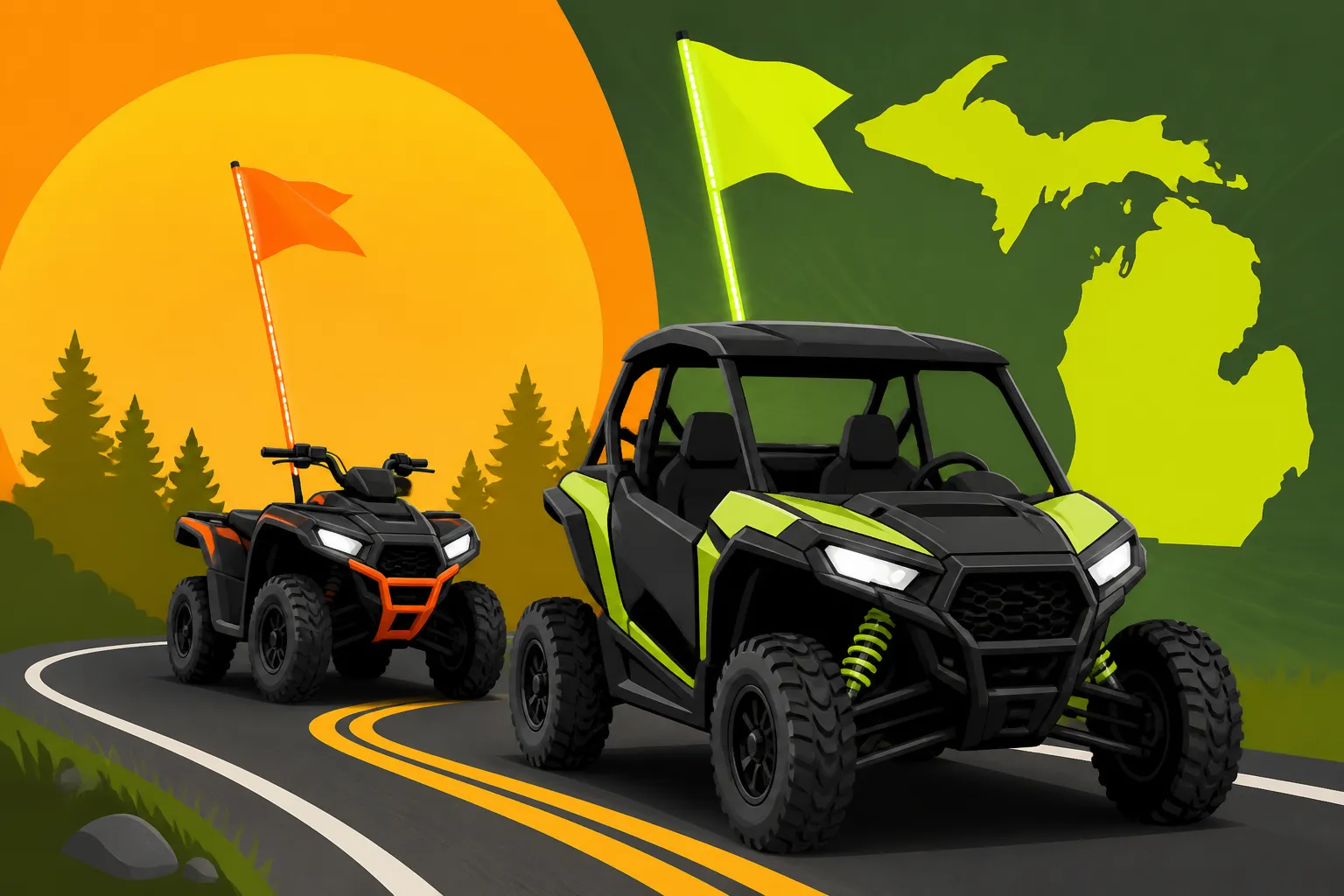
Visibility flags, especially those that extend well above the machine, serve as an early warning system. They create a vertical presence that breaks the horizon line, making your machine appear taller and more substantial than it actually is. This is particularly valuable when cresting hills, navigating blind curves, or emerging from wooded areas. The flag waves above the dust, above the low-slung branches, and above the sightline of many passenger vehicles, effectively announcing your presence long before your machine comes into full view. It’s an extra layer of protection, quite literally a red (or orange, or yellow) flag for caution to anyone sharing the road.
Enhancing Your Presence in Rural and Urban Settings
The need for visibility flags isn't limited to just one type of environment. While rural, dusty gravel roads immediately come to mind, flags are equally beneficial, if not more so, in semi-urban or mixed-use areas where ORVs might traverse brief stretches of paved roads or cross busy intersections. Imagine trying to make a left turn at a four-way stop in a UTV that's only hip-high to the average SUV. A flag waving high above your roof can catch the eye of a driver approaching from an opposite direction, or waiting to turn from a cross street.
In areas with sun glare, especially at dawn or dusk, the vibrant color and movement of a flag can cut through the visual noise that might otherwise swallow up your machine. Even on a clear, bright day, the sheer amount of visual information competing for a driver's attention—billboards, trees, houses, other vehicles—can make a smaller ORV hard to spot. A flag, particularly one with reflective elements, provides a dynamic visual cue that stands out. It signals "Hey, something is here!" in a way that static lights or the machine's body alone might not achieve. This added presence gives other road users more time to react, adjust their speed, and ensure a safe passing distance, whether you're deep in the woods or navigating the edges of a small town.
Michigan's Specific Rules and Best Practices for ORV Flags
While Michigan broadly permits ORV operation on certain county roads, the specific requirements for visibility flags can sometimes be a bit nuanced. It's not a blanket mandate across all road segments, but rather a critical best practice often influenced by rules in more challenging ORV environments like the Silver Lake Sand Dunes. Understanding these guidelines and adopting best practices is key to ensuring you're not just compliant, but genuinely safe.
State Regulations for Visibility Flags on ORVs
Currently, Michigan's state statutes for ORV operation on county roads don't universally mandate visibility flags for all road-legal ORVs, unlike specific environments such as the Silver Lake Sand Dunes where [Whip Flag Height Rules at Silver Lake] are strictly enforced. This can sometimes lead to confusion, as many riders reasonably assume that if flags are required in one ORV area, they should be everywhere. However, the absence of a statewide mandate for road use doesn't diminish their importance. Instead, it places the onus on the rider to prioritize safety above mere compliance.
Think of it this way: a seatbelt is legally required, but defensive driving isn't explicitly mandated word-for-word in every statute, yet it's crucial for safety. Visibility flags fall into that category of "highly recommended best practice" for road riding. They are a proactive measure that goes above and beyond minimum requirements. Some local ordinances at the county or township level, however, may have specific provisions for flags on their permitted ORV routes, so it's always wise to [How to Find Your Michigan County's ORV Ordinance] and check local rules before hitting the road. In the absence of a direct legal requirement, the rationale shifts from "what must I do?" to "what should I do to maximize my safety and the safety of others?" And in that context, a flag is an unequivocal win.
Recommended Flag Dimensions and Materials
When it comes to choosing a flag, bigger and brighter is generally better for road visibility. While there isn't a universal "road flag" standard in Michigan law (outside of dune areas), the principles of visibility remain constant. A good rule of thumb is to aim for a flag that is at least 6×10 inches, but larger is preferable. Fluorescent colors like orange, yellow, lime green, or bright pink are excellent choices because they stand out against natural backgrounds and are easily perceived by the human eye. Many riders opt for flags that are two-sided or have a "wind sock" design to ensure visibility from all angles, regardless of wind direction.
The whip pole itself is just as important as the flag. Fiberglass whips are common due to their flexibility and durability, allowing them to bend and sway without snapping. For road riding, the ideal height for a whip flag is often debated, but the goal is to get it high enough to clear the roofs of most passenger cars. While not a strict rule for county roads, consider the Silver Lake guidelines which often specify a minimum of 10 feet from the ground to the top of the flag. This ensures the flag is visible over parked vehicles, fences, and even minor terrain undulations. Incorporating reflective tape or choosing a flag with reflective elements, especially for rides that might extend into dusk or low-light conditions, adds another critical layer of safety. Reputable manufacturers like SuperATV offer a range of robust whips designed to meet the demands of aggressive off-road use, which easily translates to durable road use.
Proper Mounting and Placement for Maximum Visibility
Where you mount your visibility flag can make all the difference. The primary goal is unobstructed visibility from all directions. For ATVs, this usually means mounting the whip to the rear grab bar or a dedicated flag mount, ensuring it's as high as possible without interfering with your riding position or catching on overhead obstacles. For UTVs, the roll cage is the most common and secure mounting point. You want to ensure the mount is robust, preferably a heavy-duty quick-release or bolt-on style that can withstand vibrations, wind forces, and occasional bumps without loosening or failing.
When installing, consider the flag's height relative to your machine. The higher the flag, the better. You want it to be significantly taller than the machine itself, ideally extending above the average roofline of passenger cars. This means selecting a whip of appropriate length. Ensure the flag is not positioned where it can whip into the driver or passenger, or get tangled in overhead branches if you transition back to tighter trails. Many flag mounts allow for adjustable angles, so you can fine-tune the lean of the whip to maximize its vertical presentation. A properly secured flag should be rigid enough to stay upright at speed, yet flexible enough to absorb impacts. Always double-check that your chosen mount and whip combination is secure before every ride, paying attention to any signs of wear or fatigue in the mounting hardware. [Keeping Your ORV Paperwork With the Machine] is a good practice, and ensuring your safety gear like flags is in top shape should be part of that pre-ride routine.
Choosing the Right Visibility Flag System for Your ATV or UTV
Selecting the right visibility flag system isn't just about grabbing the first brightly colored flag you see. It's about investing in a piece of safety equipment that needs to withstand the rigors of off-road and on-road use, provide maximum visibility, and be a good fit for your specific machine and riding style. From simple whips to illuminated marvels, the options are plentiful, and understanding them helps you make an informed decision.
Types of Whips and Flags: What's Out There?
When you start looking for visibility flags, you'll quickly realize there's more to it than just a stick with a piece of cloth. The most common type is the standard fiberglass whip with a fabric flag. These are typically the most affordable and lightweight option. They consist of a flexible fiberglass rod, often with a spring base for added shock absorption, topped with a brightly colored nylon or polyester flag. They are highly effective at making your presence known through their vertical reach and dynamic movement.
Stepping up in technology, you'll find LED whips. These are incredibly popular for their enhanced visibility, especially during dusk, nighttime, or low-light conditions. LED whips incorporate strands of powerful, color-changing, or solid-color LEDs encased within a clear, durable tube (often made of polycarbonate). They typically come with remote controls to change patterns and colors, offering not just visibility but also a customizable aesthetic. While generally more expensive than traditional flags, the added safety benefit of illumination can be invaluable, particularly for [Riding an ORV on the Road After Dark]. Brands like SuperATV offer a wide array of high-quality LED whips that are built to last and provide superior brightness. For those who want the best of both worlds, some systems combine a traditional fabric flag with an illuminated whip.
Finally, consider the flag material itself. Heavy-duty nylon or polyester flags are standard, but some flags feature mesh designs to reduce wind resistance, or specific reflective patterns for even greater nighttime visibility. Mesh flags are particularly good in high winds or at higher speeds, as they prevent the whip from bending excessively.
Durability, Weather Resistance, and Maintenance
Your visibility flag system needs to be tough. Michigan weather can be notoriously fickle, throwing everything from intense sun to torrential downpours, high winds, and freezing temperatures at your machine. A cheap flag system might quickly fray, fade, or even snap under these conditions, rendering it useless when you need it most. Look for whips made with high-quality, UV-resistant fiberglass or polycarbonate. The flag fabric should be marine-grade nylon or heavy-duty polyester, with double-stitched edges to prevent fraying.
Weather resistance extends to the mounting hardware. Stainless steel or anodized aluminum mounts are crucial to prevent rust and corrosion, especially if your machine sees a lot of mud, water, or road salt spray. For LED whips, ensure they are rated for outdoor use, ideally with an IP (Ingress Protection) rating that indicates resistance to dust and water immersion. Many top brands, including SuperATV, engineer their whips and mounts specifically for extreme off-road environments, ensuring they'll hold up well on Michigan roads.
Maintenance is relatively straightforward:
- Regular Cleaning: Wash flags with mild soap and water to remove dirt and grime. For LED whips, gently wipe down the tube to maintain clarity.
- Check for Wear: Periodically inspect the flag for tears, frayed edges, or faded colors. Check the whip for cracks or signs of fatigue, especially near the base and mounting point.
- Hardware Inspection: Ensure all bolts and clamps on the mount are tight. Vibration can loosen hardware over time.
By taking a few minutes for inspection and care, you can significantly extend the life of your visibility flag system and ensure it's always ready to perform its critical safety function.
Beyond the Flag: Other Visibility Enhancements
While a visibility flag is an excellent primary tool, it's part of a larger safety strategy for road riding. Combining a flag with other enhancements creates a much more comprehensive safety profile for your ORV. [Michigan ORV Lighting Rules During Daylight] are a good starting point, but consider exceeding minimums. Adding auxiliary LED lights, especially amber or white strobe lights, can make a huge difference. These lights are designed to grab attention and provide another layer of visual warning. Mounting them high on your roll cage or roofline can improve their effectiveness.
Reflective tape is another simple, yet highly effective, addition. Applying [Reflective Tape Rules for Night Riding] to the rear and sides of your machine, particularly on the roll cage or body panels, can make your ORV incredibly bright when illuminated by other vehicle headlights. Choose high-visibility, engineering-grade reflective tape that adheres well to plastics and metals. Additionally, riders themselves should wear high-visibility gear. A bright orange or yellow helmet, reflective vest, or jacket significantly increases your personal visibility, especially when dismounted from your machine or during an emergency stop. Think of these elements as an integrated system: the flag provides vertical presence and movement, bright lights add static and dynamic illumination, and reflective materials ensure you’re seen even if your lights are off or you’re in shadow.
Real-World Scenarios and Practical Tips for Flag Use
Having a visibility flag is one thing; knowing how to leverage it for maximum safety in various real-world scenarios is another. Road riding on an ORV presents unique challenges, and understanding how your flag aids in these situations, along with some practical tips, can significantly boost your confidence and safety.
Navigating Busy Intersections and Crossings
One of the most nerve-wracking parts of road riding can be navigating intersections, especially when you need to [Crossing a State Highway on an ORV in Michigan]. At an intersection, you're not just worried about traffic coming from behind or head-on; you also have to contend with cross-traffic and vehicles turning onto your road. Your ORV's lower profile and smaller size make it easier for it to be overlooked by drivers approaching from perpendicular directions or those looking to turn.
This is where your visibility flag truly shines. As you approach an intersection, especially one with limited sightlines, the flag, waving high above your machine, becomes the first visual cue for other drivers. It can be seen over hedges, parked cars, and even through gaps in traffic that might otherwise hide your machine. When you're making a left-hand turn, a flag ensures that oncoming traffic has a better chance of spotting you as you prepare to cross their lane. When you're waiting at a stop sign or traffic light, the flag acts as a constant reminder of your presence to drivers behind you, reducing the risk of a rear-end collision from someone not expecting a low-profile ORV. Always proceed cautiously, make eye contact with other drivers if possible, and rely on your flag as an invaluable extension of your visible presence.
Group Riding Etiquette and Flagging
Riding with a group of ATVs or UTVs is a fantastic experience, but it also adds layers of complexity to road safety. A convoy of ORVs can generate a significant amount of dust on gravel roads, making it difficult for following riders to see the machine directly in front of them, and even harder for oncoming or passing traffic to gauge the length and number of machines in the group. This is precisely why visibility flags are essential for group rides.
Each machine in a group should ideally have its own visibility flag. This not only enhances individual machine visibility but also helps delineate the entire group. A series of flags waving in unison or sequence signals to other road users that this is not just one machine, but an entire procession. This prompts drivers to exercise greater caution, slow down, and allow ample space for the entire group to pass safely. Furthermore, within the group, flags help riders maintain appropriate spacing and keep track of their buddies, especially when negotiating corners or dusty sections. If a flag disappears for too long, it's a clear indicator that someone might be falling behind or has stopped, prompting the group to slow down or pull over safely to check in. Establish a clear understanding of [ORV Road Riding Etiquette in Small Towns] within your group, and always ensure flags are part of your pre-ride checklist.
Pre-Ride Checks and Troubleshooting
Before every road ride, especially if you're mixing off-road trails with county road segments, a quick check of your visibility flag system is paramount. This simple routine can prevent issues on the road and ensure your safety device is always ready to perform.
Pre-Ride Checklist:
- Flag Condition: Is the flag clean, bright, and free of tears or significant fraying? A dirty or torn flag is less effective.
- Whip Integrity: Inspect the fiberglass or LED whip for cracks, bends, or any signs of stress. Check the spring base (if applicable) for proper function and ensure it's not seized or overly loose.
- Mount Security: Vigorously shake the whip. Is the mount firmly attached to your machine? Are all bolts and clamps tight? A loose mount can cause the whip to sag, vibrate excessively, or even detach, becoming a hazard.
- LED Function (if applicable): If you have an LED whip, turn it on and check all colors and patterns. Ensure all LEDs are illuminating properly and the remote control is working. Check battery connections if applicable.
Troubleshooting Common Issues:
- Flag Fraying: Small frays can sometimes be trimmed and the edges sealed with a lighter (carefully!) to prevent further unraveling. For larger tears, replace the flag.
- Whip Sagging: If your whip is sagging, it might be too long for its material, the mount might be loose, or the whip itself could be weakened. Check the mount first; if that's secure, consider if you need a stiffer or shorter whip.
- LED Failure: Check wiring connections for corrosion or damage. If individual LEDs are out, it might indicate a more serious internal issue requiring repair or replacement.
- Mount Loosening: Always carry a basic tool kit. Tighten any loose bolts or clamps immediately. Consider adding thread-locking fluid for persistent loosening issues.
By making these quick checks a part of your routine, you ensure that your visibility flag is always in optimal condition, providing you with the critical safety enhancement you need for confident and responsible road riding in Michigan.
| Feature | Standard Fiberglass Whip & Fabric Flag | LED Whip System |
|---|---|---|
| Primary Benefit | Simple, effective daytime vertical presence | Superior daytime and especially nighttime visibility with illumination |
| Cost | Generally lower investment | Higher initial investment |
| Power Source | None required | Requires 12V power from ORV battery |
| Durability | Good; dependent on fabric and fiberglass quality | Excellent; often uses polycarbonate, but wiring can be vulnerable to damage if not properly sealed |
| Visibility Range | Excellent in daylight; limited at night | Excellent 24/7, highly conspicuous in low light/darkness |
| Maintenance | Clean fabric, check whip for damage | Clean tube, check wiring/connections, ensure all LEDs function |
| Aesthetics | Functional, can add custom flag designs | Dynamic, customizable colors/patterns, modern look |
| Weight | Very lightweight | Slightly heavier due to internal electronics |
Michigan's county roads offer incredible access for ORV riders, opening up new adventures and ways to connect trails. However, with that freedom comes a heightened responsibility to prioritize safety, especially when sharing roads with other traffic. Visibility flags, whether a simple brightly colored fabric on a fiberglass pole or an advanced LED system, are an inexpensive yet incredibly effective tool in your safety arsenal. By making yourself as conspicuous as possible, you’re not just following best practices; you’re actively reducing risks for yourself, your passengers, and every other driver you encounter. So, before your next Michigan road ride, make sure your flag is flying high and proud – it might just be the most important piece of gear you carry.
Disclaimer
This article is for general informational purposes only and does not constitute professional advice. Laws, prices and regulations vary by location and change over time. Consult a qualified professional for guidance on your specific situation.