Sharing Back Roads With Logging Trucks
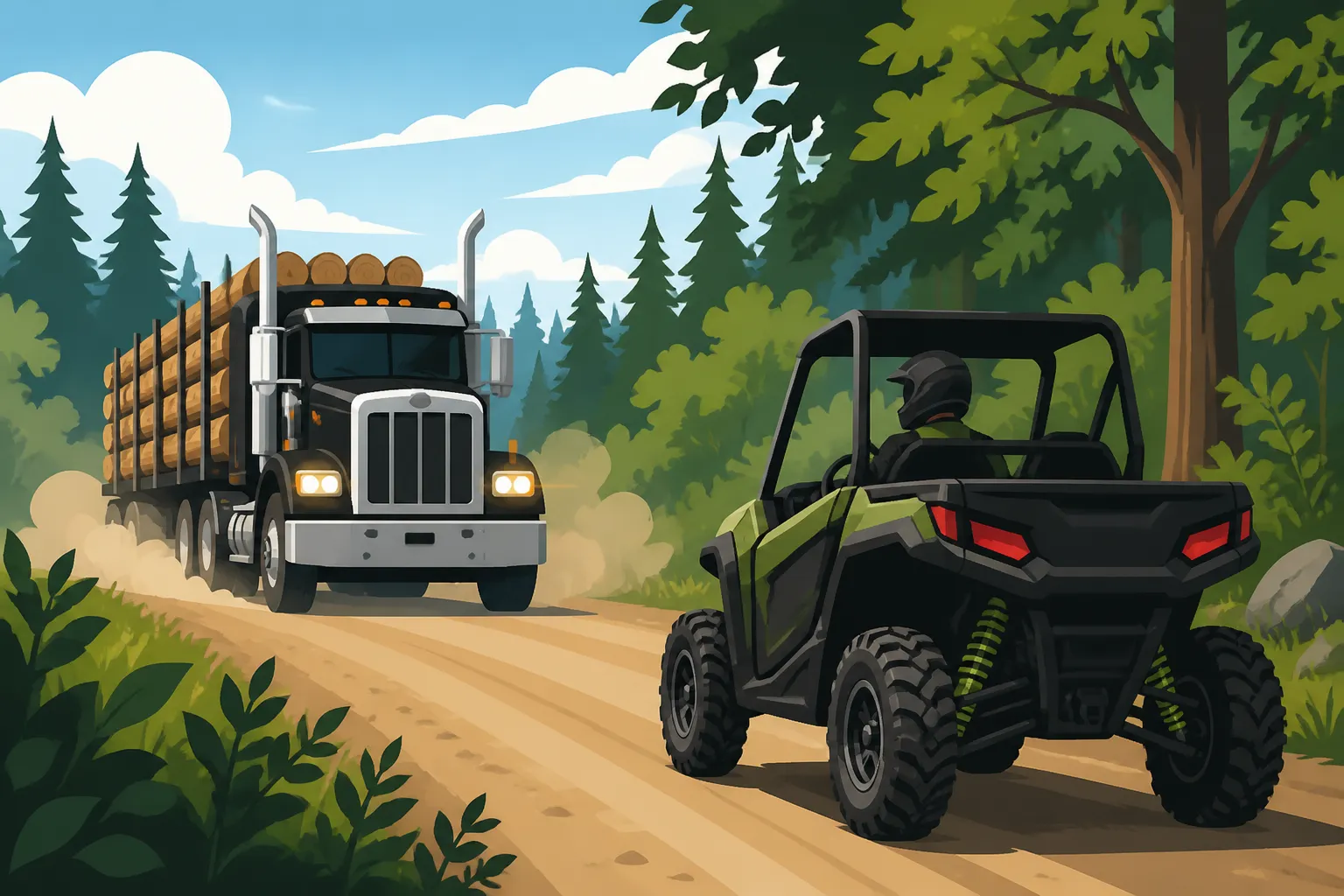
There’s nothing quite like exploring Michigan’s vast forests and backwoods on your ATV or UTV, feeling the open air and soaking in the beauty. But sometimes, that peaceful solitude can be abruptly shattered by the sheer, undeniable presence of a fully loaded logging truck rumbling down the same gravel road. These encounters can be jarring, even terrifying, for an ORV rider. This guide is all about helping you understand why these giants are on your favorite routes, how to anticipate them, and most importantly, how to share the road safely and without drama.
The Reality of Michigan's Working Forests and Back Roads
Michigan, with its expansive state forests and private timberlands, is a working landscape. While we treasure our trails and routes for recreation, many of the very same roads are vital arteries for the logging industry. It’s easy to feel like you’re in the middle of nowhere, only to suddenly confront a vehicle that dwarfs your side-by-side.
Why Logging Trucks Are There
When you're out exploring the serene beauty of the Upper Peninsula or the northern Lower Peninsula, it's easy to forget that these aren't just recreational playgrounds. They are active timber harvest areas, and the wood needs to get from the forest to the mills. This means logging trucks are regularly traversing state forest roads, county roads, and even private access roads. They might be hauling fresh-cut logs, pulpwood, or even transporting heavy machinery. These truck drivers are on a schedule, often navigating challenging terrain, and they have massive loads that make quick maneuvers impossible. Understanding that these roads are their workplace, not just your playground, is the first step in sharing them respectfully.
Think about it: those beautiful forests didn't just appear. They're managed, harvested, and regrown. And that whole cycle depends on those big rigs moving the product. So, while you're enjoying a leisurely ride, they're working. This fundamental difference in purpose shapes how each of you interacts with the road. You're riding for pleasure, they're driving for a living, and that means their priorities and capabilities are vastly different from yours. Many of these roads are also open to ORVs, as explained in resources like [Michigan State Forest Roads Open to ORVs in Michigan], so it's a shared space by design, not by accident.
The Size and Speed Disparity: Why ORVs Are at a Disadvantage
Let's not sugarcoat it: your ATV or UTV is tiny compared to a fully loaded logging truck. We're talking about vehicles that can weigh tens of thousands of pounds, often more, carrying loads that can extend far beyond the truck's frame. Their stopping distance is enormous, their blind spots are vast, and their ability to swerve or react quickly is severely limited by their size and momentum. When you're driving a smaller vehicle, whether it's an ATV, a UTV, or even a compact car, you are always at a disadvantage when encountering something as massive as a logging truck.
This isn't about blaming anyone; it's just physics. A truck driver, perched high in their cab, might not even see a low-slung UTV or a single ATV rider around a corner until they're dangerously close. The dust they kick up can blind you in an instant, and their sheer mass can feel like a force of nature. It's a sobering thought, but one that demands respect and a proactive approach to safety from every ORV rider. You've got to assume they don't see you, because often, they simply can't.
Prioritizing Your Visibility and Awareness
In the world of sharing back roads with industrial traffic, your best defense is always a good offense, meaning you need to be seen and you need to be aware of everything around you. Never assume you have the right-of-way or that others will see you.
Making Yourself Seen: Lights, Flags, and Bright Colors
First and foremost, make yourself impossible to miss. This isn't just a suggestion; it's a critical safety measure.
- Bright Colors: Ditch the camo for your riding gear if you're hitting roads where trucks might be. High-visibility vests, bright helmets, and colorful machines are your friends. Fluorescent greens, oranges, and yellows stand out far better against natural backgrounds than earth tones.
- Headlights and Taillights: Run your headlights and taillights even during the day. Many ORVs have decent lighting, but consider upgrading to brighter LED lights. A quality LED light bar from a brand like SuperATV can cut through dust and shadows, making your presence known from a greater distance, even in broad daylight. The more light you throw forward and backward, the better. Check out guides like [Michigan ORV Lighting Rules During Daylight] for more specifics.
- Whip Flags: These are essential, especially on dusty roads or roads with lots of blind spots. A tall, brightly colored whip flag on your ORV can be seen over hills, around corners, and above dust clouds long before your machine comes into view. This provides critical seconds for a truck driver to react and adjust. Make sure your flag is high enough to clear common obstacles but not so tall it gets tangled in low branches.
- Reflective Tape: Adding reflective tape to the front, back, and sides of your ORV and helmet can dramatically improve your visibility, especially in low light conditions or if a truck's headlights catch you. Every little bit helps.
Listening and Looking Actively: Beyond Your ORV's Roar
While making yourself visible is crucial, your own awareness is equally vital. It's not enough to hope they see you; you need to know they're coming.
- Engine Noise: Modern ORVs can be surprisingly loud, and that engine noise can mask the sound of an approaching truck. Try to keep your music down, or if you're wearing ear protection, use communication systems that still allow you to hear ambient sounds.
- Scan and Listen: Constantly scan the road ahead, behind, and to the sides. Listen for the distinct sound of a diesel engine, the hiss of air brakes, or the rumble of heavy tires on gravel. These are tell-tale signs of an approaching truck. Remember that sound travels differently depending on terrain, wind, and vegetation.
- Dust Plumes: One of the most common early warning signs of an approaching vehicle on a gravel road is a dust plume. If you see a rising cloud of dust in the distance, especially around a corner or over a hill, assume it's a logging truck and prepare to yield. This gives you precious time to find a safe spot.
- Blind Corners and Hills: These are your absolute danger zones. Slow down dramatically before any blind corner or crest of a hill. Lean into the turns and try to see as far down the road as possible. Don't hug the inside of the corner; keep to the right as much as safely possible. You never know what's coming at you from the other side. Using your horn with short, sharp blasts as you approach a blind spot can also alert others to your presence.
Riding in Formation and Communication for Groups
If you're riding with a group, your collective safety is even more critical, and communication becomes paramount.
- Staggered Riding: When riding in a line, stagger your position to allow for more visibility and space. The lead rider should be highly vigilant and communicate any sightings of oncoming traffic immediately.
- Hand Signals: Develop and practice clear hand signals within your group. A simple signal for "oncoming traffic" or "pull over" can save everyone from a dangerous encounter.
- Intercom Systems: If your UTV or helmet allows for intercom systems, these are invaluable for instant communication between riders. This is especially true for the lead rider to warn those behind them about hazards or approaching vehicles.
Tactical Riding Strategies for Safe Encounters
Once you've spotted a logging truck, or even suspect one is coming, your next moves are crucial. This isn't about asserting your rights on the road; it's about self-preservation.
Yielding and Getting Out of the Way: No Questions Asked
When a logging truck approaches, your primary goal is to get out of its way safely and quickly.
- Pull Over Immediately: As soon as you see or hear a truck, begin slowing down and look for a safe spot to pull over. The ideal spot is a wide shoulder, a designated pull-off, or even an old logging spur road. Pull completely off the travel portion of the road, giving the truck as much room as possible.
- Stop Completely: Don't just slow down and try to sneak past. Stop your machine. Turn your wheels slightly away from the road if you're on an incline.
- Signal Your Intentions: If you're with a group, ensure everyone understands the plan to pull over. If you have directional signals, use them.
- Where There's No Shoulder: This is where it gets tricky. If the road is narrow with no shoulder, you might have to pull off into the woods slightly, or at least get as close to the edge as possible and stop. In some extremely tight spots, you might even consider reversing to a slightly wider section if it's safe to do so. The truck needs every inch it can get.
- Wait for the Dust to Settle: After the truck passes, don't immediately pull back onto the road. Wait for the massive dust cloud to dissipate so you have clear visibility again. This could take a minute or two, depending on conditions.
Dealing with Dust and Debris
Logging trucks kick up an incredible amount of dust, which can severely reduce visibility, and they can also launch debris.
- Eye Protection is Paramount: Always wear appropriate eye protection. Goggles are a must. For UTV riders, a good windshield can help, but dust will still swirl inside. Consider a full face shield or even a dust mask. SuperATV offers a range of windshields, from full to half, and can provide significant protection from dust and small debris kicked up by trucks. Even with a full windshield, a quality set of goggles is advisable for dusty roads.
- Dust Masks/Respirators: Especially if you ride frequently in dusty areas, a simple dust mask or even a more robust respirator can make a huge difference in your comfort and long-term health. Breathing in fine dust can be irritating and unhealthy.
- Flying Debris: Be aware that truck tires can pick up and launch rocks, gravel, and other debris at high speed. Keeping your distance and being pulled off the road helps mitigate this risk. If you see debris flying, turn your head away or duck behind your machine's protection.
Navigating Blind Corners and Crests
These specific road features demand extra caution when sharing space with large vehicles.
- Anticipate: Assume there's a truck just around that blind bend or over the next hill. Always. This mindset will keep you from riding too fast into an unavoidable situation.
- Slow Down Dramatically: Reduce your speed to a crawl when approaching any section of road where you cannot see far ahead. This gives you maximum time to react if something appears unexpectedly. This is especially important on roads where the speed limit might be higher, like those discussed in [Michigan's 25 mph Limit on County Roads], but conditions demand much lower speeds.
- Stay Right: Hug the extreme right side of the road, as close to the edge as safely possible without putting a wheel in a ditch or on unstable ground. This maximizes the amount of clear road for an oncoming vehicle.
- Honk Your Horn: A quick series of short, sharp blasts on your horn before entering a truly blind corner can warn any approaching traffic of your presence. Don't rely solely on this, but it's another layer of protection.
| Safety Tactic | Why It's Important |
|---|---|
| High Visibility Gear | Makes you stand out against natural backgrounds. |
| Lights On (Day & Night) | Increases visibility in all conditions, especially dust and shadows. |
| Whip Flag | Seen over hills and dust clouds, providing early warning. |
| Listen Actively | Helps detect trucks before they are in sight. |
| Watch for Dust Plumes | Primary indicator of approaching vehicles on gravel roads. |
| Slow for Blind Spots | Maximizes reaction time for unexpected encounters. |
| Pull Over & Stop | Gives large trucks maximum room; they cannot easily maneuver or stop. |
| Eye & Dust Protection | Shields against dust and flying debris from truck tires. |
| Communicate in Groups | Ensures coordinated, safe reactions from all riders. |
| Stay to the Far Right | Provides the most clear road for oncoming, wide vehicles. |
Understanding Road Rules and Respecting Working Vehicles
While many back roads are open to ORVs in Michigan, they are often shared spaces with other users, including commercial traffic. Knowing the rules and adopting a respectful mindset can prevent conflicts and accidents.
Michigan ORV Road Riding Basics
It’s fantastic that Michigan offers so many miles of roads and trails for ORV use. However, these privileges come with responsibilities. When you’re riding on designated ORV routes or county roads where ORVs are permitted, you are sharing the road with regular vehicle traffic, and that explicitly includes logging trucks and other heavy equipment. Rules like staying to the far right, observing speed limits, and having proper licensing and permits (like those discussed in [Michigan ORV Safety Certificate Requirements]) are not just suggestions; they are crucial for harmonious coexistence.
Remember that while you might be on a recreational adventure, for many, these roads are part of their daily work commute or business operations. Respecting the local ordinances and basic traffic laws is paramount. This isn't just about avoiding a ticket; it's about being a responsible, safe rider who contributes positively to the community and doesn't create unnecessary hazards for others.
Professionalism of Truck Drivers
Most logging truck drivers are highly skilled professionals. They navigate challenging routes, often in difficult weather conditions, with immense loads. They are generally focused on their job, which involves tight schedules and safely transporting timber. While they are usually cautious, they are not expecting recreational vehicles to be around every blind corner. Their focus is on the road, their load, and getting to their destination efficiently. They often assume, quite reasonably, that smaller, more agile vehicles will take the necessary steps to get out of their way.
It’s unrealistic to expect them to constantly watch for small ORVs, especially when visibility is low due to dust or terrain. Instead, the onus is largely on the ORV rider to anticipate, detect, and yield to these large, working vehicles. Don't take it personally if a truck doesn't slow down to a crawl for you; their ability to do so, especially on an incline with a heavy load, is limited.
The "Expect the Unexpected" Mindset
This is perhaps the most important takeaway for anyone sharing back roads in Michigan with logging trucks. These are not always pristine, well-maintained recreational trails. They are working roads, sometimes rough, sometimes muddy, and often traversed by a variety of vehicles.
- Beyond Trucks: You might encounter other industrial vehicles like excavators, road graders, utility trucks, or even forest service vehicles. Each presents its own set of challenges.
- Changing Conditions: Road conditions can change rapidly. A smooth gravel road might turn into a deeply rutted, muddy path after a rain. Fresh logging operations might mean new debris on the road.
- Wildlife: While not directly related to logging trucks, remember you're in wild country. Deer, bears, and other animals are a constant possibility, adding another layer of "unexpected" to your ride.
Always ride defensively. Assume the worst-case scenario around every corner and over every hill. This isn't about being paranoid; it's about being prepared. Your ability to anticipate, react, and make yourself visible is your greatest asset in safely navigating Michigan's beautiful, yet sometimes challenging, working back roads. Remember that a bit of preparation, like having an advanced warning system or even some spare parts from SuperATV for unexpected trail repairs, can make a huge difference in your confidence and safety. Whether it's lights, winches, or suspension components, being prepared for rough conditions or difficult encounters is part of the off-roading lifestyle.
This article is for general informational purposes only and does not constitute professional advice. Laws, prices and regulations vary by location and change over time. Consult a qualified professional for guidance on your specific situation.