Houghton County ORV Road Rules
Navigating the world of ORV road rules can feel like trying to solve a puzzle while riding a quad – exhilarating but potentially confusing if you don't have all the pieces. Especially in a place like Michigan, where county ordinances can add their own unique twists, it's easy to get turned around. This guide aims to cut through the noise, offering clear, actionable insights into riding your ORV on Houghton County roads so you can enjoy the vast beauty of the Upper Peninsula without any unwanted surprises.
Understanding Michigan's Statewide ORV Road Rules
Before we dive into the specifics of Houghton County, it's crucial to understand the foundational rules that apply across the entire state of Michigan. These aren't just suggestions; they're the law, and they dictate the baseline for where and how you can operate your off-road vehicle on public roads. Many riders forget that while a county might open its roads, it still has to abide by the Michigan Vehicle Code and the Natural Resources and Environmental Protection Act.
The Foundation: State-Level Requirements for Road Use
Michigan law generally restricts ORV operation on state and federal highways, but it provides a framework for counties and municipalities to open their local roads. When those roads are opened, a set of statewide rules immediately kicks in. For starters, you'll need to make sure your ORV is properly titled and permitted. That means having a valid [Michigan ORV License and Trail Permit Explained] affixed to your machine. Beyond that, your ORV must be equipped with specific safety features. We're talking about working headlights and taillights, brakes, a muffler with a spark arrestor, and a US Forest Service approved spark arrestor. If you're riding after dark or when visibility is limited, your headlights and taillights must be illuminated.
One of the often-overlooked requirements is the speed limit. Even if the posted speed limit on a county road is 55 mph, ORVs are typically restricted to a much lower speed. [Michigan's 25 mph Limit on County Roads] is a common statewide rule when ORVs are allowed on the shoulder or far right side of the maintained portion of the road. This isn't just a suggestion to keep you safe; it's a legal limit designed to ensure compatibility with other road users. Also, keep in mind that passengers are only allowed on ORVs designed to carry more than one person, and they must be seated properly.
Driver and Passenger Regulations
Who can actually operate an ORV on a Michigan county road? This is where age and licensure come into play. Generally, anyone operating an ORV on a public road must possess a valid driver's license. This isn't the same as just having an ORV Safety Certificate; a full, unrestricted driver's license is typically required for public road use. There are specific age restrictions for younger riders as well. For example, a 12-year-old might be able to ride certain ORVs on designated trails with adult supervision, but putting them on a county road is a different ballgame. Always check the specific rules regarding [Driver's License Rules for Michigan ORV Road Riding].
Furthermore, while Michigan has some helmet exemptions for street-legal vehicles, when you're riding an ORV on a county road that isn't fully street-legalized, the helmet law often applies. Unless the machine is licensed as an assembled vehicle and meets stringent safety requirements, all riders under 18 must wear a DOT-approved helmet, and often, it's highly recommended for all riders regardless of age. Eye protection is another must-have, protecting you from dust, bugs, and debris kicked up by other vehicles or your own. It's truly about minimizing risks, because while the ride might be fun, the consequences of an accident can be severe.
Houghton County's Specific ORV Road Ordinances
Now, let's zoom in on Houghton County. Like many counties in Michigan's Upper Peninsula, Houghton County has embraced ORV use, recognizing its economic and recreational benefits. However, this doesn't mean it's a free-for-all. Local ordinances establish the specific boundaries and conditions for ORV operation on county roads. It’s important to remember that these county ordinances can add restrictions beyond the statewide rules, but they can't take away state-mandated requirements.
Where You Can and Cannot Ride in Houghton County
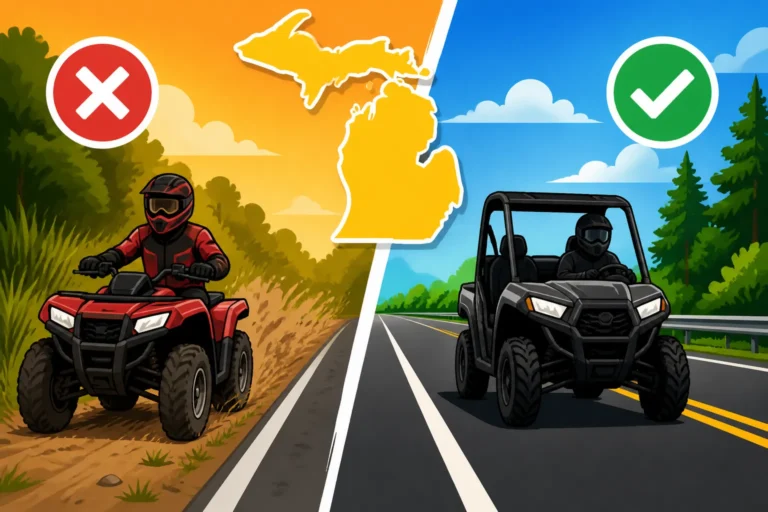
Houghton County, like other counties that have opted in, generally allows ORVs on the far right of the maintained portion of the road, which typically means the gravel shoulder or the unpaved area adjacent to the pavement. However, this doesn't apply to all roads. State highways (like US-41 or M-26) are usually off-limits. You also can't ride on a limited-access highway or within the limits of incorporated cities or villages unless they have passed their own specific ordinances allowing it. This is a common point of confusion for riders visiting from out of state or even from other parts of Michigan. Always be on the lookout for signage, as local communities might have specific restrictions even within the broader county framework.
Many riders dream of connecting trails by using a short stretch of road, and Houghton County often facilitates this. The goal is to provide contiguous access to the extensive trail networks that crisscross the area, especially in parts like the Keweenaw Peninsula where [Keweenaw County ATV Trails in Michigan] are just a stone's throw away. However, you must always yield to other traffic and maintain a safe distance. The beauty of riding in Houghton is often the vastness of the wilderness, but even there, you'll encounter other vehicles.
Local Speed Limits and Equipment Considerations
While the state might set a default 25 mph limit for ORVs on county roads, Houghton County’s ordinance will reiterate this and might even designate specific roads with lower limits in certain areas, particularly near residential zones or popular recreation spots. It’s crucial to adhere to these limits, not only for legal reasons but for safety. Braking an ORV from higher speeds on a gravel road, especially with unexpected obstacles, can be challenging.
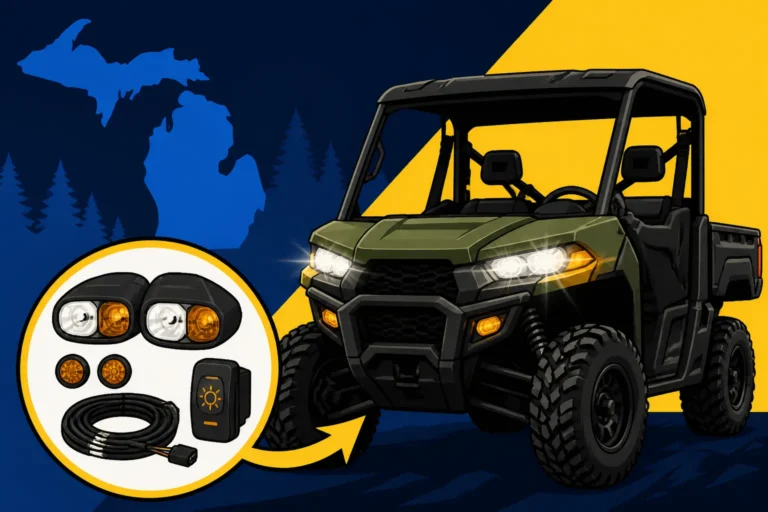
When it comes to equipment, Houghton County will expect you to meet all the state-level requirements: working headlights, taillights, and brakes. However, for those looking to maximize their safety and potentially prepare for broader road use, considering aftermarket upgrades can be a smart move. Companies like SuperATV offer a range of accessories, from robust mirrors that improve visibility on busy roads to full street-legal kits for those looking to transform their machine for more extensive road travel. While Houghton County's ordinance might not require every item in a full street-legal kit, having enhanced lighting or mirrors can make your road sections much safer and more pleasant for everyone.
For instance, reliable turn signals, while not always mandated for basic county road access, become incredibly valuable when you're sharing the road with cars. They clearly communicate your intentions and help prevent accidents. Similarly, a horn, which is a key component of most street-legal conversions, can be a lifesaver for alerting distracted drivers or pedestrians.
Navigating Houghton County Roads Safely
Riding your ORV on Houghton County roads means being a responsible and considerate user of shared public spaces. It's not just about following the letter of the law, but also about upholding the spirit of safe and respectful recreation.
Best Practices for Road Sharing
When you're riding your ORV on a county road, always assume you are sharing that space with larger, faster vehicles that might not expect to see you. Stay to the far right, drive single file if you're with a group, and signal your intentions clearly. Pull over to allow faster traffic to pass if safe to do so. Dust can be a major issue, especially on gravel roads, so be mindful of visibility for yourself and others. This means maintaining extra space between machines in your group and being aware of how much dust you're kicking up for passing cars.
Crossing a paved state highway is often permitted, but it must be done at a right angle and only when safe. You're not allowed to ride on the state highway, only to cross it. This distinction is vital and often leads to confusion or violations. The Michigan DNR and local law enforcement actively patrol these areas, and they are well-versed in the nuances of these rules. Ignorance of the law is rarely an excuse that holds up.
Finding Current Ordinances and Staying Informed
County ordinances can change. What was allowed last year might have new restrictions this year, or vice versa. The best way to stay informed is to check the official Houghton County website, specifically their clerk's or sheriff's department pages, for the most up-to-date ORV ordinances. You can often find a current copy of the ordinance or a summary of its key points. The Michigan Department of Natural Resources (DNR) website is also an invaluable resource, often providing links to county ordinances and statewide regulations. [How to Find Your Michigan County's ORV Ordinance] will give you a detailed breakdown of how to track down this information.
Additionally, local ORV clubs and online forums focused on Michigan off-roading can be excellent sources of community wisdom and up-to-the-minute information about local conditions, trail closures, or changes in road access. These communities are often passionate about preserving access and are quick to share important updates.
| Feature | Michigan Statewide Rule (General) | Houghton County ORV Ordinance (Typical) |
|---|---|---|
| Operating Location | Far right of maintained portion of county roads/shoulders | Far right of maintained portion of designated county roads |
| Speed Limit | 25 mph on county roads (unless lower posted) | 25 mph on designated county roads (adhere to local signs) |
| Driver's License | Valid driver's license required for public roads | Valid driver's license required for public roads |
| Helmet Requirement | Under 18 requires DOT helmet (unless street-legal title) | Under 18 requires DOT helmet (unless street-legal title) |
| Lighting | Headlights & taillights on at all times (dawn/dusk/night) | Headlights & taillights on at all times (dawn/dusk/night) |
| Spark Arrestor | Required (USFS approved) | Required (USFS approved) |
| Passenger Rules | Only on machines designed for multiple riders, properly seated | Only on machines designed for multiple riders, properly seated |
| Crossing Highways | Permitted at right angles, only when safe | Permitted at right angles, only when safe |
| City/Village Limits | Generally prohibited unless local ordinance allows | Generally prohibited unless local ordinance allows |
| Proof of Ownership | [Keeping Your ORV Paperwork With the Machine] | [Keeping Your ORV Paperwork With the Machine] |
Remember, while this table provides a general overview, it's essential to consult the exact, current ordinance for Houghton County.
Enhancing Your ORV for Road Use in Houghton County
While the basic requirements for ORV road use in Houghton County are straightforward, many riders choose to upgrade their machines to make road sections safer, more comfortable, and more compliant with evolving regulations.
Key Upgrades for Safety and Compliance
Thinking about those stretches of county road, certain upgrades just make sense. Good lighting is paramount. Beyond the basic headlights and taillights, adding auxiliary LED light bars can vastly improve your visibility, especially when the sun starts to dip below the horizon on those remote UP roads. This isn't about blinding oncoming traffic, but about being seen by other vehicles. Many companies, including SuperATV, offer a variety of lighting solutions that are rugged enough for off-road abuse but provide excellent road illumination.
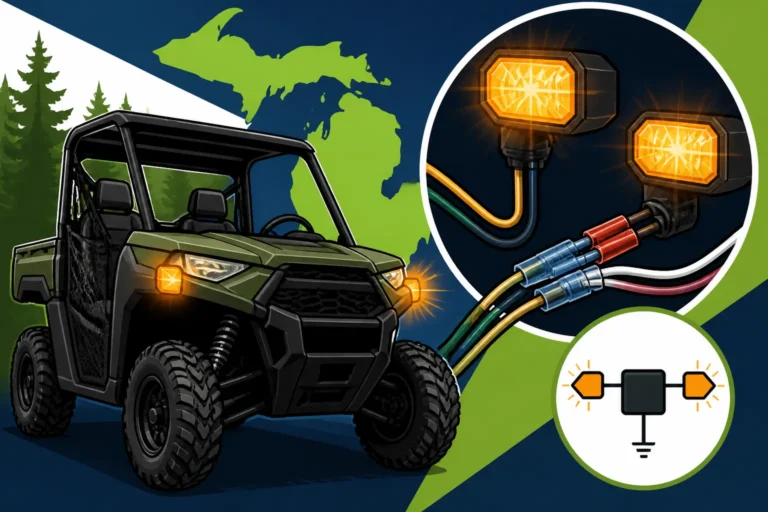
Another major consideration is signaling. While not always strictly mandated for simple county road access, turn signals greatly enhance safety. Trying to hand-signal on a moving ORV, especially in cold weather or with full gear, can be awkward and ineffective. An integrated turn signal kit makes your intentions clear to other drivers, significantly reducing the risk of collisions. Additionally, a working horn is invaluable for alerting other road users to your presence. These are elements you'd typically find in a [Street-Legal UTV Kit Prices] for a full conversion, but you can certainly add them piecemeal for increased safety on county roads.
Tires and Other Practicalities
Your choice of tires also plays a role. While aggressive mud tires are fantastic in the sloppy trails, they wear quickly and handle poorly on pavement or hard-packed gravel roads. If you plan to spend a significant amount of time linking trails via county roads, consider a more all-terrain style tire that offers a better balance of off-road grip and on-road durability. This will not only make your ride more comfortable but also prolong the life of your tires.
Finally, ensuring your machine is in good working order before hitting any roads is non-negotiable. Check your brakes, tire pressure, and fluid levels. A breakdown on a remote Houghton County road isn't just an inconvenience; it can be a serious safety issue. Having a basic tool kit, a spare tire or tire repair kit, and a communication device is always a smart move. Remember, riding on county roads means you're operating in a more regulated environment, so taking every precaution to ensure your machine meets both the letter and spirit of the law, and that it's safe for yourself and others, is paramount.
Disclaimer
This article is for general informational purposes only and does not constitute professional advice. Laws, prices and regulations vary by location and change over time. Consult a qualified professional for guidance on your specific situation.