Which Side of the Road Michigan ORVs Ride On
Navigating Michigan's beautiful backcountry on your ORV is an incredible experience, but it comes with a specific set of rules, especially when you find yourself on county roads. One of the biggest head-scratchers for many riders is exactly where on the road you're supposed to be. It’s not always intuitive, and simply driving "like a car" can lead to a ticket or, more importantly, put you and others at risk. This guide aims to clear up all that confusion, detailing precisely which side of the road Michigan ORVs ride on and the crucial guidelines that will keep your adventures safe and legal.
The Fundamental Rule: Always Keep to the Far Right
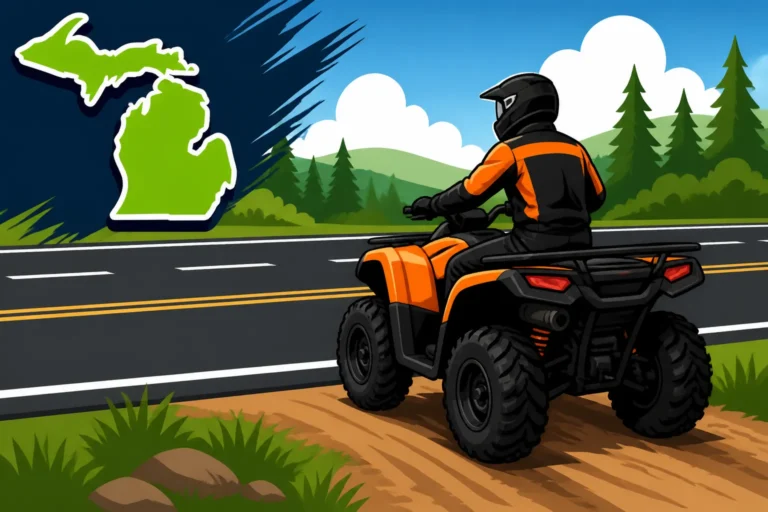
When you're out enjoying Michigan's vast network of trails and routes, transitioning onto a county road requires a shift in mindset from free-flowing trail riding to structured road etiquette. The most basic, non-negotiable rule for ORVs on designated county roads is to stay as far to the right as safely possible. This isn't just a suggestion; it's a fundamental safety principle designed to minimize conflicts with other vehicles.
Staying to the Far Right of the Maintained Portion
Michigan law is quite specific about where an ORV should operate on a county road that has been opened to ORV use. You must ride on the far right of the "maintained portion" of the road. Now, what exactly does "maintained portion" mean? It’s not just the paved surface, if there is one. It includes the graded, improved gravel, or dirt surface that is regularly maintained by the road authority. It's essentially the usable travel lane, not necessarily just the paved strip if the road has a gravel shoulder that's part of the regularly kept roadway. You're expected to hug that right edge, giving maximum space to oncoming and passing traffic.
This practice is crucial for safety. Imagine you're riding your side-by-side around a blind curve on a gravel road. If you're drifting towards the center, an oncoming pickup truck, perhaps hauling a trailer, won't have the space needed to avoid a collision. By staying to the far right, you create a buffer zone, enhancing visibility and reaction time for everyone. Even when passing a slower farm implement or another ORV, the expectation is that you return to the far right as quickly and safely as possible. Think of it less as sharing the road and more as coexisting on the very edge of it, giving priority to larger, faster vehicles. For more clarity on what parts of the road are officially designated, you might want to look into [Michigan's Maintained Portion of the Road, Defined].
Riding Single File
For most ORV road riding in Michigan, especially for ATVs, riding single file is not just a polite suggestion—it’s often a strict requirement. This rule reinforces the "far right" principle by preventing multiple ORVs from taking up too much of the travel lane width. If you're part of a group ride, this means lining up one behind the other, maintaining safe following distances, and each rider staying to the far right of the maintained portion.
This can feel a bit unnatural if you're used to riding side-by-side on wide trails, but on county roads, it's about minimizing your footprint. Picture a group of ATVs coming over a rise; if they're spread out, they present a much larger obstacle to an unsuspecting motorist. When riders are single file, the visual impact is reduced, and it's easier for other vehicles to gauge their position and pass safely. Even side-by-sides, which are wider by nature, must adhere to the far right of the maintained portion, effectively using their entire machine width as the "single file" unit. This topic is so important that there's specific guidance on [Riding Single File on Michigan County Roads]. It’s a habit that every group needs to practice to ensure a smooth, safe ride for everyone sharing the road.
Understanding "Road Shoulder vs Maintained Portion"
The distinction between the "road shoulder" and the "maintained portion" can sometimes be a source of confusion for ORV riders, and it’s a critical difference that impacts where you can legally and safely ride. Just because a road has a shoulder doesn't automatically mean it's the designated ORV travel lane.
The Definition of the Maintained Portion and Shoulder for ORVs
In Michigan, the "maintained portion" of the road generally refers to the part of the roadway that is regularly graded, paved, or improved for vehicular travel. This is where cars, trucks, and, when permitted, ORVs are expected to operate. The "shoulder," on the other hand, is typically an unpaved or less-improved area immediately adjacent to the maintained portion, often used for emergencies, stopping, or drainage. For ORVs, the rules usually direct you to the far right of the maintained portion, not necessarily the shoulder itself, unless a specific local ordinance or situation dictates otherwise.
For example, on a paved county road with a clear gravel shoulder, you might instinctively think to ride entirely on the gravel shoulder to keep out of the way of cars. However, unless the local ordinance explicitly permits shoulder riding for ORVs, you are often expected to ride on the far right of the paved lane itself. On an unpaved gravel road, the distinction becomes even more nuanced, as the entire road width might be considered the "maintained portion." This is where knowing your specific [Michigan County ORV Ordinances Explained] becomes paramount, as local rules can add or subtract from state-level directives. Understanding these definitions is essential to avoid being cited for improper operation, as what looks like "being polite" by riding further off the road might actually be against the rules.
When You Can Use the Shoulder (and When You Can't)
While the general rule is to stick to the far right of the maintained portion, there are limited circumstances where using the shoulder might be permissible or even necessary. These are typically for safety-related actions, not sustained travel. For instance, if you need to pull over to address a mechanical issue, consult a map, or allow a line of traffic to pass, temporarily moving onto the shoulder is often the appropriate and safest action. Similarly, avoiding a sudden obstacle in the road might necessitate a momentary swerve onto the shoulder.
However, you should not assume that you can continuously travel on the shoulder as an alternative to the main roadway. Prolonged shoulder travel can be dangerous, as shoulders often have poor visibility, uneven terrain, debris, or soft spots that are not designed for continuous ORV travel. Furthermore, local ordinances might specifically restrict ORV use to the maintained portion only. Always remember that the shoulder is primarily for temporary stops or emergencies. If you're unsure about the rules for a specific road or area, err on the side of caution and stay on the far right of the maintained portion, single file, just as the general state law suggests. Your ORV accessories, like robust mirrors from SuperATV, can also help you monitor traffic before pulling over.
Safety, Visibility, and Legal Responsibilities
Operating an ORV on public roads, even those designated as routes, brings a heightened level of responsibility. Your position on the road isn't just about following the law; it's fundamentally about ensuring the safety of yourself, your passengers, and every other road user.
Enhancing Visibility for Other Road Users
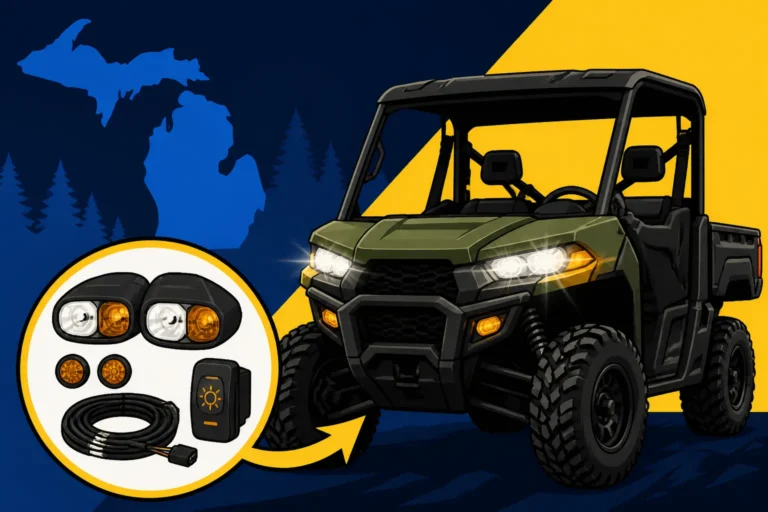
Riding on the far right of the road can sometimes put you in a less visible position, especially to drivers who aren't actively looking for ORVs. Because of this, enhancing your visibility becomes an absolute must. Your machine should be equipped with properly functioning headlights and taillights, which must be on even during daylight hours on county roads, as specified in [Michigan ORV Lighting Rules During Daylight]. Beyond the basics, consider adding reflective tape to your machine and wearing bright, high-contrast clothing.
Many riders also opt for additional safety accessories. A whip flag, especially important for dustier roads or hilly terrain, can make a huge difference in how quickly other drivers spot you. Companies like SuperATV offer a range of lighting solutions, from LED light bars to auxiliary marker lights, which can further increase your presence on the road. Remember, a driver can't avoid what they don't see, so doing everything possible to stand out is a critical part of your road riding responsibility. This proactive approach is especially important for [Visibility Flags for Road Rides].
Penalties for Non-Compliance
Ignoring Michigan's ORV road rules, including the requirement to ride on the far right and single file, can lead to more than just a stern talking-to. Law enforcement, including county sheriffs and DNR conservation officers, regularly patrol ORV routes, and they take these rules seriously. Violations can result in significant fines and, in some cases, even the impoundment of your machine. A single ticket for improper operation can quickly dampen an otherwise enjoyable ride.
It's not just about the monetary cost; repeat offenses or egregious violations can have more serious repercussions. Riding an ORV improperly can lead to traffic citations that, while typically not adding points to your driver's license, are still official legal matters. Always be aware of your responsibilities, and if you're ever stopped by an officer, be cooperative and have all your [Michigan ORV Paperwork During a DNR Stop] readily available. To get a sense of what to expect, read up on [Tickets Deputies Write for Road Riding]. Remember, ignorance of the law is generally not a valid defense.
Other Road Rules Michigan ORV Riders Must Follow
While understanding your lane position is crucial, it's just one piece of the puzzle for legal ORV road riding in Michigan. Once on a county road, you're expected to obey most conventional traffic laws, albeit with some specific ORV adaptations. This includes adhering to posted speed limits, which for ORVs on county roads is often capped at [Michigan's 25 mph Limit on County Roads], even if the posted limit for cars is higher. You must also obey all traffic signs and signals, stop at stop signs, and yield to oncoming traffic when turning left.
Signaling your turns, either with your machine's turn signals (if equipped) or clear hand signals, is also vital for communicating your intentions to other drivers. This holistic approach to road safety is encapsulated in [The Three Road Rules Michigan ORV Riders Must Follow], which serves as a quick reference for fundamental expectations. Remember that other vehicles on the road often have a right of way, and you, as an ORV operator, bear a significant responsibility to operate safely and predictably.
To help visualize some of these common ORV road rules, here's a quick summary:
| Rule Category | Specific Requirement | Why It Matters |
|---|---|---|
| Road Position | Far right of maintained portion | Maximizes space for other vehicles, reduces collision risk. |
| Formation | Single file (if more than one ORV) | Minimizes road footprint, improves visibility for other drivers. |
| Speed Limit | Adhere to posted limit, often capped at 25 mph for ORVs | Prevents overdriving conditions, allows more reaction time. |
| Visibility | Headlights/taillights on, use of [Visibility Flags for Road Rides] encouraged | Ensures you are seen by other road users, especially on curves or dusty roads. |
| Traffic Signals | Obey all signs, signals, and yielding requirements | Integrates ORV operation into existing traffic flow for safety. |
| Shoulder Use | Generally for emergencies or temporary stops, not sustained travel | Shoulders can be unpredictable and dangerous for continuous travel. |
| Passage | Yield to pedestrians, bicycles, and larger vehicles | Promotes shared road safety and responsible operation. |
Practical Tips for Riding Safely and Legally
Understanding the rules is one thing; putting them into practice safely and effectively is another. Good planning and mindful riding habits can make all the difference when you take your ORV onto Michigan's county roads.
Pre-Ride Checks and Route Planning
Before you even think about hitting a county road on your ORV, a little preparation goes a long way. First, always perform a thorough pre-ride check of your machine. Are your tires properly inflated and in good condition? Do all your lights, including headlights, taillights, and any additional running lights, work perfectly? Is your exhaust system intact and within noise limits? Companies like SuperATV offer a variety of robust accessories, from stronger tires to comprehensive lighting kits, that can improve your machine’s readiness for mixed-terrain riding, including road segments.
Beyond your machine, your route planning is crucial. Michigan's ORV road system can be complex, with some roads open, some closed, and some with specific hours or seasonal restrictions. Don't rely on guesswork. Check county websites, use updated trail maps, or consult apps that show legal ORV routes. Knowing exactly which roads are open and for what type of ORV will prevent you from accidentally straying onto an illegal path. This planning also lets you anticipate any sections where you’ll need to be extra cautious due to traffic or tricky intersections.
Group Riding Etiquette and Communication
When you're riding with a group, the "single file, far right" rule becomes even more important. It's a discipline that needs to be maintained by every rider. Designate a lead rider who knows the route and the rules, and a sweep rider at the back to ensure no one gets separated or left behind. Communication within the group is key. Hand signals, especially for turns, hazards, or slowing down, are essential. Some groups even use two-way radios or helmet communicators, which can be incredibly helpful for maintaining formation and alerting others to upcoming turns or road conditions.
Before you start, have a brief meeting to review the expectations for road riding. Remind everyone to keep a safe distance, stay to the far right, and be vigilant for other traffic. A disciplined group that rides predictably is a much safer group, and it helps foster a positive image for ORV enthusiasts as responsible road users. Remember, the actions of one rider can sometimes reflect on the entire ORV community, especially in smaller towns with [ORV Road Riding Etiquette in Small Towns].
Being Prepared for Unexpected Situations
Even with perfect planning and execution, unexpected situations can arise on the road. You might encounter heavy traffic, pedestrians, bicyclists, or even wildlife. Always ride defensively, anticipating that other road users might not see you or understand your movements. Be ready to slow down, pull over safely, or stop completely if necessary. If you need to pull over, do so onto the shoulder if it's safe, and ensure your machine isn't obstructing traffic.
Carrying basic tools, a first-aid kit, and enough water and snacks for your ride is always a good idea. Make sure your cell phone is charged, but don't rely on it for navigation, as cell service can be spotty in some of Michigan's more remote areas. Ultimately, remaining alert and adaptable is your best defense against the unexpected. Knowing what to do in various scenarios can prevent a minor inconvenience from escalating into a serious problem, ensuring your ORV adventure remains enjoyable and incident-free.
Disclaimer
This article is for general informational purposes only and does not constitute professional advice. Laws, prices and regulations vary by location and change over time. Consult a qualified professional for guidance on your specific situation.