Turn Signals and Hazard Lights on a Street-Legal Build
It’s a fantastic feeling to imagine cruising your side-by-side or ATV down a scenic Michigan county road, heading straight to the trailhead or even just to the local ice cream shop. But the dream quickly bumps into reality when you realize that hitting public asphalt isn't as simple as slapping on a license plate. One of the biggest hurdles, and frankly, a point of confusion for many Michigan ORV owners, revolves around proper signaling. This comprehensive guide will clear up all the fog surrounding turn signals and hazard lights on a street-legal UTV or ATV build, ensuring you understand the legalities, installation, and proper use to keep you safe and legal on Michigan's roads.
The Why Behind Turn Signals on Michigan Roads
When you’re out on the trails, hand signals might suffice, if you even use them. But as soon as those tires touch the pavement, things change dramatically. You’re no longer just an off-road vehicle; you’re sharing space with cars, trucks, and all the established rules of the road. Ignoring these rules, especially signaling, isn’t just risky – it’s a recipe for trouble.
More Than Just a Courtesy: It's the Law
Michigan’s vehicle code is pretty clear: if you’re operating a vehicle on a public road, you need to communicate your intentions. Think about it: every car, every truck, every motorcycle has blinkers. That’s not by accident; it’s a fundamental part of road safety and traffic flow. When you convert your ORV to be street legal, it’s held to many of the same standards as any other road-going vehicle. This means that indicating turns, lane changes, or even just pulling over to the side of the road isn't just a polite gesture; it's a legal obligation.
Trying to use hand signals from a UTV can be awkward, difficult for other drivers to see, and frankly, often impossible if you’re gripping the wheel tightly or have a passenger. Without clear, illuminated signals, you're leaving other drivers guessing. This uncertainty can lead to sudden braking, swerving, or worse, a collision. Imagine you're on a two-lane county road, slowing down to turn left into a gas station. If the driver behind you doesn't see a clear signal, they might assume you're just slowing down for a bump and attempt to pass, putting everyone in a dangerous situation. Having proper turn signals removes that guesswork, making your intentions crystal clear to everyone around you.
Safety First: Preventing Collisions with Clear Intentions
Beyond the legal requirements, the primary reason for turn signals and hazard lights is safety, pure and simple. On the trail, you might be the only one around, or you’re riding in a convoy where everyone knows the plan. On the road, you're an anomaly. Most drivers aren't expecting a UTV, and they might misjudge your speed or intentions. Proper signaling is your best tool for communicating effectively with these other road users. It’s about more than just avoiding a ticket; it’s about preventing accidents and protecting yourself, your passengers, and your machine.
Consider a scenario where you're riding your newly street-legal side-by-side on a winding, tree-lined county road in northern Michigan. You're observing [Michigan's 25 mph Limit on County Roads], but a car behind you is eager to get past. If you suddenly slow down for a sharp curve or to turn onto a side road without signaling, that driver might not react in time. Bright, functional turn signals give them the crucial heads-up they need to adjust their speed and position safely. Hazard lights become equally vital if you experience a mechanical issue or need to stop unexpectedly, especially on roads with limited visibility. Signaling your distress can be the difference between a close call and a serious incident. These lights are essential tools in your street-legal arsenal, making your UTV a more predictable and therefore safer presence on Michigan's diverse roadways.
Understanding Michigan's Requirements for Turn Signals
So, you're ready to make your UTV street-legal and want to ensure your turn signals meet Michigan's exacting standards. It's not just about slapping on any old set of lights; there are specific criteria they need to fulfill to pass inspection and keep you in compliance. Understanding these details is crucial for a smooth conversion process.
What Constitutes a Legal Turn Signal Setup?
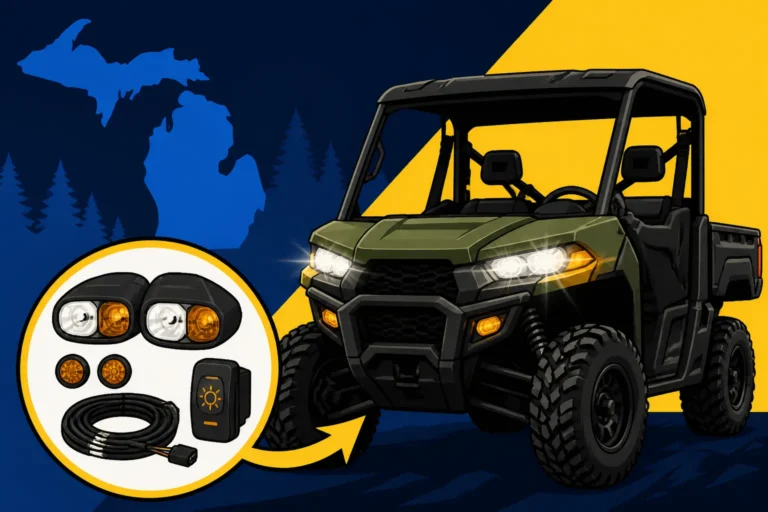
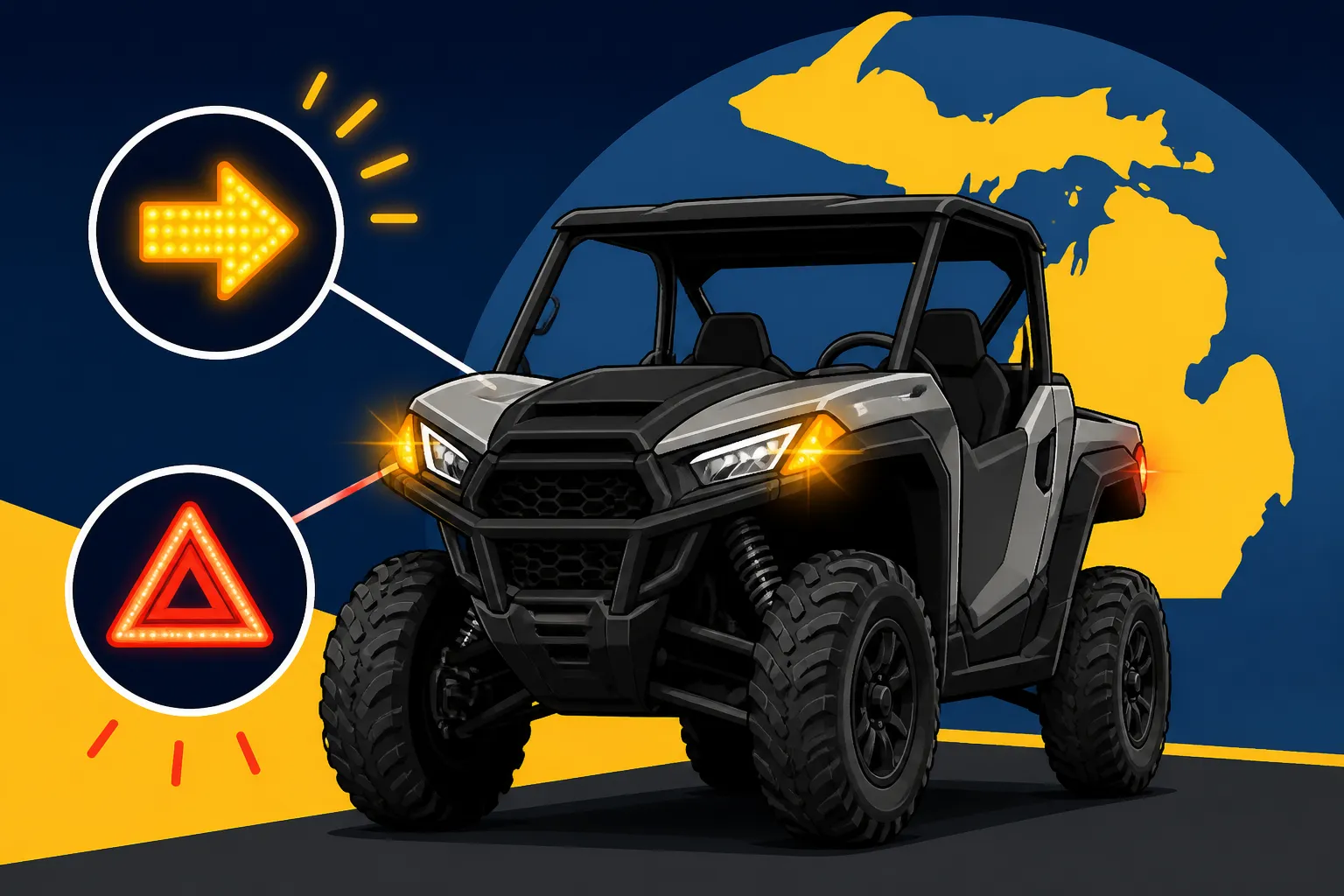
Michigan law, like most states, specifies that turn signals must be visible from both the front and rear of the vehicle. For ORVs, this typically means a minimum of two amber lights mounted on the front and two amber lights mounted on the rear. These lights need to be clearly visible from specific distances, both in daylight and at night. They must flash at a consistent rate – not too fast (indicating a bulb out) and not too slow. You'll need a control switch, usually a handlebar-mounted rocker or a steering column-mounted lever, that allows you to activate the left or right signal independently. This switch should also include an "off" position and ideally, a hazard light function.
Most aftermarket turn signal kits designed for UTVs, such as those from SuperATV, come with all the necessary components: the LED lights, wiring harness, a flasher relay, and a control switch. The lights themselves should ideally be DOT (Department of Transportation) compliant, ensuring they meet minimum brightness and visibility standards. When you present your UTV for a [Michigan Street-Legal UTV Inspection at the Secretary of State], the inspector will check not just that the lights are present, but that they function correctly, are mounted securely, and are visible from all required angles. An improperly installed or poorly visible light will not pass muster, forcing you to go back to the drawing board.
Hazard Lights: When and Why You Need Them
Beyond individual turn signals, Michigan also requires that street-legal vehicles be equipped with hazard warning lights, often called "four-way flashers." This system simultaneously flashes all your turn signal lights – both front and rear – to indicate a disabled vehicle, a temporary obstruction, or an emergency situation. Think of it as a universal signal for "caution, there's a problem here."
You'll need your hazard lights if you break down on the side of a road, even if it's just a quick stop due to a flat tire or a minor mechanical issue. They're also vital if you're operating your UTV very slowly, perhaps moving oversized farm equipment or towing something that significantly impedes your speed, particularly at dawn, dusk, or in inclement weather. These lights significantly increase your visibility to other drivers, giving them ample warning to slow down and proceed with caution. This is especially critical on rural roads where speed limits are higher and unexpected obstructions can be extremely dangerous. Without functional hazard lights, you could be cited for failing to equip your vehicle properly and, more importantly, put yourself and others at a much higher risk of an accident.
Choosing the Right Turn Signal Kit for Your UTV
Deciding to make your UTV street-legal in Michigan is a big step, and choosing the right turn signal kit is a critical part of that process. With so many options available, it can feel a bit overwhelming, but understanding the differences between universal and vehicle-specific kits, and knowing what features to prioritize, will help you make an informed decision.
Universal vs. Vehicle-Specific Kits
When you start looking for turn signal kits, you'll generally find two main categories: universal kits and vehicle-specific kits. Each has its own set of advantages and disadvantages.
Universal kits are often more budget-friendly and designed to work across a wide range of UTV makes and models. They usually come with generic components that you'll need to adapt to your specific machine. This can involve more custom wiring, drilling new holes for light mounts, and finding creative ways to secure the switch and relay. While this flexibility can be appealing for the DIY enthusiast who enjoys a challenge and wants to save a few bucks, it can also lead to a more time-consuming and potentially frustrating installation process if you're not experienced with automotive wiring. You might end up spending more time troubleshooting or buying additional connectors and hardware to get everything just right.
On the other hand, vehicle-specific kits are tailored to a particular UTV model, such as a Polaris RZR, Can-Am Defender, or Yamaha Wolverine. These kits, like the ones offered by SuperATV, are designed to be plug-and-play as much as possible, often utilizing existing wiring harnesses, factory mounting points, and switches that integrate seamlessly into your dashboard or steering column. This makes installation significantly easier and faster, often requiring minimal cutting or splicing. While vehicle-specific kits tend to come with a higher price tag, the convenience, integrated look, and reduced installation hassle often make them a worthwhile investment for many owners. They also reduce the likelihood of issues arising during the [Michigan Assembled Vehicle Title Application] process, as the components are designed for direct fitment and compliance.
Key Features to Look For in a Quality Kit
Once you've decided between universal and vehicle-specific, it’s time to zero in on the features that truly matter for a street-legal UTV in Michigan. After all, this isn't just about functionality; it's about durability, visibility, and ease of use.
First and foremost, look for durability. Your UTV is built for rough conditions, and its turn signals should be too. Seek out lights with robust, weatherproof housings that can withstand mud, water, dust, and vibrations inherent to off-road riding. LED lights are almost universally preferred today due to their superior brightness, lower power draw, and longer lifespan compared to traditional incandescent bulbs. Ensure the LEDs are bright enough to be clearly visible in broad daylight, even against a bright sun, which is crucial for safety on busy roads. The switch mechanism is also important: do you prefer a simple rocker switch mounted on the dash, or a steering column-mounted lever that mimics a car's turn signal? Consider what feels most natural and safest for you to operate while driving. Many kits also integrate a horn into the same control module, which is another requirement for street-legal builds, so an all-in-one solution can simplify your wiring and dash clutter.
Finally, think about the overall quality of the wiring harness and connectors. A good kit will have well-insulated wires, waterproof connectors, and clear instructions. While it might seem like a minor detail, a high-quality harness will prevent frustrating electrical issues down the line. A reliable kit will also likely be more compliant with DOT standards, meaning fewer headaches when it comes time for inspection. Investing in a quality kit from a reputable brand means you’re getting components that are designed to last and perform under the challenging conditions that street-legal UTVs face in Michigan. You're preparing for years of safe road riding, not just a single inspection. You can see a basic breakdown of kit types below:
| Feature | Universal Turn Signal Kit | Vehicle-Specific Turn Signal Kit |
|---|---|---|
| Compatibility | Designed for broad fitment across many models | Tailored for a specific make/model of UTV |
| Installation Difficulty | Often requires more custom work, drilling, wiring | Typically plug-and-play, uses existing points |
| Cost | Generally lower upfront cost | Usually higher upfront cost |
| Included Components | Basic lights, generic switch, flasher, wiring | Lights, custom switch, flasher, model-specific harness |
| Customization Potential | High, allows for unique light placement | Lower, designed for factory-like integration |
| Brand Examples | Basic kits, various generic suppliers | SuperATV, Moose Utility, XTC Power Products, Ryco |
Installation Tips and Common Pitfalls
Installing turn signals and hazard lights on your UTV might seem daunting, but with a bit of planning and attention to detail, it's a perfectly achievable DIY project. However, rushing through it or cutting corners can lead to frustrating electrical gremlins or even safety issues. Here's what you need to know to get it right.
Planning Your Wiring and Mounting Points
Before you even unbox your kit, take some time to plan. Unroll your wiring harness and lay out your components. Think about where each light will go. Front lights need to be clearly visible from the front and sides, usually mounted on the fender flares or brush guard. Rear lights need to be visible from the rear, often integrated into the taillight housing or mounted nearby. Ensure they are mounted at a consistent height and spacing for a professional, compliant look. When considering where to mount your lights, make sure they won't be easily damaged by trail debris, branches, or accidental bumps during regular use. Some owners opt for recessed mounts if possible to offer extra protection.
Now, for the wiring. Route your wires carefully, keeping them away from hot engine components, sharp edges, and moving parts. Use zip ties liberally to secure the harness every few inches, preventing it from chafing, sagging, or getting snagged. When you’re dealing with a Polaris Ranger, for example, many owners find success routing wires along the frame rails or through existing wire looms to keep them protected and out of sight. Remember, a good ground connection is absolutely critical for any electrical system. Ensure all ground wires are connected to a clean, unpainted metal surface on the frame. Scrape away any paint or rust to ensure a solid, reliable connection. If your kit includes a flasher relay, mount it in an accessible but protected location, like under the dash or in a sealed electrical box. Taking your time during this planning phase, and being meticulous with your wire routing and connections, will save you a world of headaches down the road. For specific guidance on connecting to existing systems, a guide like [Wiring Turn Signals on a Polaris Ranger] can be incredibly helpful, even if you own a different brand, as the principles often translate. Similarly, if you have a Can-Am, looking at resources like [Street-Legal Light Kit for a Can-Am Defender] can offer brand-specific insights into common mounting and wiring strategies.
Testing, Troubleshooting, and Maintenance
Once everything is wired up and mounted, it's time for the moment of truth: testing. Before you button everything up, turn on your UTV's ignition and test each turn signal independently. Does the front left flash? Does the rear left flash? Repeat for the right side. Then, activate your hazard lights. Do all four lights flash simultaneously and at a consistent rate? Don't forget to test your horn, if it's integrated into the same switch, as that's another crucial component of [Safety Glass, Mirrors and Horns: Michigan's Street-Legal List].
If you encounter an issue, don't panic. Start with the basics:
- No power at all? Check your main fuse. Many kits come with an inline fuse, or you might have blown a fuse in your UTV's fuse box.
- One light not working? Check the bulb or LED connection. Ensure it's plugged in correctly and securely grounded.
- All lights flash too fast/slow or not at all? This often points to a faulty flasher relay or an incorrect wiring to the flasher unit itself.
- Intermittent issues? Look for loose connections, corroded terminals, or chafed wires that might be shorting out.
After successful installation, don't just forget about your new signals. Regular maintenance is key. Periodically check all connections for tightness and corrosion, especially after heavy rain or mud rides. Clean the lenses of your lights regularly to ensure maximum brightness and visibility. The last thing you want is for an inspector to tell you your signals don't work during your [Michigan Street-Legal UTV Inspection at the Secretary of State]. Proactive checks can help you avoid common issues that could lead to your UTV failing the inspection, ensuring that you don't face the dreaded "What Fails a Michigan Assembled Vehicle Inspection" scenario.
Michigan Inspection and Beyond
You've put in the hard work, researched the components, chosen the right kit, and meticulously installed your turn signals and hazard lights. Now comes the moment of truth: getting your street-legal UTV approved by the Michigan Secretary of State. But the journey doesn't end there; knowing how to use these new features responsibly on the road is just as important as having them.
What the Secretary of State Looks For
When you bring your UTV in for its assembled vehicle inspection – a crucial step in the [Michigan's Assembled Vehicle Route for a UTV] process – the inspector isn't just checking a box. They are performing a thorough visual and functional assessment to ensure your vehicle meets all state requirements for road use. Your turn signals and hazard lights will be under close scrutiny. The inspector will confirm that you have both front and rear amber lights that are clearly visible from appropriate distances. They will ask you to activate your left signal, then your right signal, and finally, your hazard lights.
The lights must flash consistently, not too rapidly or too slowly, and all bulbs (or LEDs) must be fully functional. They'll check that the switch is accessible and easy to operate from the driver's seat. Beyond functionality, the inspector will also look at the mounting. Are the lights securely attached? Are they positioned correctly to be seen by other drivers? Any loose wiring, improperly aimed lights, or non-functioning signals will be a red flag. It's a good idea to perform your own pre-inspection checklist, going through every required item, including your turn signals and hazard lights, to ensure everything is in perfect working order. This attention to detail will help ensure a smooth inspection process and avoid delays in getting your street-legal title. Knowing what's expected is half the battle when converting your UTV, and understanding that things like turn signals are non-negotiable elements is key.
Riding Responsibly with Your New Signals
Congratulations! Your UTV is now fully equipped with functional turn signals and hazard lights, and you’ve passed inspection. But having these features is only half the battle; the other half is using them correctly and consistently every single time you hit a public road. A turn signal is only effective if it's activated early enough to give other drivers time to react. Don't wait until you're already braking or turning to flick the switch. Engage your signal well in advance of your maneuver, giving other motorists ample warning of your intentions.
Remember that while your UTV is street-legal, it's still a unique vehicle on the road. Many drivers may not be accustomed to sharing the asphalt with a side-by-side. Use your signals to communicate clearly and confidently. If you need to slow down suddenly, perhaps to make a turn onto a tight trail access point, make sure your brake lights are working, and your turn signal is activated. If you encounter an unexpected issue on the road, immediately engage your hazard lights to warn oncoming and trailing traffic. This is crucial for your safety and the safety of everyone else on the road. Being a responsible and predictable driver is the best way to earn respect from other road users and ensures you avoid unwanted attention from law enforcement, which could result in [Tickets Deputies Write for Road Riding]. Think of your turn signals and hazard lights as an extension of your driving etiquette – they are essential tools for clear communication and safe passage on Michigan's roads.
Disclaimer
This article is for general informational purposes only and does not constitute professional advice. Laws, prices and regulations vary by location and change over time. Consult a qualified professional for guidance on your specific situation.