Michigan Street-Legal UTV Inspection at the Secretary of State
Trying to make your UTV street-legal in Michigan can feel like navigating a maze blindfolded. You've heard about the "assembled vehicle" route, and you know it means a trip to the Secretary of State, but the specifics of that inspection process can be incredibly confusing and frankly, a bit intimidating. This guide is here to demystify the Michigan Street-Legal UTV Inspection at the Secretary of State, walking you through everything you need to know to get your off-road machine ready for the pavement.
Understanding Michigan's Assembled Vehicle Route for UTVs
Michigan offers a specific pathway for vehicles not originally manufactured for on-road use to become street-legal: the "assembled vehicle" designation. This isn't just a simple title transfer; it's a complete reclassification of your UTV in the eyes of the state. It's a critical step that allows you to legally drive your side-by-side on approved Michigan roads, which opens up a whole new world of adventure, from accessing trailheads more easily to just cruising through town. Without this process, your UTV is strictly limited to off-road environments or very specific, limited road use under ORV regulations.
The process of converting your UTV to an assembled vehicle involves demonstrating that it meets a strict set of safety and equipment standards designed for on-road travel. This isn't about getting an ORV sticker; it's about getting a standard license plate, just like a car or truck. The state wants to ensure that any vehicle sharing public roads is safe for both its occupants and other drivers. It's a significant undertaking, but the payoff in terms of versatility and convenience for your UTV is well worth the effort for many Michigan riders.
Why the SOS Inspection is Necessary
The Secretary of State (SOS) inspection serves as the official checkpoint to ensure your UTV meets all the criteria for an "assembled vehicle." This isn't a rubber-stamp process; it's a thorough examination by an SOS employee or a designated third-party inspector to confirm that your UTV is equipped with all the required safety features and components. They're looking for everything from proper lighting to functional brakes, and they'll cross-reference these against Michigan's specific street-legal requirements. Without this inspection and approval, you simply cannot obtain an assembled vehicle title or a standard license plate for your UTV.
Think of it this way: when you buy a brand new car, it's already designed and certified to meet federal and state safety standards for road use. A UTV, however, is typically sold as an off-road machine, so it hasn't gone through that same certification. The SOS inspection bridges that gap, providing the state's assurance that your modified UTV is now safe for shared public roads. It's a vital step in transforming your trail-blazer into a versatile road-going machine, and it's where many hopeful UTV owners find their first real hurdle. You can learn more about the overall process in [Michigan's Assembled Vehicle Route for a UTV].
The Difference Between an ORV Title and an Assembled Vehicle Title
It's crucial to understand that an ORV (Off-Road Vehicle) title and an assembled vehicle title are fundamentally different in Michigan, governing entirely separate uses for your machine. An ORV title simply identifies you as the owner of an off-road vehicle and is necessary for obtaining your annual ORV license sticker and trail permit, allowing you to ride on designated trails and areas. It acknowledges your UTV as an off-road machine, plain and simple.
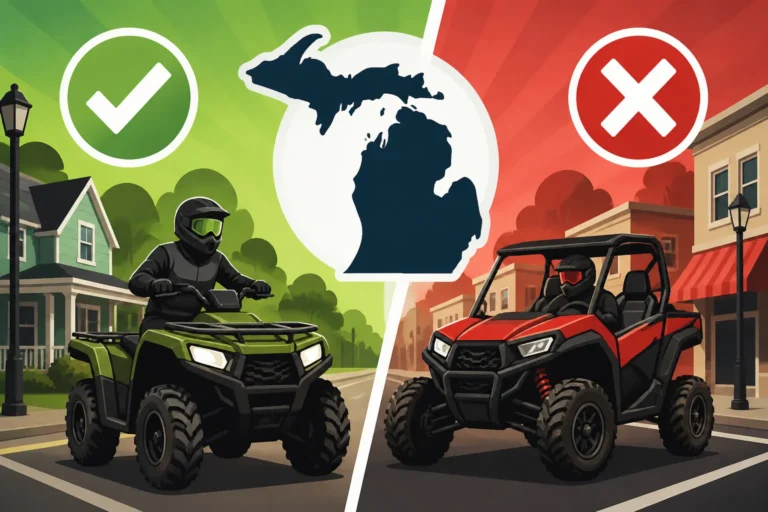
An assembled vehicle title, however, transforms your UTV into what the state considers a road-going vehicle. This title allows you to obtain a standard Michigan license plate, enabling you to legally drive on most county roads and certain state highways, subject to local ordinances and specific speed limits. This change in title classification means your UTV is now treated more like a car or truck in terms of road legality, insurance requirements, and safety inspections. You're moving from a recreational off-road designation to a street-legal vehicle status, which carries different responsibilities and opens up broader access to Michigan's road network.
| Feature | ORV Title | Assembled Vehicle Title (Street Legal UTV) |
|---|---|---|
| Primary Use | Off-road trails, scramble areas, private land | Public roads, designated ORV routes, private land |
| Required Permit | ORV License & Trail Permit | Standard Michigan License Plate |
| Road Access | Limited to specific ORV routes/shoulder use | Most county roads, specific state highways (25 mph) |
| Insurance | ORV-specific or homeowners rider | Michigan No-Fault (like a car) |
| Inspection Needed | No (for title/registration) | Yes, by Secretary of State or authorized inspector |
| Vehicle Type | Off-Road Vehicle | Assembled Vehicle (Low-Speed Vehicle/UTV) |
What You Need Before Your Inspection Appointment
Before you even think about calling the Secretary of State for an inspection, your UTV needs to be fully prepared and equipped to meet Michigan's street-legal standards. Many folks get excited about the idea of road-legal riding and rush into the appointment, only to be turned away because they missed a critical component. This pre-inspection preparation is arguably the most important part of the entire process, as it directly impacts your success rate. Failing the inspection means more time, more money, and more frustration, so it's best to be meticulous here.
You'll need to gather a specific set of documents that prove ownership and show the history of your UTV. Beyond the paperwork, your actual machine needs a host of modifications to make it compliant with road-going vehicle requirements. This isn't just about slapping on a few lights; it's about integrating essential safety features that ensure your UTV can safely navigate public roads alongside other traffic. Taking the time to properly prepare will save you countless headaches down the line and ensure a smoother inspection experience.
Essential Documents and Proof of Ownership
When you head to your Secretary of State appointment for an assembled vehicle inspection, think of it like applying for a passport – you need to have all your ducks in a row with the paperwork. The SOS staff needs to establish a clear chain of ownership and understand the history of your UTV, especially since it's undergoing a significant reclassification. Missing even one document can mean a wasted trip, forcing you to reschedule and gather the necessary information.
You'll definitely need your original ORV title for the UTV, or if it was recently purchased, the previous owner's properly signed-over title. If you bought it new or built it from scratch, you'll need the Manufacturer's Certificate of Origin (MCO) or all relevant receipts for major components if it’s a true homemade build. Additionally, any bills of sale from previous transactions are crucial to prove how you acquired the machine. The state needs to see who owned it, when, and how it came into your possession. You'll also need a completed [Michigan Assembled Vehicle Title Application], which will require detailed information about your UTV and the modifications made. Keep all these documents organized in a folder, perhaps with copies of your driver's license and proof of Michigan residency, to present to the examiner.
Key Components for Street-Legal Compliance
This is where the rubber meets the road, quite literally. Michigan has a specific list of equipment your UTV must have to be deemed street-legal. Don't guess; make sure every single item is installed and fully functional. The inspector will go through this list with a fine-tooth comb. First and foremost, you'll need working headlights and taillights, capable of illuminating the road and making your UTV visible from behind. But it doesn't stop there.
You'll need functional brake lights that activate when you press the brake pedal, and crucially, turn signals on both the front and rear of your machine. These are often integrated into aftermarket kits, and brands like SuperATV offer comprehensive street-legal kits designed to meet these exact requirements, taking a lot of the guesswork out of piecing components together. A horn, loud enough to be heard by other drivers, is also mandatory. Your UTV must be equipped with at least one rearview mirror, typically on the driver's side, providing a clear view to the rear, though many riders opt for two for better visibility.
Additionally, your UTV needs a windshield made of safety glass – not just Plexiglass or Lexan, which often won't pass inspection due to shatter resistance. While goggles are sufficient for off-road ORV use, for street-legal status, a proper windshield is often expected, or you must explicitly be prepared to confirm proper eye protection will always be worn. There must be a speedometer to gauge your road speed and a functional parking brake to secure the vehicle when stopped. Tires must be DOT-approved, meaning they are rated for highway use, and you'll need seatbelts for all seating positions. Understanding [Safety Glass, Mirrors and Horns: Michigan's Street-Legal List] is essential.
Navigating the Secretary of State Appointment and Inspection
You've done the hard work of modifying your UTV and gathering your documents. Now comes the moment of truth: the actual appointment at the Secretary of State. This step can feel a bit daunting, especially if you're not sure what to expect. Rest assured, while it's a formal process, it's designed to ensure public safety, not to trip you up. Knowing the steps, from scheduling to the actual inspection, can help alleviate much of the stress and make the experience go much more smoothly.
It's important to remember that not all SOS branches handle assembled vehicle inspections, so a bit of research and planning is required. Once you're there, the inspection itself is a detailed check of your UTV's modifications against state law. Being prepared for what the examiner will look for can make a world of difference in passing the first time around.
Scheduling and What to Expect at the Branch
Scheduling your assembled vehicle inspection isn't like walking into any SOS branch for a driver's license renewal. These inspections are specialized services, and not all locations are equipped to handle them. You'll typically need to call ahead or check the Michigan SOS website to find a branch that offers "assembled vehicle inspections" or "VIN inspections" for custom builds. Once you've identified the correct branch, you'll need to schedule an appointment. These appointments can sometimes be booked out a few weeks, so plan accordingly and don't wait until the last minute if you have a specific timeline in mind. Knowing where and how to schedule your visit for [Michigan Secretary of State Appointments for ORV Title Work] is key.
On the day of your appointment, arrive a little early with your UTV, ready for inspection. You'll likely be directed to a specific area in the parking lot where the inspection takes place, or you might be asked to drive it into a designated bay. The SOS personnel will greet you, verify your appointment, and direct you on the next steps. Be polite, patient, and have all your documents readily accessible. They are there to do a job, which is to ensure your vehicle meets all legal requirements before it hits the road.
The Inspection Process: What the Examiner Looks For
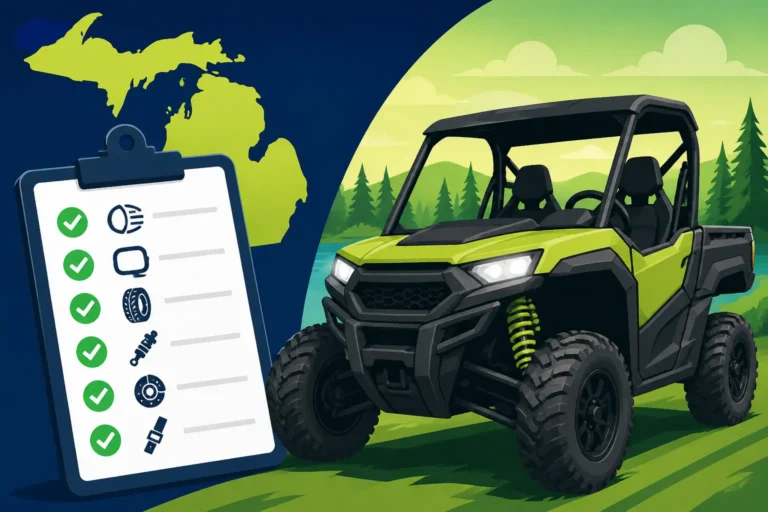
During the inspection, the SOS examiner will go through a detailed checklist to verify that your UTV meets all the street-legal requirements we discussed earlier. They will physically examine each component on your UTV, testing its functionality and ensuring it's installed correctly. For instance, they'll check your headlights and taillights, making sure they illuminate properly. They'll activate your turn signals to confirm all four corners flash as required and listen for the horn to verify it's loud enough.
Expect them to check your brake lights by having you press the brake pedal, and they'll confirm your mirrors provide adequate rear visibility. The windshield will be scrutinized for material and clarity, and they will want to see that your speedometer is present and functional. They'll also verify seatbelts are installed for all seating positions and that your tires bear the proper DOT rating for road use. Beyond the components, they will also verify the Vehicle Identification Number (VIN) on your UTV against your documentation. It’s essentially a comprehensive safety check, so familiarize yourself with the [Michigan Street-Legal UTV Inspection Checklist] beforehand. Any missing or non-compliant item will likely result in a failed inspection, requiring you to fix the issue and reschedule.
Common Pitfalls and How to Avoid Them
Even with careful preparation, it's easy to overlook small details that can derail your street-legal UTV inspection. Many riders go into the process with good intentions, only to find themselves frustrated by a seemingly minor issue that forces them to go back to the drawing board. Understanding these common pitfalls ahead of time can save you significant time, money, and stress. The goal is to pass the inspection on your first attempt, getting your license plate and hitting the road as quickly as possible.
From incorrect paperwork to overlooked equipment requirements, these hurdles are common, but entirely avoidable with proper knowledge. By anticipating these challenges, you can double-check your work and ensure your UTV is truly ready for the road, and for the scrutiny of the Secretary of State examiner.
Mistakes That Lead to Inspection Failure
One of the most frequent reasons for a failed assembled vehicle inspection is simply having the wrong type of equipment. For example, installing a simple plastic windshield that isn't rated as safety glass is a common error. While it might look the part, it won't pass the state's stringent requirements for on-road safety. Similarly, using non-DOT approved tires, even if they're aggressive off-road tires, will result in immediate failure because they aren't certified for highway speeds and conditions. It's crucial to invest in components specifically designed for street-legal conversions. Companies like SuperATV specialize in these types of kits, offering components that are typically designed with compliance in mind, which can be a huge help.
Another common pitfall involves the functionality of electrical components. A turn signal that doesn't blink, a brake light that's out, or a horn that barely whispers are all grounds for failure. Before your appointment, rigorously test every single light, switch, and safety device. Don't assume everything works just because it's new. Wiring issues are surprisingly common after an extensive install, so check connections and ensure proper operation. Finally, don't forget the small details like ensuring your VIN is clearly visible and matches your paperwork exactly; any discrepancy here can also cause a delay or failure. Reviewing [What Fails a Michigan Assembled Vehicle Inspection] can give you a clear picture of what to avoid.
Post-Inspection Steps and Getting Your Plate
Congratulations, you've passed the inspection! That's a huge hurdle cleared, but you're not quite done yet. After a successful inspection, the SOS examiner will provide you with the necessary paperwork, typically an inspection certificate or a signed-off application, confirming your UTV meets the street-legal criteria. This document is critical because it allows you to complete the final steps of titling and plating your UTV.
You'll then proceed to the main counter inside the Secretary of State branch (or sometimes it's all handled in one spot) to officially apply for your assembled vehicle title and a standard Michigan license plate. You'll present your inspection certificate, your original UTV title (or proof of ownership), and your driver's license. This is also when you'll pay the applicable fees, including the title transfer fee, plate fee, and any sales tax or use tax if applicable. Once processed, you'll typically receive your new assembled vehicle title in the mail within a few weeks, and you'll walk out with your new license plate in hand, ready to mount it on your now street-legal UTV. You might also want to look into [Insurance a Michigan Street-Legal UTV Needs] right after getting your plate.
Costs and Timeframes for the Street-Legal Conversion
Converting your UTV to a street-legal machine in Michigan is an investment, both in terms of money and time. It's not a quick or free process, and understanding the potential financial implications and the timeline involved can help you plan realistically. Many enthusiasts are eager to hit the roads with their UTVs, but the process does require patience and a budget for all the necessary modifications and state fees.
From the components you need to purchase for conversion to the fees charged by the state, these costs can add up. Similarly, the time it takes isn't just about the labor you put in, but also about waiting for appointments, parts, and processing by the state. Being fully aware of these aspects will prevent any unwelcome surprises along your journey to street-legal status.
Fees Associated with the Inspection and Titling
When you embark on the journey of making your UTV street-legal, there are several fees you'll encounter at the Secretary of State. First, there's usually a specific fee associated with the assembled vehicle title application itself. This is distinct from the standard ORV title fee and reflects the state's process for reclassifying your vehicle. Then, you'll pay a fee for the standard Michigan license plate, which is typically an annual charge, similar to what you'd pay for a car or truck plate.
Beyond these basic fees, if you bought your UTV recently or are just titling it for the first time as an assembled vehicle, you might owe sales tax or use tax on the purchase price if you haven't already paid it. This is Michigan's way of collecting tax on the transaction, even if it wasn't purchased from a licensed dealer who collected it at the point of sale. These costs can fluctuate, so it's always wise to check the current rates on the Michigan Secretary of State website or by calling a branch. The [Michigan Assembled Vehicle Title Cost] outlines these fees in more detail.
How Long a Street-Legal UTV Conversion Takes
The total time it takes to get your UTV street-legal in Michigan can vary significantly, depending on several factors. The first major variable is the extent of modifications your UTV needs. If you're starting with a bare-bones off-road machine and need to add everything from a windshield to turn signals, this can involve several weekends of work, especially if you're doing the installation yourself. Waiting for aftermarket parts to arrive, particularly specialized street-legal kits from providers like SuperATV, can also add to this timeframe.
Once your UTV is fully equipped, the next variable is the wait time for a Secretary of State appointment. As mentioned, these specialized inspections can have a lead time of a few weeks. After a successful inspection, the actual processing of your new assembled vehicle title and the mailing of the physical document typically takes a couple of weeks. So, from the moment you decide to go street-legal to the day you have your new title in hand, you're likely looking at a process that could range from a few weeks to a couple of months, depending on your efficiency and the state's processing times. For a more detailed breakdown, consider reading [How Long a Street-Legal UTV Conversion Takes].
Disclaimer
This article is for general informational purposes only and does not constitute professional advice. Laws, prices and regulations vary by location and change over time. Consult a qualified professional for guidance on your specific situation.