Which Michigan Roads Allow ORVs
It's incredibly frustrating when you just want to enjoy your off-road vehicle in Michigan, but the rules about where you can legally ride on public roads feel like a constantly shifting puzzle. One county might welcome your ORV with open arms, while the very next township has a strict ban in place. This guide is here to help you unravel the complexities of Michigan's ORV road laws, offering clarity on where you can, and more importantly, where you can't, take your ATV or UTV.
The Patchwork Quilt of Michigan ORV Road Laws
Michigan is a beautiful state, rich with diverse terrain perfect for off-road adventures. However, the laws governing where your ORV can legally operate on public roads are anything but straightforward. It’s not a single, unified statewide policy but rather a complex blend of state statutes, county ordinances, and even local township or city regulations. This creates a "patchwork quilt" effect, where knowing the rules demands a bit of homework before you hit the throttle.
Why It's So Confusing for Riders
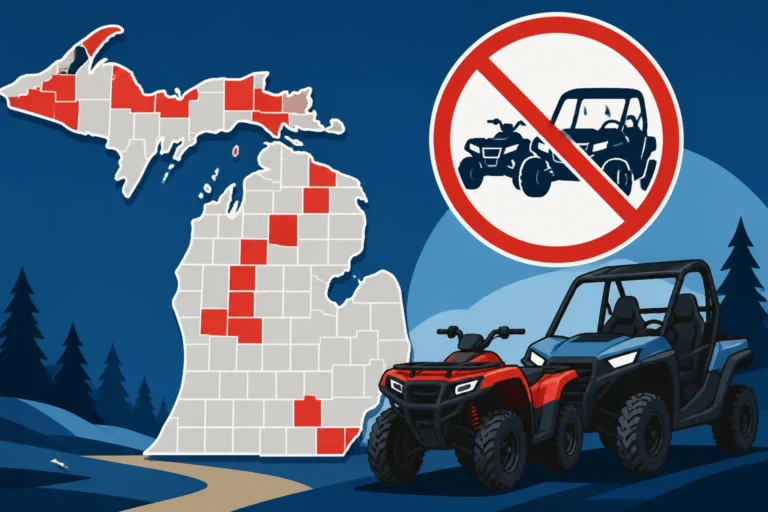
The primary source of confusion stems from the layers of authority that dictate ORV access. The Michigan Legislature sets the foundational laws, but then individual counties have the power to "opt in" or "opt out" of allowing ORVs on their specific road systems through local ordinances. To add another layer, cities and townships often have their own municipal codes that can further restrict or permit ORV use within their boundaries.
Imagine you're planning a trip from one side of a county to another, perhaps trying to connect two different trail systems or simply get from your cabin to the nearest gas station. What was perfectly legal on one segment of your journey might become a ticketable offense just a mile down the road if you cross into a different jurisdiction with stricter rules. This inconsistency can be incredibly disheartening and can lead to unintentional violations for even the most well-meaning riders. It’s enough to make you want to throw your hands up in exasperation!
The Fundamental State Laws for ORV Operation
At its core, Michigan's ORV Act provides the baseline framework. Generally speaking, state law prohibits ORV operation on the "maintained portion" of public roads, meaning the paved or graveled travel lanes. This is the default rule. However, the Act also establishes a mechanism for local governmental units – primarily counties – to adopt ordinances that allow ORVs on specific county roads or shoulders under certain conditions.
These state-level rules typically mandate certain safety equipment, such as a spark arrester, a muffler in good working order, and proper lighting if riding at night. Riders are also required to have a valid [Michigan ORV License and Trail Permit Explained] and, for younger operators, an ORV safety certificate. These fundamental state requirements apply regardless of whether a local ordinance opens up a road. Without these basic compliance steps, even riding on an "allowed" road would be illegal.
County Roads: Where the Action (Sometimes) Is
For many ORV enthusiasts in Michigan, county roads represent the sweet spot for expanding their riding opportunities beyond dedicated trails. But it's a significant "sometimes," as not all counties have embraced ORV road use, and those that have often come with specific stipulations.
How Counties Adopt ORV Ordinances
The process for a county to allow ORVs on its roads typically involves the county Board of Commissioners. They must deliberate, hold public hearings to gather input from residents, law enforcement, and ORV groups, and then vote to adopt an ordinance. This isn't a quick process, and it often reflects a balance between promoting tourism and recreation, and addressing concerns from residents about noise, safety, and property values.
Once adopted, these ordinances are critical. They usually specify which types of county roads are open (e.g., all roads except state highways, or only certain designated routes), the permissible hours of operation, speed limits (often mirroring the state's 25 mph guideline for ORVs on roads), and any unique local requirements. Some ordinances might even define which months of the year ORV riding is permitted, though this is less common.
Identifying Allowed County Roads
This is where your diligence really pays off. The general rule of thumb in Michigan is that if a county road isn't explicitly opened for ORV use by a local ordinance, it remains closed. You cannot assume anything. The best way to identify allowed roads is by checking the specific county's website, often under the Sheriff's Department or County Clerk's section. Many counties that allow ORVs will also post signs at their borders or along designated routes, clearly indicating where ORV operation is permitted.
These signs are your best friends on the trail. Look for white signs with green lettering that say "ORV Route" or similar. However, even with signs, it’s always wise to cross-reference with an official map or ordinance to ensure you’re on the right track. For instance, [Houghton County ORV Road Rules] might differ significantly from [Calhoun County ORV Ordinance], so you can't rely on knowledge from one area applying to another. Many savvy riders use apps like onX Offroad or download official DNR maps to their devices, making it easier to see the permitted routes in real time.
General Rules on County Roads If Permitted
If you find yourself in a county that has opened its roads to ORVs, there are still crucial rules to follow to ensure your safety and legality. Firstly, speed limits are almost universally lower for ORVs on these roads, often capped at [Michigan's 25 mph Limit on County Roads], even if the posted speed limit for cars is higher. This isn't just a suggestion; it's a legal requirement designed to ensure safety for both ORV operators and other road users.
Secondly, ORVs are typically required to operate on the far right of the [Michigan Road Shoulder vs Maintained Portion] of the road, if a shoulder exists, or as far to the right as practicable on the maintained portion. This means staying out of the primary travel lane as much as possible, yielding to vehicle traffic. You’re expected to travel single file and exercise extreme caution. Proper lighting – headlights and taillights – is mandatory, especially during the hours of dusk, dawn, or anytime visibility is low. Riders are also expected to have their machines equipped with a properly functioning spark arrester and muffler to keep noise levels respectful for nearby residents.
Township and City Streets: Often a No-Go Zone
While some counties have embraced ORV road use, getting your off-road machine onto smaller township and city streets is generally a much tougher proposition. These more densely populated areas often have different priorities and concerns, leading to more restrictive policies.
Why Most Municipalities Restrict ORVs
The primary reasons cities and townships tend to restrict ORV access revolve around public safety, noise pollution, and traffic management. In residential areas, the loud engines and distinct rumble of ORVs can be a major nuisance to homeowners, especially early in the morning or late at night. There's also the legitimate concern about increased traffic and potential accidents in areas with more pedestrians, cyclists, and cars.
Many municipal planners simply weren't designing their street networks with ORV access in mind, and the infrastructure might not be suitable for mixed-use traffic that includes off-road vehicles. While ORVs are designed for rugged terrain, the hard pavement of city streets can also be tougher on their components, leading to faster wear and tear, which in turn might lead to more breakdowns and road hazards. It's a complex equation that often tips towards restriction in urban and suburban settings.
Exceptions: Special Ordinances and Access Points
Despite the general prohibitions, some smaller, more recreation-focused towns and townships in Michigan have adopted ordinances that do allow ORVs on their local streets. These are often communities that directly abut popular trail systems or are located in areas where ORV tourism is a significant economic driver. For example, you might find specific ordinances like those mentioned in [Michigan Townships That Opened Their Streets to ORVs], allowing riders to access local businesses, restaurants, or fuel stations.
These exceptions are usually very specific, designating particular streets as "ORV access routes" or providing for limited travel to connect to trails or services. Riders are typically expected to adhere to strict rules, including reduced speed limits, operating only during specific hours, and parking responsibly. Knowing [ORV Parking Rules Downtown] can be crucial in these areas; you can't just leave your side-by-side wherever you please. These communities understand that being ORV-friendly can be a huge benefit for their local economy, but they also balance that with the needs of their year-round residents.
How to Confirm Local Rules
When it comes to township and city streets, you absolutely cannot rely on county ordinances alone. A county might allow ORVs on its roads, but a city within that county could still ban them completely on its municipal streets. This is why checking with the specific township or city clerk's office is paramount. Many municipalities publish their ordinances online, often on their official government websites.
It's tempting to rely on what other riders say or what you see happening, but that can lead to costly tickets. Law enforcement officers enforce local ordinances, and ignorance of the law is never an excuse. A quick phone call or email to the local authorities before your trip can save you a lot of grief and ensure your adventure stays on the right side of the law. Always seek official, written information, rather than word-of-mouth.
State Trunk Lines and Highways: Strictly Off-Limits (Mostly)
When it comes to the major arteries of Michigan's transportation network – the state trunk lines and interstate highways – the rules for ORVs are much clearer and far more restrictive. For the most part, these roads are a definitive "no-go" for off-road vehicles.
The Absolute Prohibition
Michigan law explicitly prohibits ORV operation on the main travel lanes of state trunk lines, which are designated as M-routes (e.g., M-28), U.S. routes (e.g., US-2), and interstate highways (e.g., I-75). These are high-speed roads designed for conventional motor vehicles, and ORVs simply aren't built or equipped for safe travel at those speeds or amidst that volume of traffic.
The safety concerns are paramount here. ORVs typically have a lower top speed, different braking characteristics, and less protection for occupants compared to cars or trucks. Introducing them to high-speed traffic lanes would create an unacceptable risk of serious accidents. Therefore, this prohibition is pretty much universal across the state, with very, very limited exceptions that don't apply to general riding.
Crossing State Highways: A Limited Exception
While riding on a state highway is forbidden, there are specific, highly regulated exceptions for crossing them. If a designated ORV trail or route needs to continue on the other side of a state highway, Michigan law permits riders to cross at a 90-degree angle to the highway, only after coming to a complete stop and yielding to all oncoming traffic. This is not a casual maneuver; it requires extreme caution and a full understanding of the risks involved.
You must choose a safe crossing point, ensure clear lines of sight, and complete the crossing as quickly and directly as possible. Lingering on the shoulder or attempting to ride along the highway, even for a short distance, is strictly prohibited. Understanding the precise rules for [Crossing a State Highway on an ORV in Michigan] is vital for any rider whose route might intersect with these major roads. Remember, safety always comes first, and a cautious approach is key when dealing with high-speed traffic.
Bridges and Causeways: A Strict No-No
Another critical area of prohibition for ORVs involves bridges and causeways, particularly those on state trunk lines. Generally, ORVs are not permitted on these structures. The reasons are multifaceted, including structural integrity concerns, narrow pathways that make safe passage impossible, and the simple fact that these are integral parts of the state's main road network, falling under the same restrictions as the highways they carry.
A prime example of this strict rule is the Mackinac Bridge. You simply cannot ride an ORV over it. The rules outlined in [Bridge and Culvert Crossings on ORV Routes] usually stem from engineering limitations, safety considerations, and the desire to maintain the flow of conventional traffic on these critical infrastructure links. It’s always best to assume a bridge or causeway is off-limits unless it’s explicitly signed as part of a designated ORV route, and even then, such instances are rare and usually limited to very short, local bridges rather than major structures.
Private Roads, Designated Trails, and Other Surfaces
Beyond the complexities of public roads, there are other surfaces where ORVs are commonly operated, each with its own set of rules and considerations. Understanding these distinctions is crucial for responsible riding.
Private Property and Private Roads
This is perhaps the simplest rule: you can ride your ORV on your own private property, or on private property belonging to someone else, provided you have their express permission. This permission is non-negotiable. Trespassing with an ORV is not only illegal but can severely damage relationships with landowners and contribute to a negative public perception of ORV enthusiasts.
Private roads, such as those within housing developments, private hunting clubs, or large parcel subdivisions, also fall under this category. While they might look like public roads, they are privately maintained and often have their own rules regarding ORV use, set by homeowners associations or property owners. Always clarify these rules beforehand, ideally in writing, to avoid any misunderstandings or conflicts. Just because a private road is ungated doesn't mean it's open season for ORVs.
The Vast Network of Michigan ORV Trails
Michigan boasts one of the most extensive ORV trail systems in the nation, offering thousands of miles of designated routes for every type of rider. This is where the majority of ORV recreation takes place and where you’ll find the most consistent rules. To legally ride on these state-managed trails, you are required to purchase a [Michigan ORV License and Trail Permit Explained]. This dual permit helps fund trail maintenance and development, ensuring these resources remain available for future generations.
These trails are clearly marked, and maps are readily available from the Michigan Department of Natural Resources (DNR). Riders often marvel at [Michigan's 4,000 Miles of ORV Trails Explained], which span diverse landscapes from the dense forests of the Lower Peninsula to the rugged terrain of the Upper Peninsula. Sticking to these designated trails is not just a legal requirement but also an ethical one, helping to prevent environmental damage and preserve natural habitats.
Special Use Areas: Sand Dunes and Scramble Areas
Michigan also offers unique riding opportunities in special use areas like sand dunes and scramble parks. The most famous of these is the [Silver Lake Sand Dunes: Michigan's Only Dune Ride], a sprawling expanse of shifting sands on the western side of the Lower Peninsula. Silver Lake has its own very specific set of rules and safety requirements, including mandatory whip flags, specialized permits, and often, certain vehicle modifications like roll cages.
Beyond Silver Lake, places like Holly Oaks ORV Park near Detroit provide purpose-built scramble areas with challenging terrain, obstacle courses, and designated open riding zones. These parks are designed for a variety of off-road vehicles and often have a tiered fee structure and specific operating hours. Each of these special areas has its own detailed rulebook, and it's essential to familiarize yourself with them before arriving, as they can differ significantly from general trail riding or road access regulations.
Understanding Street-Legal Conversions for ORVs
Given the complex web of ORV road laws, some riders choose to pursue a "street-legal" conversion for their UTVs. While this doesn't open up every road, it can significantly expand where you can legally operate your machine, particularly on local roads.
What "Street Legal" Really Means in Michigan
Making an ORV "street legal" in Michigan isn't as simple as just bolting on a few accessories. It involves reclassifying your UTV (ATVs are generally excluded from this process due to their inherent design) as an "assembled vehicle" or "specially constructed vehicle" with the Michigan Secretary of State. This process is rigorous and aims to ensure that the UTV meets the safety and equipment standards required of other vehicles on public roads. It's a formal recognition that your UTV is no longer just an off-road machine but also capable of safe, limited use on certain paved surfaces.
This process involves an inspection by a law enforcement officer, who verifies that all necessary equipment is present and functioning correctly. Once approved and titled as a street-legal vehicle, your UTV will typically be eligible for a standard license plate, allowing it to operate on most public roads where cars are allowed, with some important caveats about speed and road types (e.g., still no expressways).
Essential Equipment for Road Legality
To pass a street-legal inspection and be legally operated on public roads, a converted UTV needs a host of specific equipment that often isn't standard on an off-the-shelf ORV. This typically includes:
- Headlights: High and low beam functionality.
- Taillights and Brake Lights: Functional and visible.
- Turn Signals: Front and rear.
- Horn: An audible warning device.
- Mirrors: At least one rearview mirror, typically two side mirrors.
- Windshield: Made of safety glass (plexiglass is usually not allowed in Michigan).
- Windshield Wipers: Operational if a windshield is present.
- DOT-Approved Tires: Specifically designed for road use.
- Seat Belts: For all occupants.
- Speedometer: Functional and accurate.
- License Plate Mount and Light: To display the new street-legal plate.
Many riders turn to aftermarket providers like SuperATV for their conversion kits or individual DOT-approved parts, ensuring they meet the stringent requirements. The [Michigan Street-Legal UTV Inspection Checklist] is a comprehensive document that outlines everything you'll need to have in place to successfully navigate this process. Missing even one item can mean failing the inspection and having to reapply.
The Advantage of a Street-Legal UTV
The biggest advantage of converting your UTV to street legal status is the expanded road access. While it doesn't grant you permission to blast down I-75, it typically allows you to use paved and unpaved county roads, and often city/township streets that aren't specifically designated as ORV routes, provided they are not state highways. This can be a game-changer for riders who want to connect trails, access fuel or food in town, or simply enjoy a leisurely cruise on a quiet back road.
A street-legal UTV provides more flexibility and convenience, reducing the need to trailer your machine for short distances. It also simplifies interactions with law enforcement, as you're operating a vehicle that meets recognized on-road standards. Navigating the Secretary of State for this process can be involved, requiring meticulous documentation and patience, but for many, the freedom it offers is well worth the effort.
The Nuances: Farm Use, Golf Carts, and Exemptions
Michigan's ORV laws are further complicated by various nuances and specific exemptions, particularly concerning agricultural use and different types of recreational vehicles like golf carts. It's important not to lump all small, off-highway vehicles into the same "ORV" category, as their legal distinctions can be significant.
Agricultural Exemptions for Farmers
Farmers in Michigan often rely on ATVs and UTVs for daily operations, and state law recognizes this vital role. There are specific exemptions that allow farmers to operate ORVs on public roads for agricultural purposes. This usually means traveling between fields, transporting equipment, or accessing livestock, provided the ORV is being used for legitimate farm work and not for recreational riding.
These exemptions typically come with conditions, such as displaying a slow-moving vehicle emblem, using proper lighting, and adhering to specific times of day for operation. While [Do Farmers Need an ORV Title in Michigan?] might seem like a straightforward question, the answer often depends on the specific use case and whether the machine is primarily for off-road recreation or agricultural work. Farmers are expected to be responsible operators, minimizing disruption to traffic and ensuring their machines are safe for road use, even if they're not fully "street-legal" in the conventional sense.
Golf Carts and Low-Speed Vehicles (LSVs)
Golf carts and Low-Speed Vehicles (LSVs) are often mistakenly grouped with ORVs, but they are entirely different categories under Michigan law. While an ORV is designed for off-road terrain, a golf cart is primarily for golf courses and very limited street use, and an LSV is specifically designed for low-speed public road operation. The rules for [Michigan Golf Cart and Low-Speed Vehicle Rules] are distinct and separate from ORV regulations.
Golf carts are generally restricted to roadways with speed limits of 25 mph or less, and often only in municipalities that have passed specific local ordinances allowing them. They also have specific equipment requirements like lights, mirrors, and sometimes turn signals. LSVs, on the other hand, are four-wheeled vehicles with a top speed between 20 and 25 mph, equipped with full automotive safety features, and typically require registration and a license plate, allowing them broader access on low-speed public roads. Understanding these differences is crucial, as operating a golf cart where an ORV is allowed (or vice-versa) can still lead to a ticket.
Specific Examples of ORV-Friendly Regions
While general rules apply, it's worth noting that certain regions in Michigan have more fully embraced ORV road access due to their geography, economy, or culture. The Upper Peninsula, for instance, with its vast tracts of public land and fewer major highways, often presents a more ORV-friendly environment. Counties like Gogebic, Marquette, and Iron have extensive county road systems that are open to ORVs, allowing riders to seamlessly connect trails, access towns, and enjoy the scenery.
In these areas, you might find specific ordinances like [Gogebic County ORV Road Rules] or [Marquette County ORV Road Access] that facilitate extensive riding opportunities. These regions often see ORV tourism as a significant economic driver and have worked to integrate ORV use responsibly into their road networks. This makes them popular destinations for riders seeking multi-day adventures that combine trail riding with the convenience of road access to amenities.
Crucial Steps Before You Ride on Any Road
Before you even think about putting your ORV on a public road in Michigan, there are a few non-negotiable steps you need to take. Being prepared and informed isn't just about avoiding a ticket; it's about ensuring your safety and helping to maintain positive public perception for all ORV riders.
Check Local Ordinances Religiously
This cannot be stressed enough: always check the specific, current local ordinances for the county, township, or city you plan to ride in. A county might open its roads, but a specific township within that county could still ban ORVs on its streets. Rules can also change, so what was allowed last year might be prohibited today. The best way to find official information is through the county clerk's office, the sheriff's department website, or the specific municipal government's site.
Do not rely on outdated maps, informal advice from fellow riders, or simply what you think the rules might be. A quick phone call or a search of official government websites can save you a significant headache and potential fines. Being caught off-guard by a local ordinance is a common pitfall, so make this your absolute first step in planning any road-based ORV adventure.
Ensure Your ORV Meets State Requirements
Beyond local ordinances, your ORV itself must meet the state's baseline requirements for operation, especially if you plan to touch any public road. This includes having a valid [Michigan ORV License and Trail Permit Explained] clearly affixed to your machine. For youth riders, a [Michigan ORV Safety Certificate Requirements] is often mandatory.
Your machine must also be equipped with essential safety features. This means a working muffler, a U.S. Forest Service approved spark arrester to prevent wildfires, and proper lighting (headlights and taillights) if you plan to operate during hours of reduced visibility. If you're riding a UTV, ensuring all seatbelts are functional for all occupants is also critical. Neglecting these basic state requirements can lead to fines, even if you are on an otherwise permitted road.
Ride Responsibly and Be a Good Ambassador
Ultimately, the future of ORV road access in Michigan largely depends on how responsibly all riders conduct themselves. Excessive noise, tearing up property, disrespecting other road users, or riding off-route can quickly lead to negative public sentiment and prompt local governments to close roads that were once open.
Be mindful of your speed, especially in residential areas or near homes. Keep noise to a minimum by maintaining your muffler and avoiding aggressive driving. Always yield to pedestrians, cyclists, and conventional vehicle traffic. Stay on marked routes and respect private property boundaries. By demonstrating courteous and safe riding habits, you become an ambassador for the entire ORV community, helping to preserve and expand riding opportunities for everyone. We want more roads open, not fewer, and that starts with each of us.
Here’s a quick summary of general ORV road access in Michigan:
| Road Type | Typical ORV Access | Key Considerations |
|---|---|---|
| State Trunk Lines (M, US, I routes) | Generally Prohibited | Only permitted for direct 90-degree crossings at designated points, extreme caution needed. |
| County Roads | Permitted if county ordinance allows | Varies wildly by county. Often 25 mph limit, far right side of road/shoulder, requires local check. |
| Township/City Streets | Generally Prohibited | Unless specific local ordinance allows. Very restrictive in populated areas. Local check is critical. |
| Designated ORV Trails/Routes | Permitted | Requires Michigan ORV License & Trail Permit. Clearly marked, maps available from DNR. |
| Private Roads/Property | Permitted only with owner's permission | Strict adherence to owner's rules. Trespassing is illegal. |
| Special Use Areas (Dunes/Scramble Parks) | Permitted with specific site rules | Examples: Silver Lake Sand Dunes, Holly Oaks. Strict safety gear & permit requirements. |
| Street-Legal UTVs | Permitted on most roads (except state highways) after conversion | Requires inspection, reclassification, license plate. Still follow speed limits. (UTVs only) |
| Farm Use on Public Roads | Exemptions for legitimate agricultural purposes | Specific conditions apply (e.g., slow-moving vehicle emblem). Not for recreation. |
Disclaimer
This article is for general informational purposes only and does not constitute professional advice. Laws, prices and regulations vary by location and change over time. Consult a qualified professional for guidance on your specific situation.