NICB VIN Check for a Used ATV
Buying a used ATV or UTV in Michigan can feel like a high-stakes gamble. You're trying to snag a great deal on a machine that will bring you countless hours of fun on the trails, but there's always that nagging fear: what if it's a lemon? Or, even worse, what if it's a stolen machine that you'll lose (and all your money) as soon as you try to title it? This guide is here to walk you through one of the most powerful and essential tools at your disposal: the NICB VINCheck, helping you gain crucial insights and peace of mind before you hand over your hard-earned cash.
What Exactly is a VIN and Why It Matters for Your ATV Purchase
Before we dive into the National Insurance Crime Bureau (NICB) VINCheck, let's get down to basics. Every ATV and UTV has a Vehicle Identification Number, or VIN, and understanding what it is and why it's so critical is your first line of defense against a bad purchase. Think of the VIN as the machine's unique DNA, a universal identifier that tells its life story.
Decoding the 17 Characters of Your ATV's Identity
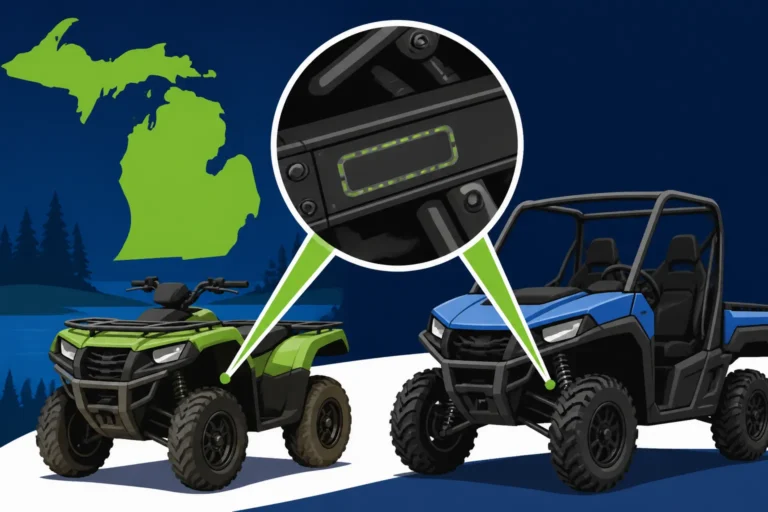
A VIN is a standardized 17-character alphanumeric code, no two are alike. This isn't just a random string of letters and numbers; it's a carefully structured code that reveals a ton of information about the machine. It's usually stamped directly onto the frame of the ATV or UTV, often on the front frame tube, near the engine, or under the seat. It’s absolutely vital to find this physical stamp and not just rely on stickers or documents. You can learn more about where to locate it in our guide on [Where the VIN Is Stamped on an ATV or UTV].
Let's break down what those 17 characters typically mean:
- Positions 1-3 (World Manufacturer Identifier – WMI): These characters identify the country of origin, the manufacturer, and the type of vehicle. For example, a "3" might indicate a U.S. manufacturer, and combined with other letters, it tells you exactly which brand made the machine.
- Positions 4-9 (Vehicle Descriptor Section – VDS): This section describes the general characteristics of the vehicle, such as the engine type, body style, model, and series. There's often a "check digit" in position 9, which is used to verify the authenticity of the VIN itself, preventing common errors or fraudulent modifications.
- Positions 10-17 (Vehicle Identifier Section – VIS): This is the unique serial number of the vehicle. Position 10 indicates the model year, and position 11 specifies the manufacturing plant. The remaining characters are the sequential production number.
Knowing how to decode these can tell you if the VIN on the machine matches what the seller is telling you. If the VIN says it's a 2018 Polaris Outlaw and the seller insists it's a 2022 Can-Am Renegade, you've got a serious red flag right there. This kind of discrepancy can lead to massive headaches when you try to get a [Michigan ORV Title Application and What It Costs] at the Secretary of State.
Beyond the Sticker: Why a Clean VIN is Non-Negotiable
A clean VIN isn't just about matching numbers; it's about legal ownership and the machine's history. When you're buying a used ATV, you're not just buying a machine; you're buying its past. And a "dirty" VIN can carry a lot of baggage.
Imagine this scenario: you find what looks like an incredible deal on an ATV. The seller is eager, maybe a little too eager, and the price seems almost too good to be true. You shake hands, pay the cash, and trailer your new toy home. Then, when you head to the Michigan Secretary of State to transfer the title, you get the dreaded news: the VIN comes back as stolen, or it's been tampered with. What happens then? The police will likely confiscate the machine, you'll be out your money, and you'll have absolutely nothing to show for it. You can imagine the frustration and despair in that moment.
A VIN can be "dirty" in several ways:
- Stolen: This is the most serious. If the VIN comes back as stolen, you've essentially purchased stolen property, even if you didn't know it. The original owner gets their machine back, and you lose everything.
- Salvage or Total Loss: An ATV might have been declared a total loss by an insurance company due to an accident, flood damage, or fire. While it might have been rebuilt, a salvage title history can affect its value, insurability, and even its roadworthiness if you ever considered making it street legal. You'll want to inspect such a machine meticulously, as our guide on [What a Salvage Title Means for an ATV Buyer] details.
- Tampered or Re-tagged: Sometimes, criminals try to obscure a stolen machine's history by altering the VIN or replacing it with another. This is illegal and incredibly dangerous for a buyer. Look for signs of grinding, welding, or new plates where the VIN should be. Any indication of tampering is an immediate deal-breaker. Our article on [Fixing a Wrong VIN on a Michigan ORV Title] discusses ways to address legitimate errors, but tampering is a different beast entirely.
Dealing with [Michigan ORV Title Problems and How to Clear Them] can be a long, frustrating, and often expensive process. It's far better to identify these issues before you buy. A clean VIN means the machine's identity is legitimate, simplifying the titling process in Michigan and ensuring you have clear legal ownership.
How the NICB VINCheck Protects Michigan ATV Buyers
Now that we understand the gravity of the VIN, let's talk about a powerful, free tool that every Michigan ATV buyer should use: the NICB VINCheck. This isn't just some random online lookup; it's a direct connection to a vital database designed to fight vehicle crime.
Unmasking the National Insurance Crime Bureau (NICB) Database
The National Insurance Crime Bureau (NICB) is a not-for-profit organization dedicated to combating insurance fraud and vehicle crime. They are supported by member insurance companies and work closely with law enforcement agencies across the country. Their mission is to prevent, detect, and deter insurance fraud and crime, including vehicle theft.
The NICB's database compiles information from participating insurance companies regarding vehicles that have been reported stolen or declared a total loss (e.g., due to severe damage from an accident, flood, or fire). What's fantastic for you, the prospective ATV buyer, is that they offer a public-facing tool called VINCheck. This service allows you to access a portion of their massive database to check a vehicle's history for free. It’s a huge resource for uncovering red flags that a seller might be trying to hide, or even be unaware of themselves.
Step-by-Step: Using the NICB VINCheck for Your Potential Purchase
Using the NICB VINCheck is remarkably simple, and it should be one of the very first steps you take when considering a used ATV or UTV. It literally takes minutes and can save you thousands of dollars and endless heartache.
Here's how to do it:
- Locate the VIN: As discussed earlier, find the 17-character VIN stamped on the frame of the ATV or UTV you're interested in. Do not rely on a paper copy from the seller at this stage; physically verify the VIN on the machine itself. Write it down carefully, double-checking each character.
- Visit the NICB Website: Go to the official NICB VINCheck website. You can usually find it with a quick search for "NICB VINCheck."
- Enter the VIN: You'll see a simple input field where you can type in the 17-character VIN. Make sure there are no typos!
- Review the Results: The system will process your request and, within seconds, present you with any records found. The primary information it will reveal is whether the vehicle has been reported as:
- Stolen: This is a definitive red flag. If the VINCheck says the machine is stolen, walk away immediately and consider reporting the seller to local authorities. Our guide on [How to Check If an ATV Is Stolen Before You Buy] goes deeper into this critical step.
- Total Loss: This indicates that an insurance company has declared the vehicle a total loss. This means the cost to repair it exceeded its value. While not illegal to buy, it warns you that the machine has a significant damage history that you absolutely need to investigate further. It may have a salvage title, which requires special inspection in Michigan before it can be titled as rebuilt.
The beauty of the NICB VINCheck is its speed and its cost – it's completely free. There are paid VIN check services out there that claim to offer more comprehensive reports, and while some can provide additional details like accident history or previous owners, the NICB tool is indispensable for flagging the most critical issues: theft and total loss. Always start here.
Limitations of the NICB VINCheck and What Else to Look For
While the NICB VINCheck is a fantastic tool, it's essential to understand its limitations. No single check can give you the complete picture, and relying solely on one source is a rookie mistake.
Here are some things the NICB VINCheck might not tell you:
- Unreported Thefts: If an ATV was stolen but never reported to an insurance company or law enforcement (or if the owner didn't have comprehensive insurance), it won't show up as stolen in the NICB database.
- Minor Accidents or Damage: Unless the damage resulted in a "total loss" claim with a participating insurer, minor fender benders or non-insured repairs won't appear.
- Non-Participating Insurers: While NICB works with many major insurance companies, there might be smaller or non-traditional insurers whose data isn't included.
- Title Washing: In some rare cases, criminals try to "wash" a title by moving a vehicle through different states to remove a salvage or problematic designation. While NICB is designed to track this, it's not foolproof.
- Maintenance History: You won't find oil change records, recall information, or specific repair history through NICB.
Therefore, the NICB VINCheck should be just one piece of your overall due diligence puzzle. After using it, you should always follow up with other checks. For instance, performing a title search through the Michigan Secretary of State can reveal ownership history, lien information, and any title brands (like salvage or flood damage) officially recorded in Michigan. Our article [Looking Up an ORV Title History] provides more details on this process. It's about building layers of verification to ensure you're making an informed decision.
Layering Your Due Diligence: Beyond the NICB Check for Michigan Buyers
The NICB VINCheck is a fantastic starting point, an indispensable early warning system. But a truly savvy Michigan ATV buyer knows that comprehensive due diligence involves multiple layers of verification. You need to gather all the puzzle pieces to see the full picture.
The Michigan Title: Your Ultimate Proof of Ownership
In Michigan, the title is the absolute gold standard for proving legal ownership of an ORV. This isn't a document you can skip. If a seller doesn't have a title for their ATV or UTV, or if something about it seems off, consider it a giant red flag.
When you're inspecting the title, here's what to look for:
- Matching Names: The seller's name on the title must exactly match the name on their government-issued ID (driver's license or state ID). If the name is different, they may not be the legal owner, or they could be "curbstoning"—selling vehicles without a dealer license. You need the legal owner to sign over the title for a valid transfer.
- Clear Lien Status: The title should clearly indicate whether there are any liens against the vehicle. A lien means someone else (usually a bank or financial institution) still has a financial interest in the ATV. If there's an active lien, the seller doesn't fully own the machine, and they cannot legally transfer a clear title to you without first satisfying that lien. Always insist on a lien release document if a lien is present and claimed to be paid off. Our guide on [Liens on a Michigan ORV Title] covers this in more detail.
- No "Open" Titles: An "open" title is one that has been signed by a previous owner but left blank for the buyer's name. This practice is illegal in Michigan and creates a murky chain of ownership. You want a title that is transferred directly from the current, legal owner to you.
- Title Brands: Look for any "brands" on the title, such as "Salvage," "Rebuilt," "Flood," or "Total Loss." These are permanent designations that indicate a significant event in the vehicle's history. While not necessarily deal-breakers, they warrant extreme caution and a thorough [Pre-Purchase Inspection Before Signing an ATV Title].
- Signatures: Ensure the seller signs the title in the correct spot, exactly as their name appears. If there are multiple owners listed with "AND" between their names, both must sign. If it says "OR," only one needs to sign. Our article [Who Has to Sign a Michigan ORV Title] clarifies these details.
If you're buying from a private seller, the process of transferring a Michigan title is crucial. Read our guide [Michigan Title Transfer When You Buy From a Private Seller] for a step-by-step breakdown. If the machine truly has no title, which can happen with older models or specific exemptions, then [Proof of Ownership When a Michigan ORV Has No Title] becomes a completely different challenge you need to understand.
The Bill of Sale: Protecting Both Buyer and Seller
Even with a perfectly clean title, a well-drafted bill of sale is an absolute must. Think of it as your contractual agreement, spelling out the terms of the sale and protecting both you and the seller. While a title proves ownership, a bill of sale confirms the transaction itself.
A good bill of sale should include:
- Buyer and Seller Information: Full legal names, addresses, and contact information for both parties.
- Vehicle Information: The ATV's year, make, model, and, most importantly, the full 17-character VIN. Double-check that this VIN matches the one on the title and the machine.
- Purchase Price: The agreed-upon sale price in numerical and written form. This is critical for calculating Michigan sales tax, as explained in [Michigan ORV Sales Tax at a Secretary of State Branch].
- Date of Sale: The exact date the transaction occurred.
- "As-Is" Clause: Most private sales are "as-is," meaning you buy the machine in its current condition with no warranties from the seller. This clause should be clearly stated.
- Signatures: Both the buyer and seller should sign and date the bill of sale. While a notary isn't always legally required for an ATV bill of sale in Michigan, as discussed in [Does a Michigan ATV Bill of Sale Need a Notary?], it can add an extra layer of authenticity and prevent disputes.
Having a robust bill of sale is essential for resolving any future disputes, proving the purchase price for tax purposes, and demonstrating your intent to take ownership. Resources like LawDepot offer templates and guidance for creating legally sound bills of sale, ensuring you don't miss any critical details. They make it easier to draft comprehensive documents that align with common legal practices, giving you confidence in your purchase agreement. For more specific details on what to include, check out [Michigan ATV Bill of Sale: What to Put in It]. It's important to understand the distinctions between these documents, as explored in [Bill of Sale vs Title as Proof of Ownership].
In-Person Inspection and Trusting Your Gut
All the paperwork in the world won't matter if the physical machine itself is a disaster. An in-person inspection is your final, critical line of defense. This is where you get hands-on and confirm that everything you've learned from your VIN checks and title reviews aligns with reality.
Here's what to focus on during your inspection:
- VIN Verification (Again!): Physically locate the VIN stamped on the frame. Compare it meticulously with the VIN on the title and the VINCheck report. Look for any signs of tampering—grinding, re-stamping, unusual welds, or plates that look added on. If anything looks suspicious, walk away. This is one of the most important checks you can do.
- Overall Condition: Do a thorough walk-around. Look for signs of major damage: bent frames, cracked plastics, mismatched paint, severe rust, or fluid leaks. Pay attention to the tires, suspension components, and any aftermarket modifications. Ask about service records and how the machine has been maintained.
- Test Ride (if possible and safe): If the seller permits and you're in a safe, legal area, take it for a short test ride. Listen to the engine, check the brakes, test the steering, and feel for any unusual vibrations or noises.
- Trust Your Instincts: How does the seller behave? Are they open and honest, willing to answer all your questions, and happy to show you all the paperwork? Or do they seem rushed, evasive, or unwilling to provide details? If a seller insists on meeting in a parking lot rather than at their home, or if the price is unbelievably low, these are all potential red flags. Your gut feeling is often a powerful indicator of trustworthiness.
Using a resource like LawDepot for drafting a purchase agreement can also prompt you to consider various clauses, helping you think through the transaction thoroughly, even beyond the direct transfer of the title. Combining these document checks with a careful physical inspection provides the most robust protection for you as a buyer.
By taking these comprehensive steps—starting with the essential NICB VINCheck, meticulously reviewing the Michigan title, securing a detailed bill of sale, and performing a thorough physical inspection—you dramatically reduce your risk of buying a problematic or stolen ATV. It's all about empowering yourself with information and protecting your investment so you can hit the Michigan trails with genuine peace of mind.
Here's a quick comparison of the various checks and what they offer:
| Check Type | What it Reveals | Cost | Limitations |
|---|---|---|---|
| NICB VINCheck | Stolen status, total loss history from insurers | Free | Limited to participating insurers, might not show all history |
| Michigan SOS Title Search | Ownership history, lien status, title brands (MI only) | Small fee | Requires specific info, might not show out-of-state history |
| Physical VIN Inspection | Tampered VIN, matching numbers, physical location | Time/effort | Relies on visual inspection, expertise helpful |
| Physical Machine Inspection | Visible damage, general condition, maintenance signs | Time/effort | Might miss hidden internal issues or mechanical problems |
| Bill of Sale | Agreed terms, proof of transaction, "as-is" clause | Free (DIY) / Template cost | Only as good as the information provided, not proof of title |
Disclaimer
This article is for general informational purposes only and does not constitute professional advice. Laws, prices and regulations vary by location and change over time. Consult a qualified professional for guidance on your specific situation.