Where the VIN Sits on a Polaris Ranger Frame
It can be incredibly frustrating when you're trying to handle important paperwork for your Polaris Ranger – whether you're selling it, buying a used one, or just trying to register it – and you can't find that all-important Vehicle Identification Number (VIN). This guide is here to walk you through exactly where to look for the VIN on your Polaris Ranger's frame, what to do if it's hidden, and why knowing its exact location is so crucial for every Michigan ORV owner.
Why Locating Your Polaris Ranger's VIN is Essential
As a Michigan ORV owner, your Polaris Ranger's VIN is more than just a random string of numbers and letters; it's the unique identifier for your specific machine, much like a fingerprint for your vehicle. Without it, you're going to hit a brick wall on a lot of necessary tasks, and it can even put you at risk.
Establishing Ownership and Title Work
One of the primary reasons you'll need to know your VIN is for official documentation, especially when it comes to proving you're the rightful owner. When you're dealing with the Michigan Secretary of State, they absolutely need that VIN to process your title application. If you just bought a used Ranger, that VIN is what links you directly to the machine on the [Michigan ORV Title Application and What It Costs]. It’s how the state knows it's truly your machine and how they can issue a clean title in your name. Trying to get a title without a clear VIN is like trying to navigate a Michigan trail system without a map – you're just not going to get far.
Verifying Vehicle History and Preventing Theft
Before you hand over your hard-earned cash for a used Polaris Ranger, that VIN is your best friend. It allows you to run a comprehensive history check to see if the vehicle has been reported stolen, if it's ever been in a major accident, or if it has a lien against it. Imagine buying a beautiful Ranger, only to find out later it was stolen – what a nightmare! Checking the VIN beforehand can save you from a world of headaches and legal troubles. For instance, knowing [How to Check If an ATV Is Stolen Before You Buy] is a critical step that starts with that VIN. It’s also crucial for law enforcement if your machine ever does get stolen; they use the VIN to identify and return it.
Servicing, Insurance, and Parts Ordering
Beyond the legalities, your VIN plays a practical role in the day-to-day life of your Polaris Ranger. When you take it in for service, mechanics use the VIN to ensure they're looking up the correct specifications, recalling any applicable service bulletins, and ordering the right parts. There are countless variations even within the Ranger lineup, and the VIN tells the whole story – model year, engine size, trim level, and more. Your insurance company will also require the VIN to properly insure your machine and to process any claims, as it precisely identifies the vehicle they are covering. It's the ultimate decoder for your specific ORV. You can even use it with an [ATV VIN Decoder: Reading the Model Year Digit] to understand more about your machine's heritage.
Common Locations for the VIN on a Polaris Ranger Frame
Finding the VIN on a Polaris Ranger can sometimes feel like a scavenger hunt, especially after years of trail riding, mud, and dust. However, Polaris typically places the VIN in a few consistent spots on the frame. It's usually a 17-character alphanumeric code, often stamped directly into the metal or affixed on a durable sticker.
Passenger Side Front Frame Rail
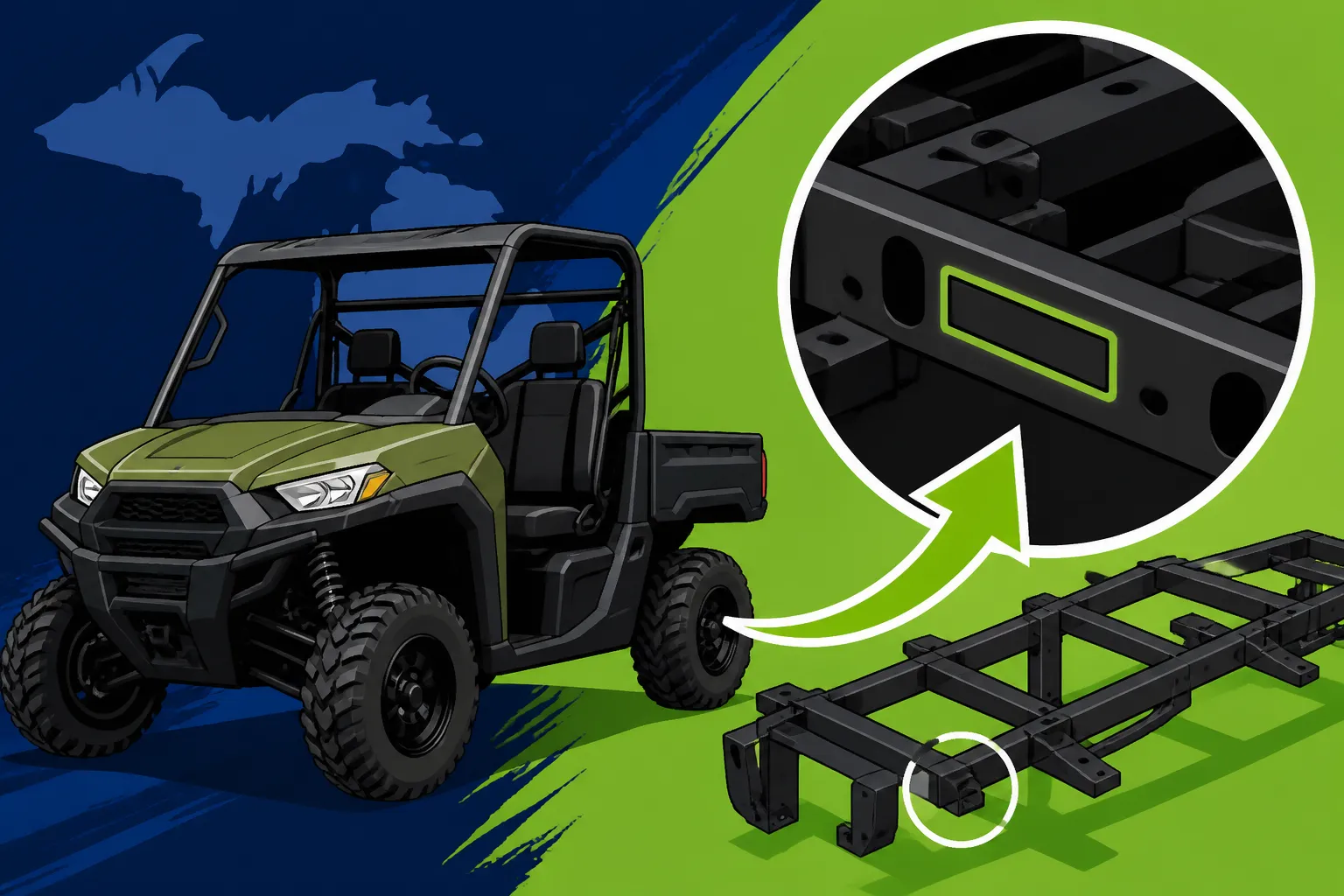
One of the most common and often easiest places to find the VIN on a Polaris Ranger is on the passenger side of the vehicle, stamped into the front frame rail. Picture standing at the front of your Ranger, looking back at the cab. Now, focus on the frame rail that runs underneath the passenger side footwell, leading towards the front wheel.
You'll typically find the VIN stamped on the outside of this frame rail, or sometimes on the top surface of it, just behind the front wheel or near the front suspension mounting points. It might be low, close to the ground, so you might need to get down on your hands and knees or even lie on your back to get a good look. This area is prone to mud and debris accumulation, so don't be surprised if you need a good brush and some soapy water to make it visible. Take your time, clear away any grime, and shine a flashlight directly on the area.
Driver's Side Rear Frame Section
While less common than the front passenger side, some Polaris Ranger models, especially older ones or specific utility configurations, might have the VIN stamped on the driver's side, towards the rear of the vehicle. This location could be on the frame rail just ahead of the rear wheel, or sometimes near the rear cargo bed mounts.
If you've thoroughly checked the front passenger side and come up empty, move to the driver's side and repeat the process. Look along the main frame rails that run the length of the vehicle. Again, mud, dirt, and even aftermarket accessories like rock sliders or skid plates can obscure this area. A thorough cleaning is often the key to revealing the numbers. It’s not an ideal spot for quick checks, but it's worth knowing about as a fallback.
Other Potential Spots and Decal Locations
Sometimes, especially on specific models or model years, Polaris might place the VIN in slightly different, albeit less common, locations. This could include a cross-member of the frame, underneath the driver or passenger seat (though this is often a sticker, not a frame stamp), or even sometimes inside one of the wheel wells. While the frame stamp is the definitive and hardest-to-alter location, many Rangers also have a VIN decal or sticker. These are often found:
- Under the driver's or passenger's seat: Lift the seat cushion or remove the seat entirely to check the frame underneath.
- On the dashboard or inside the glove box: These are less common for the primary VIN, but sometimes a duplicate decal can be found here.
- On a support tube near the engine: Look for a durable sticker on a frame tube close to the engine compartment, though this is more frequent for emission information.
Always prioritize the actual frame stamp, as stickers can be damaged or removed. The frame stamp is the enduring proof of the VIN. Make sure to consult your owner's manual if you're truly stumped, as it often provides diagrams of VIN locations specific to your model year. Knowing [Where the VIN Is Stamped on an ATV or UTV] in general can give you a broader idea of typical manufacturer practices.
Tips for Locating and Reading a Difficult VIN
Finding that elusive VIN on your Polaris Ranger can sometimes be a test of patience, especially if your machine has seen its fair share of Michigan mud and trails. But don't despair! With a few handy tips and a methodical approach, you can usually uncover the numbers you need.
Cleaning the Area Thoroughly
The most common reason for a "missing" VIN is simply that it's buried under layers of grime. Your Polaris Ranger is designed for off-road adventures, and that often means mud, dirt, rust, and debris get into every nook and cranny. Before you give up, grab a stiff brush, a bucket of soapy water, and some elbow grease.
Focus your cleaning efforts on the areas previously mentioned: the front passenger side frame rail, and potentially the rear driver's side frame. Use a degreaser if there's a lot of old oil or grease buildup. A wire brush can be helpful for surface rust, but be careful not to damage the underlying metal or the stamp itself. Once you've scrubbed the area clean, wipe it dry. You'll be amazed at how often a seemingly blank piece of metal reveals a perfectly legible VIN once the crud is gone. If the area is heavily rusted, you might need a rust remover, but proceed with caution to ensure you don't etch away the numbers.
Using Proper Lighting and Angles
Even after cleaning, sometimes the VIN can be tricky to read due to lighting or the way it's stamped. Don't rely solely on ambient light. Grab a bright flashlight or a headlamp and direct the beam at different angles across the suspected VIN area.
The light can create shadows that make the embossed or stamped numbers pop out. Try shining the light from the side, then from above, and then from below. Sometimes, just changing your perspective and looking at it from a different angle – perhaps crouching lower or standing further away – can make the numbers clearer. If the numbers are extremely faint, sometimes rubbing a piece of chalk or a white crayon over the area and then wiping it gently can fill in the indentations, making the VIN stand out against the darker frame. This trick works wonders when you're dealing with aged or faint stamping.
Dealing with Rust and Corrosion
Rust is a common enemy of clearly legible VINs, especially on machines that spend a lot of time exposed to the elements or in humid conditions. If you've cleaned the area and still only see a patch of orange fuzz where the VIN should be, you'll need to address the rust carefully.
Start with a rust-penetrating spray and let it soak for a while to loosen the corrosion. Then, gently use a brass brush (which is softer than steel and less likely to damage the metal) or even fine-grade sandpaper (very carefully!) to remove the surface rust. Your goal isn't to polish the frame, but to expose the stamped characters. Once you've removed enough rust to see the numbers, you might want to apply a rust inhibitor or a clear coat of paint to protect the area for future reference. Remember, the goal is to make the VIN legible without causing further damage to the frame. If your VIN is badly rusted, this might be a reason for a [Michigan Salvage ATV Title Inspection] if it came from a situation where it had significant damage.
Documenting Your Findings
Once you've finally located and clearly read your Polaris Ranger's VIN, take a moment to document it thoroughly. This might sound obvious, but you'd be surprised how often people find it, jot it down on a scrap of paper, and then lose it!
- Write it down: Write the full 17-character VIN in multiple places: your owner's manual, a dedicated vehicle information file, and perhaps even in your phone's notes. Double-check every character to ensure accuracy.
- Take photos: Use your smartphone to take clear, well-lit photos of the VIN stamped on the frame. Get a close-up shot of the numbers themselves, and then a wider shot that shows the VIN in context on the vehicle. These photos can be incredibly useful if you ever need to prove the VIN's location or condition.
- Create a durable record: Consider using a service like LawDepot to create a simple vehicle record or bill of sale, even if you're not selling, just to have an official document with the VIN recorded. It's an easy way to keep track of important details. Having this readily available helps with things like [Replacing a Lost Michigan ORV Title] down the road.
What to Do If You Can't Find or Read the VIN
Despite your best efforts, sometimes that VIN just refuses to show itself clearly. This can be a frustrating situation, especially when you need it for title transfers or other official business. But don't give up hope; there are still steps you can take.
Consulting Your Paperwork
Before panicking, check all the existing paperwork you have for your Polaris Ranger.
- Original Purchase Agreement or Bill of Sale: This is usually the first place to look. When the machine was originally sold, the VIN would have been recorded on the sales contract. A detailed [Michigan ATV Bill of Sale: What to Put in It] should always include the VIN.
- Previous Title or Registration: If you bought the Ranger used, the previous owner's title or registration document should clearly list the VIN. Even if the title is old or from out of state, the VIN will be there.
- Insurance Documents: Check your current or past insurance policy cards or declarations. The VIN is a mandatory piece of information for vehicle insurance.
- Owner's Manual: Sometimes the VIN is printed on a sticker inside the front cover of the owner's manual.
- Service Records: If your Ranger has been serviced professionally, the repair shop likely recorded the VIN on their invoices or work orders.
These documents are crucial for establishing a paper trail and can provide the VIN even if it's illegible on the machine itself. They also help if you're facing [Michigan ORV Title Problems and How to Clear Them].
Seeking Professional Assistance
If you've exhausted all your personal resources and the VIN remains unreadable or completely hidden, it's time to bring in the professionals.
- Polaris Dealership: Your local authorized Polaris dealer is an excellent resource. They often have specialized tools, knowledge of model-specific VIN locations, and might even be able to look up your machine's VIN using internal databases if you can provide them with other identifying information (like an engine serial number, if legible). They deal with these machines all day, every day, so they know the quirks.
- Certified Mechanic: An experienced ORV mechanic might also have a keen eye for finding difficult VINs and could have access to lifts or tools that make inspection easier. They are used to getting into the tight spots on these machines.
- Law Enforcement or DNR: In some cases, if the VIN is completely missing, unreadable, or appears to have been tampered with, you might need to involve law enforcement or a Michigan Department of Natural Resources (DNR) officer. They can often conduct a VIN inspection and help determine if a new VIN plate is needed or if further investigation is required. This is especially true if you suspect the machine might have a questionable history, and they can advise you on the steps for [Proof of Ownership When a Michigan ORV Has No Title].
The Reassigned VIN Process
In rare circumstances where the original VIN is completely unreadable, missing, or has been intentionally altered (which is a serious red flag, by the way!), you might need to go through a process to get a "reassigned" VIN from the state. This is a lengthy and detailed procedure, designed to ensure the machine is legitimate and safe.
The process typically involves a thorough inspection by law enforcement or the Secretary of State to verify ownership and ensure there's no foul play. You'll likely need to provide all available documentation, including any bill of sale (which you can draft using a reliable template from a service like LawDepot), affidavits, and details of how you acquired the machine. If approved, the state will issue a new VIN plate that is permanently affixed to your Ranger, allowing you to finally title and register it. This is a last resort, but it's a pathway to legal ownership when all other avenues for finding the original VIN have been exhausted.
Here's a quick summary of typical Polaris Ranger VIN locations:
| Location Type | Typical Placement on Ranger Frame | Things to Look For | Difficulty to Locate (1-5, 5 being hardest) |
|---|---|---|---|
| Primary Stamped VIN | Passenger side, front frame rail, often near the front tire or footwell area. | Stamped characters, usually 17-digit code. | 2-3 |
| Secondary Stamped VIN | Driver's side, rear frame section, sometimes near the rear wheel or cargo bed mounts. | Stamped characters, same 17-digit code. | 3-4 |
| VIN Decal/Sticker | Under the driver's or passenger's seat, dashboard, or inside the glove compartment. | Adhesive sticker with printed VIN. | 1-2 |
| Cross-Member Stamped | Less common, but sometimes stamped on a horizontal frame member connecting the main rails. | Stamped characters, often obscured by components. | 4 |
Keep this table handy when you're out there on the hunt for your Polaris Ranger's VIN. Finding it might take a bit of effort, but it's a critical step in responsible ORV ownership here in Michigan!
Disclaimer
This article is for general informational purposes only and does not constitute professional advice. Laws, prices and regulations vary by location and change over time. Consult a qualified professional for guidance on your specific situation.