Michigan Title Rules for an ORV Bought Out of State
Bringing an off-road vehicle (ORV) home to Michigan after purchasing it out of state can be a real head-scratcher. You might think, "I've got the bill of sale, I'm good to go!" only to discover Michigan has its own specific rules that might be totally different from where you bought it. This guide is here to walk you through the essential steps and potential roadblocks you'll encounter when titling your out-of-state ATV or UTV in the great state of Michigan.
Understanding Michigan's ORV Titling Requirements
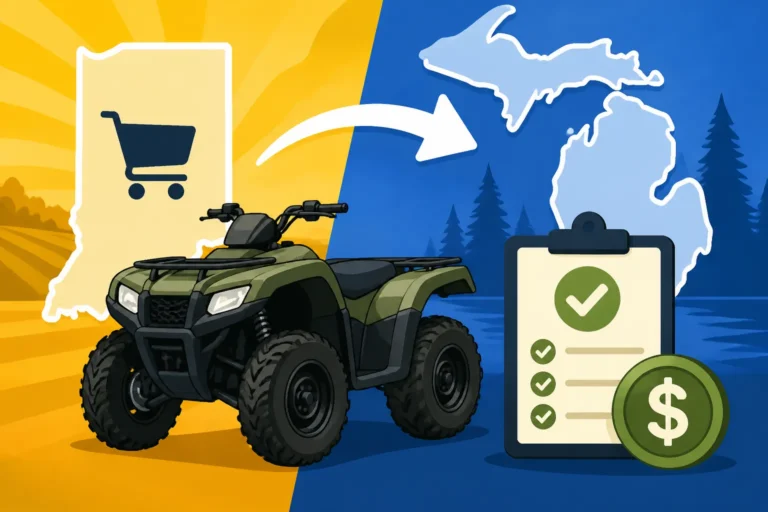
One of the biggest sources of confusion for Michigan residents buying an ORV from another state is the difference in titling laws. Some states don't require titles for certain types of off-road vehicles, or they might have different age cutoffs for when a title becomes mandatory. But when you bring that machine into Michigan, our state's rules take precedence. It's not uncommon for people to purchase an ATV in a neighboring state like Indiana or Ohio, where titles might be less strictly enforced for older machines, only to find Michigan demanding one.
Why Michigan Wants a Title (Almost Always)
Michigan is pretty clear on its stance: most ORVs operating within the state need a title. This includes ATVs, UTVs, and even dirt bikes that meet the definition of an ORV. The only real exceptions are specific machines used exclusively for farm work on private land, certain low-speed electric vehicles, or machines that pre-date Michigan's titling requirements, generally those manufactured before 1970. For the vast majority of riders, if you're planning to ride your machine on designated trails, state forest roads, or any public land, you'll need a Michigan title. This requirement ensures proper ownership tracking, helps deter theft, and makes it easier for law enforcement to identify vehicles. It's a fundamental piece of paperwork that proves you are the legal owner, plain and simple.
When you've just driven your new-to-you side-by-side back from, say, Wisconsin, where perhaps the seller didn't even have a title because their state didn't require one for that particular year or type of machine, it can feel like you're caught in a bureaucratic tangle. You've paid your money, you have a bill of sale, and now Michigan is asking for something that doesn't exist from the original state. This is a common frustration, and understanding Michigan's firm stance on titling from the outset can save you a lot of grief. It also means that before you even buy, you should be asking about the title status in the seller's state and how that might translate to Michigan's requirements.
The 15-Day Titling Deadline for New Residents
Whether you're a new resident moving to Michigan with your existing ORV or you just purchased a machine out of state and brought it here, Michigan gives you a specific window to get things squared away. You have 15 days from the date of purchase or the date you establish residency to apply for your Michigan title. This isn't just a friendly suggestion; it's a rule that comes with potential consequences if missed. [Michigan Gives You 15 Days to Title an ORV] outlines this timeframe in more detail.
Missing this deadline can lead to additional fees. The state imposes a late fee on title applications submitted after the 15-day grace period. It's a small penalty, but one that's easily avoidable with a little planning. Imagine driving all the way back from Pennsylvania with your dream quad, getting it home, and then getting caught up in the excitement of riding, only to realize weeks later that you forgot to apply for the title. Now you're facing an extra charge on top of the regular title fees. To avoid this, it's wise to gather all your documents immediately after purchase and make an appointment with the Secretary of State as soon as possible. Even if you can't get an immediate appointment, simply submitting the application within the 15-day window will usually protect you from the late fee, provided you have all the necessary paperwork in order.
The Essential Paperwork You'll Need to Bring
Getting your ORV titled in Michigan after an out-of-state purchase requires a precise collection of documents. The Michigan Secretary of State needs a clear paper trail to establish ownership and ensure all taxes are paid. This isn't the time to guess or show up with just half the story. Having everything in order before your appointment will save you immense frustration and potentially multiple trips.
The Out-of-State Title or Proof of Ownership
This is perhaps the most critical document. If the ORV you purchased was titled in the previous state, you'll need that physical title. It should be signed over to you by the seller, exactly as it was issued. Make sure the VIN on the title matches the VIN on the machine perfectly – even one digit off can cause major headaches. [Fixing a Wrong VIN on a Michigan ORV Title] delves into issues with incorrect VINs. If the previous state did not title the ORV (which, as discussed, is a common scenario), you'll need robust proof of ownership in another form. This typically means a very comprehensive bill of sale, including the full names and addresses of both buyer and seller, the purchase price, the date of sale, the ORV's make, model, year, and crucially, its Vehicle Identification Number (VIN). Both parties must sign the bill of sale. Sometimes, a previous registration certificate from the seller's state can also help corroborate ownership if no title was issued.
Without a proper title or undeniable proof of ownership, you'll be stuck. The Secretary of State cannot issue a new title without being absolutely certain who the previous owner was and that they legally transferred the machine to you. This is where a meticulously prepared bill of sale becomes your best friend. Services like LawDepot offer templates for bills of sale that can help ensure you're capturing all the necessary information, which is especially important when dealing with private party sales across state lines. Don't underestimate the power of a well-crafted bill of sale; it's your lifeline when a previous title is absent.
Bill of Sale and Purchase Price
Even if you have a properly signed-over title from the seller, a bill of sale is still a highly recommended, often essential, document. It explicitly states the purchase price, which is vital for calculating Michigan's sales or use tax. For private sales, the bill of sale should clearly list the exact amount you paid for the ORV. This prevents any confusion or disputes regarding the taxable value. If you paid less than the fair market value, or if it was a gift, the bill of sale should reflect that, and you might need to fill out a Michigan form to declare the actual value for tax purposes. [Michigan ATV Bill of Sale: What to Put in It] provides guidance on creating a strong bill of sale.
When purchasing from a dealer out of state, they will typically provide a purchase agreement or sales invoice that details the transaction, including the price, trade-in value (if any), and any taxes collected. Keep this document safe! It serves the same purpose as a bill of sale for private sales when it comes to proving the purchase price. Remember, Michigan wants to ensure it collects its fair share of tax on the transaction, and the bill of sale or purchase agreement is the primary evidence for this calculation. Always double-check that the purchase price matches what you're declaring, as discrepancies can lead to delays and additional questions from the state.
Your Michigan Driver's License or State ID
This might seem obvious, but you need to prove who you are. Bring your current, valid Michigan driver's license or state identification card to your Secretary of State appointment. This confirms your identity and your residency in Michigan. The name on your ID should match the name you want on the new ORV title. If you've recently moved to Michigan, be sure your ID reflects your current Michigan address. If you're a new resident bringing an ORV with you, this ID will be crucial for establishing your eligibility for a Michigan title.
It's a simple step, but forgetting your ID or having an expired one will halt the entire process. The Secretary of State won't be able to process your application without verifying your identity. Make sure to bring the physical card, not just a photo of it on your phone. They need to see the actual document. This is standard procedure for any vehicle or ORV titling transaction, ensuring that the person applying for the title is indeed the person claiming ownership.
VIN Verification (Sometimes Required)
In some instances, especially if the ORV was not previously titled in any state, or if there are any irregularities with the VIN on the documents, Michigan may require a VIN verification. This is a physical inspection of your ORV to confirm that the VIN stamped on the machine matches the documentation you're providing. It's an anti-theft measure and ensures the vehicle isn't stolen or cobbled together from parts without proper record. [VIN Inspection Requirements for a Michigan ORV Title] offers more insights into this process.
A VIN verification can usually be performed by a law enforcement officer (such as a sheriff's deputy or state trooper) or, in some cases, by trained personnel at a Secretary of State branch or specific inspection stations. They will physically examine the ORV's VIN plate or stamped location to verify its authenticity and compare it against your paperwork. It's not a safety inspection, but purely a check of the identification number. If you suspect your ORV might fall into a category requiring a VIN verification, it's best to check with the Secretary of State beforehand so you can complete this step before your title appointment, avoiding another trip.
Navigating Sales Tax and Use Tax When Buying Out of State
This is where things often get tricky and cause the most confusion for people buying an ORV from another state. Michigan has specific rules about sales and use tax, and it's highly likely you'll owe something to the state, even if you paid tax in the state where you purchased the machine.
Michigan's Use Tax on Out-of-State Purchases
When you buy an ORV from a private seller out of state and bring it into Michigan for use, you generally owe Michigan's use tax. This is essentially the equivalent of sales tax, but it's applied when a taxable item is purchased without Michigan sales tax being collected at the point of sale, and then brought into the state for use. The current rate applies to the purchase price you declared on your bill of sale or other proof of purchase. [Michigan Use Tax on a Private-Party ATV Sale] provides a more detailed explanation.
Let's say you found an incredible deal on a UTV from a private seller in Ohio. Ohio's sales tax might be lower, or perhaps private sales there aren't subject to sales tax at all. When you bring that UTV to Michigan, you're responsible for paying Michigan's use tax rate on the purchase price. The Secretary of State will collect this tax when you apply for your title. It's a non-negotiable part of the process, and they won't issue a title without it. This is Michigan's way of ensuring that all transactions where a vehicle or ORV enters the state's use stream contribute to the state's revenue, regardless of where the initial purchase occurred.
Credit for Sales Tax Paid in Another State
Now, what if you bought your ORV from an out-of-state dealer and did pay sales tax to that state? This is a common scenario. Michigan does typically allow a credit for sales tax legitimately paid to another state on the same transaction. However, the credit is usually only up to the amount of Michigan's sales or use tax rate. So, if you paid 5% sales tax in, say, Indiana, and Michigan's use tax is 6%, you would get credit for the 5% paid and still owe the remaining 1% to Michigan. If you paid 7% sales tax in another state, you would get credit for the 6% (or whatever Michigan's rate is) but wouldn't get a refund for the extra 1% you paid elsewhere.
You'll need proof of the sales tax paid in the other state, usually in the form of the dealer's invoice or purchase agreement that clearly itemizes the tax collected. Without this proof, the Secretary of State will assume no tax was paid and you'll be liable for the full Michigan use tax. It's important to keep all your financial documents from the purchase meticulously organized for this reason. This credit system prevents you from being double-taxed on the same purchase, but you're still responsible for Michigan's portion if it's higher. For specific examples, check out [Paying Michigan Tax on an ATV Bought in Indiana] or [Titling an ATV Bought in Wisconsin and Brought to Michigan].
What to Do About Liens or Missing Information
Buying an ORV from out of state can introduce unique challenges, especially if the previous owner had financing on the machine or if some critical paperwork seems to be missing. These situations aren't insurmountable, but they do require extra steps and diligence on your part.
Handling an Existing Lien on the Out-of-State Title
If the ORV you purchased still has an active lien recorded on its out-of-state title, this means the previous owner had a loan against it that hadn't been fully satisfied. You absolutely cannot get a clear Michigan title until that lien is released. A lender will hold onto the original title or have their lien noted on it until the loan is paid off. If you buy a machine with a lien, you could potentially lose the ORV if the previous owner defaults on their loan, even if you've paid them in full. This is a huge risk to take.
Before you even complete the purchase, you should always check for liens. Most states have an online portal or a way to request a title history report that will reveal any outstanding liens. If you purchase an ORV with a lien, you'll need a lien release document from the lender when you apply for your Michigan title. This document proves that the debt has been paid and the lienholder no longer has a claim to the ORV. Without it, the Michigan Secretary of State won't be able to issue a clean title in your name. Always confirm the lien has been satisfied and get the release in writing before exchanging money. [Liens on a Michigan ORV Title] goes into this in more depth.
When the Seller Doesn't Have a Title
As we've touched on, some states don't title certain ORVs, or the seller might have genuinely lost their title. If the previous state didn't issue a title for your ORV, your comprehensive bill of sale becomes your primary proof of ownership. However, if the seller should have had a title but claims it's lost, you'll need to exercise caution. In Michigan, the process for [Proof of Ownership When a Michigan ORV Has No Title] involves specific steps.
Michigan's Secretary of State may have a process for acquiring a "bonded title" or a title based on a court order in such cases. This is typically a more involved and lengthy process. A bonded title requires you to purchase a surety bond, which acts as insurance against any claims of prior ownership. It basically says, "If someone else proves they own this, I'll pay them through this bond." Getting a court order involves going through the legal system to have a judge declare you the rightful owner. Both are last-resort options and indicate a significant risk when you bought the ORV. To avoid these complex scenarios, always try to ensure the seller has a proper title or official documentation confirming their state doesn't issue one for that specific machine before you buy. If you are unsure, it is best to avoid the purchase, or consult with the Secretary of State about your specific situation before handing over your cash.
Correcting Mistakes on Out-of-State Paperwork
Mistakes happen. Maybe the seller accidentally put the wrong VIN on the bill of sale, or their signature doesn't quite match their ID, or perhaps the purchase date is ambiguous. These seemingly minor errors can cause significant delays at the Secretary of State. The Michigan Secretary of State is very particular about accuracy, especially when dealing with out-of-state documents that might not be immediately familiar.
If you notice an error before your appointment, try to get it corrected by the seller. This might mean getting a new, corrected bill of sale or having them re-sign the title properly. If the error is only discovered at the Secretary of State, you might be asked to go back and get the corrections, which means another trip and more waiting. For example, if the seller's signature is missing from the assignment section of their out-of-state title, you'll have to track them down to complete it. [ORV Title With a Missing Seller Signature] outlines how frustrating this can be. It's always best to thoroughly review all documents before leaving the seller, verifying every detail, from the VIN to the purchase price and signatures.
Common Pitfalls and How to Avoid Them
Buying an ORV from out of state can feel like navigating a minefield of potential issues. While the promise of a great deal or a unique machine might be tempting, it's crucial to be aware of the common problems that can turn your exciting purchase into a bureaucratic nightmare. Avoiding these pitfalls usually comes down to thorough preparation and careful scrutiny.
Not Researching the Seller's State Titling Laws
One of the biggest mistakes buyers make is assuming all states have the same titling rules as Michigan. They don't. Some states, particularly for older ATVs or smaller displacement machines, might not issue titles at all, relying instead on a bill of sale or registration. Others might have entirely different age exemptions or classification systems. This disparity can lead to situations where you purchase an ORV that, in its home state, was perfectly legal to sell with just a bill of sale, but Michigan requires a formal title.
Before you even start shopping out of state, take a few minutes to research the titling and registration laws for ORVs in that specific state. A quick call to their equivalent of the Department of Motor Vehicles or Secretary of State can provide invaluable information. Understanding their process will help you know what to ask the seller for and what documents to expect. For instance, [Michigan Title Rules for an ORV Bought in Ohio] delves into considerations when purchasing from a specific neighboring state. If the seller can't produce a document that their state should issue, that's a red flag. Always verify, don't just assume.
Neglecting to Verify the ORV's History
Just like with cars, ORVs can have complex histories. They can be stolen, have salvage titles, or carry undisclosed liens. When you buy an ORV from out of state, especially from a private seller, you have less recourse if something goes wrong. Always, always, always perform a thorough check on the ORV's history.
- VIN Check: Use the VIN to run a history report. While there might not be a single national database as robust as for cars, services can sometimes flag stolen vehicles or major accident history. The National Insurance Crime Bureau (NICB) offers a free VIN check tool that can sometimes reveal if a vehicle has been reported stolen or involved in a major insurance claim. [How to Check If an ATV Is Stolen Before You Buy] offers critical advice here.
- Salvage Titles: If the ORV has a salvage title from another state, understand what that means. It indicates the machine was significantly damaged (e.g., from an accident, flood, or fire) and declared a total loss by an insurance company. Michigan has specific procedures for [Michigan Salvage ATV Title Inspection] and retitling a salvage ORV, which can be complex and expensive, involving inspections and potentially rebuilding processes. Don't assume a salvage title is just a minor detail; it impacts the ORV's value and legality.
- Liabilities: Ensure there are no outstanding liens. We discussed this earlier, but it's worth reiterating. You don't want to inherit someone else's debt.
Underestimating the Total Cost (Taxes, Fees, Travel)
When you see that attractive price tag on an out-of-state ORV, it's easy to get tunnel vision. However, the sticker price is just the beginning. You need to factor in several additional costs that can quickly add up and negate any perceived savings.
- Michigan Use Tax: As detailed earlier, you'll almost certainly owe Michigan's use tax, even if you paid some sales tax elsewhere. Don't forget to budget for this.
- Title Fees: Michigan charges a fee for issuing a new ORV title. While not exorbitant, it's another cost. [Michigan ORV Title Fee at the Secretary of State] will give you an idea of the expense.
- Late Fees: If you miss that 15-day window for titling, you'll incur a late fee. [Late Fee for Titling an ORV in Michigan] explains the penalty.
- Travel Costs: Don't forget the cost of gas, potentially a rental trailer, and your time for traveling to the out-of-state seller to pick up the ORV. These can be substantial, especially for long distances.
- Inspection Fees: If a VIN inspection or salvage inspection is required, there might be associated fees.
- Insurance: While not directly part of titling, you'll need [Michigan ORV Insurance and When You Actually Need It] before you can legally ride on public land.
Creating a detailed budget that includes all these potential costs before committing to an out-of-state purchase will give you a more realistic picture of the total investment and help you avoid any unwelcome surprises.
Timeline and Next Steps After Submission
You've done your homework, gathered your documents, and finally had your appointment at the Michigan Secretary of State. What happens next? The process isn't instantaneous, and understanding the timeline and what to expect can help manage your anticipation.
Processing Your Application at the Secretary of State
When you submit your ORV title application and all supporting documents at a Michigan Secretary of State branch, the clerk will review everything meticulously. They'll verify your identity, check the VINs, calculate and collect any applicable use tax, and ensure all signatures are present and correct. If everything is in order, they will process your application. You will likely walk away with a temporary registration or a receipt that serves as proof you've applied. This receipt is important, as it proves you're in the process of getting your title and can help you avoid issues if you're stopped before the actual title arrives.
The clerk at the counter will not typically issue the physical title on the spot. The application is sent to a central processing unit where the official title certificate is printed and mailed out. This separation in processing helps maintain security and efficiency. So, don't expect to leave with your new title in hand; you'll receive it in the mail.
How Long Until Your New Title Arrives
The time it takes for your new Michigan ORV title to arrive in the mail can vary. Generally, you can expect to receive your title within a few weeks. However, during peak seasons or if there are any issues with your application that require manual review, it could take a bit longer. It's always a good idea to ask the Secretary of State clerk for an estimated timeframe when you submit your application.
While you're waiting, keep your receipt or temporary registration accessible. This document acts as your proof that the titling process is underway. If you don't receive your title within the expected timeframe, you can follow up with the Michigan Secretary of State. [How Long a Michigan ORV Title Takes to Arrive] provides a more detailed breakdown of what to expect. Patience is key during this waiting period, but vigilance in checking your mail is also important.
What to Do If Your Title Doesn't Arrive or Has Errors
Sometimes, despite all your best efforts, things go awry. If the estimated timeframe passes and your title hasn't shown up, or if it arrives and you notice an error (like a misspelled name, incorrect address, or a wrong VIN), you'll need to take action.
- Missing Title: First, double-check your mail. If it's still missing, contact the Michigan Secretary of State. They can check the status of your application. It's possible it was delayed, sent to the wrong address, or perhaps there was an unforeseen issue with the application itself. They can guide you on how to proceed, which might involve applying for a duplicate title or re-submitting parts of your application. You can often check the status online using the reference number from your receipt. [Checking a Michigan ORV Title Status Online] can be a helpful resource.
- Errors on Title: If your title arrives with an error, do not attempt to correct it yourself. Contact the Secretary of State immediately. They will have a specific process for correcting title errors, which usually involves submitting a request for correction along with the incorrect title and any supporting documentation. Prompt action is crucial to avoid further complications down the road, especially if you plan to sell the ORV in the future.
Navigating the nuances of titling an out-of-state ORV in Michigan can be a detailed process, but with careful attention to documentation, understanding Michigan's unique tax requirements, and knowing what to expect, you can successfully get your new machine titled and ready for the trails.
| Document Category | Required for Titling (Out-of-State ORV) | Notes & Best Practices |
|---|---|---|
| Proof of Ownership | Out-of-State Title (signed over) | If previous state titled it, this is paramount. VIN must match machine. |
| OR Comprehensive Bill of Sale | Crucial if previous state didn't title. Include VIN, buyer/seller info, price, date, signatures. | |
| Financial Proof | Bill of Sale / Purchase Agreement | Shows purchase price for tax calculation. |
| Proof of Sales Tax Paid (if applicable) | Dealer invoice clearly showing sales tax collected by the other state. | |
| Identity/Residency | Valid Michigan Driver's License/ID | Must match name on title application. |
| Vehicle Verification | VIN Inspection (if required) | Law enforcement or approved inspector verifies VIN on machine against documents. |
| Michigan Application | Michigan ORV Title Application (Form) | Completed and signed. |
| Lien Release (if any) | Written Lien Release from Lender | Needed if previous title showed an outstanding loan. |
Disclaimer
This article is for general informational purposes only and does not constitute professional advice. Laws, prices and regulations vary by location and change over time. Consult a qualified professional for guidance on your specific situation.