Why Michigan Has No ORV Registration
If you've just bought an ATV or UTV in Michigan, or perhaps moved here from another state, you might be scratching your head trying to figure out the "registration" process. Many states require you to register your off-road vehicle just like a car, complete with license plates and annual renewals. But here in Michigan, things work a little differently, and that difference often causes a lot of confusion, leading to frustrating searches for forms that simply don't exist. This comprehensive guide is here to clear up that mystery, explaining why Michigan focuses on titling your ORV rather than traditional registration, and what that truly means for you as an owner.
Understanding Michigan's Approach: Title, Not Registration
It's a common point of confusion, and frankly, a source of a lot of head-scratching for folks new to Michigan's ORV scene: where's the registration? You're ready to hit the trails, but you can't find the equivalent of a license plate or annual sticker for your new quad or side-by-side that says "registered." That's because Michigan has taken a distinct path, prioritizing a clear title of ownership over a rolling registration system. It might seem like semantics, but for ORV owners, the distinction is critical and impacts everything from buying and selling to trail riding.
The Key Distinction: What's the Difference Anyway?
Let's break down the core difference between a title and registration, because understanding this is fundamental to navigating Michigan's ORV laws. A title is essentially a legal document that proves who owns a piece of property. Think of it like the deed to your house or the title to your car. It establishes ownership, which is crucial for proving the machine belongs to you, especially if it's stolen or when you decide to sell it. It typically doesn't expire, only changing hands when the ownership transfers. It's a one-time process for each owner.
Registration, on the other hand, is usually an annual or biennial process that permits you to operate a vehicle on public lands or roads. This is what you do with your car, where you get new license plate tabs every year. Registration often involves a fee that helps fund infrastructure, and it might require the vehicle to pass certain inspections. It's about granting permission to use, whereas a title is about proving who owns. Michigan has chosen to separate these functions for ORVs, handling the "permission to operate" through a different system entirely, which we'll discuss shortly.
Why Michigan Opted for Titling
Michigan's decision to forgo traditional ORV registration and instead focus on titling stems from a few practical considerations. Primarily, it simplifies the process by creating a clear, permanent record of ownership. This helps prevent theft and facilitates the legal transfer of ownership. Imagine trying to prove a machine is yours without a title – it would be a chaotic mess! By requiring a title, the state ensures a paper trail for every ORV, making transactions more transparent and ownership disputes easier to resolve.
This system also streamlines the administrative burden. Rather than processing tens of thousands of annual registrations, the state deals with title transfers as they occur, which is a less frequent event for any given machine. This approach allows for a robust system of ownership verification without the overhead of annual registration renewals for the machine itself. For a detailed look at the titling process, you can explore guides like [How to Title an ATV in Michigan].
What a Title Does for You (and the State)
For you, the ORV owner, having a title provides undeniable proof that you legally own your ATV or UTV. This is incredibly important for several reasons. First, it protects your investment. If your ORV is ever stolen, the title is crucial for filing a police report and for insurance claims. Without it, proving ownership becomes incredibly difficult, and recovering your machine or getting compensated could be nearly impossible. Secondly, it's a prerequisite for legally selling your ORV. No one wants to buy an ORV without a clear title, as it opens them up to potential legal headaches and questions of ownership.
For the state, titling provides a centralized database of ORV ownership. This helps track stolen machines, verify legitimate sales, and collect sales tax when an ORV changes hands. It also helps manage liens on ORVs, ensuring that financial institutions have a record of their interest in the vehicle. While it doesn't fund trail maintenance directly (that's where the ORV license/sticker comes in), it creates an orderly system for tracking these machines, which is vital for law enforcement and for maintaining legal clarity in the ORV market.
The Michigan ORV Title: What It Is and Why You Need It
The Michigan ORV title is your golden ticket to legitimate ownership. It's not just a piece of paper; it's the official record that links you to your machine, confirming your rights and responsibilities as the owner. Whether you're buying brand new from a dealership, picking up a used quad from a private seller, or even bringing a machine in from out of state, understanding the title's role is paramount. Ignoring it can lead to a host of problems, from legal penalties to difficulties reselling your pride and joy.
Proof of Ownership and Beyond
At its heart, the Michigan ORV title is the ultimate proof of ownership. This single document contains vital information: your name (or the name of your business/LLC), the ORV's Vehicle Identification Number (VIN), and details about the make, model, and year of the machine. When you sign that title over or receive a signed title, you are legally establishing or transferring ownership. This isn't just for your peace of mind; it's a legal requirement. The state demands that you title your ORV within a certain timeframe after purchase – typically 15 days – to ensure a continuous chain of ownership. Missing this deadline can result in late fees and unnecessary hassle, as detailed in [Michigan Gives You 15 Days to Title an ORV].
Beyond simple ownership, the title serves several other critical functions. It's essential for obtaining insurance, as most insurers will require proof of ownership before they'll cover your ORV. It also acts as the legal instrument for placing or releasing liens, such as if you financed your purchase. Should you ever need to sell your machine, a clean, properly transferred title is non-negotiable for most buyers. If you're looking to purchase a used ORV, always ensure the seller has a clear title to sign over to you.
When a Title is Absolutely Required
In Michigan, nearly all ORVs operated off private property must have a title. This includes ATVs, UTVs (side-by-sides), three-wheelers, and even many dirt bikes if they meet the definition of an ORV. This requirement applies whether the machine is new or used, and regardless of where you bought it. If you purchase from a dealer, they'll typically handle the initial titling paperwork for you, often including sales tax collection. If you're buying from a private seller, the responsibility falls squarely on your shoulders to transfer that title. You can find comprehensive steps in [Michigan Title Transfer When You Buy From a Private Seller].
There are very few exceptions to this rule, and it's best to assume your ORV needs a title unless explicitly stated otherwise by the Michigan Secretary of State. Operating an ORV on public lands or designated trails without a proper title can lead to fines and legal complications, not to mention the inherent risk of not being able to prove the machine is yours. Always make titling one of your first priorities after acquiring an ORV.
Titling a Michigan ORV Bought at Auction
Buying an ORV at an auction can be an exciting way to find a deal, but it often comes with a unique set of challenges regarding the title. Auction houses typically deal with a high volume of vehicles, and sometimes titles can be delayed, lost, or even problematic. When you win an ORV at auction, it's absolutely crucial to understand the titling procedure specific to that auction and the state of Michigan. You'll usually receive some form of auction receipt or bill of sale, but this is not a title. It's merely proof of purchase.
You will still need to apply for a Michigan ORV title in your name. This often requires the original title from the previous owner (if available), or in some cases, you might need to pursue a bonded title if the original title is missing. Always ask the auction house about their title handling procedures before you bid. They should be able to tell you what documentation you'll receive and how long the title transfer process might take. Having a robust bill of sale, perhaps one you can create with a service like LawDepot, can also provide an extra layer of proof of your purchase, even if the title process is delayed. Be prepared for a bit more paperwork and patience when dealing with auction-acquired ORVs.
Exemptions and Special Cases for Michigan ORV Titling
While the general rule is that most ORVs in Michigan need a title, there are indeed some specific scenarios and types of machines that are exempt. These exemptions are usually in place for practical reasons, often related to the ORV's primary purpose or its inherent nature. Understanding these specific carve-outs can save you unnecessary trips to the Secretary of State, but it's vital to ensure your situation truly meets the criteria. Don't assume an exemption applies without verifying it, as misunderstanding the rules can still lead to legal trouble.
Farm Machines and Commercial Use
One of the most common exemptions relates to ORVs used exclusively for farming or other specific commercial purposes. If your UTV, for example, is primarily used on private agricultural land for duties like hauling feed, checking fences, or transporting equipment, it might not require a title. The key here is "exclusively" – if that same machine occasionally gets taken out for a weekend trail ride on public land, then the exemption likely doesn't apply, and it would need to be titled. This distinction is crucial, and it's something a Conservation Officer might ask about if they encounter your machine.
Similarly, ORVs used exclusively for specific commercial operations, often on private property, may also be exempt. This could include machines used by logging companies on their private tracts or by construction crews on a job site. The intent behind these exemptions is to avoid burdening businesses and farmers with titling requirements for tools that are not typically used for recreational purposes on public ORV trails or roads. It's always a good idea to keep proof of commercial or agricultural use readily available if you are relying on this exemption.
Machines Michigan Does Not Title
Beyond specific use cases, there are some types of machines that Michigan simply does not title at all, regardless of how or where they are used. This often includes very small, low-powered vehicles or those that don't fit the state's official definition of an ORV. For example, powered wheelchairs, electric bikes, or certain very small, youth-oriented ride-on toys might not be titled. The state generally focuses on titling machines that are capable of significant speed, power, and potential for public use.
It's important to differentiate these untitlable machines from those that should be titled but haven't been. Just because a machine doesn't currently have a title doesn't mean it's exempt. It might mean the previous owner neglected to title it, or it was purchased in a state without similar titling requirements. Always verify with the Michigan Secretary of State if you're unsure if a particular type of vehicle falls under the titling requirements. The official guide [Machines Michigan Does Not Title] provides further clarification on these specific exceptions.
ORV Title Exemptions for Farm Machines in Michigan
Let's dive a little deeper into the farm machine exemption, as it's a significant one for many rural Michigan residents. To qualify, an ORV must be used solely for agricultural operations. This means tasks directly related to the production of crops, livestock, or other farm products. It also extends to machines used for maintaining the farm property itself, such as plowing snow on a farm lane or performing repairs on farm structures.
The exemption does not cover machines that are dual-purpose, meaning they are used for farm work and recreational riding off the farm. If you take your farm UTV to the local ORV trail, or even use it to drive into the nearest town for supplies (unless it's specifically street-legal and plated as such, which is a different category entirely), it loses its exemption and must be titled. This can be a tricky line to walk for some farmers who might occasionally use their ORV for non-farm tasks. If there's any doubt about the primary or exclusive use, err on the side of caution and get it titled. This will protect you from potential fines and legal issues if a law enforcement officer questions its status.
The ORV Sticker and Trail Permit: Michigan's Version of "Registration" (Sort Of)
Even though Michigan doesn't have a traditional "registration" for ORVs, that doesn't mean you can just hop on your machine and hit the trails without any state-issued credentials. This is where the annual ORV license/sticker and the trail permit come into play. These are the state's mechanisms for granting you permission to operate your ORV on public lands and designated trails, and they are absolutely mandatory. Think of them as Michigan's unique way of managing and funding the ORV trail system, serving a similar function to what "registration" does in other states, but distinct from proving ownership.
The Annual ORV License/Sticker
Every ORV operated on public lands or trails in Michigan must display a valid ORV license, often referred to as a sticker. This sticker is purchased annually and is valid from April 1st through March 31st of the following year. It's your basic permission slip to ride. The revenue generated from these annual stickers goes directly into funds that support ORV programs, including trail maintenance, enforcement, and education. It's a small fee that helps keep Michigan's extensive trail system in top shape for everyone to enjoy.
Purchasing this sticker is a straightforward process. You can buy it online through the Michigan DNR eLicense system, at authorized license retailers (like many sporting goods stores or bait shops), or at some Secretary of State offices. Make sure to purchase a new one each year, as riding with an expired sticker is an easy way to get a ticket from a Conservation Officer. The ORV license is machine-specific, meaning each ORV you own that you intend to ride on public land needs its own sticker.
The ORV Trail Permit (and Why You Need Both)
Now, here's where it gets a little more nuanced: in addition to the annual ORV license/sticker, many riders also need an ORV trail permit. This is a separate sticker, also purchased annually, and it grants you access to Michigan's designated ORV trail system, routes, and scramble areas. If you plan to ride on any of Michigan's thousands of miles of public trails, you absolutely need this trail permit in addition to your basic ORV license. The funds from the trail permit specifically target the development and maintenance of these trails, ensuring they remain safe and enjoyable.
The distinction is important: the basic ORV license lets you ride on designated public ORV areas (like some state forest roads or certain open riding zones). The ORV trail permit gives you access to the marked and maintained ORV trails. Most recreational riders will need both. For example, if you're exploring the St. Helen ORV Trails or hitting the Silver Lake Sand Dunes, you'll need both stickers prominently displayed on your machine. For more details on the costs and application process, check out [Michigan ORV Title Application and What It Costs].
Where the Michigan ORV Sticker Goes on Your Machine
Proper placement of both your annual ORV license sticker and your trail permit is not just about aesthetics; it's a legal requirement. Conservation Officers need to be able to easily see and verify these stickers. Generally, they should be affixed to the front of your ORV, in a highly visible location.
For ATVs, this usually means on the front fender or the front fairing, in a spot that isn't easily obscured by handlebars or other accessories. For UTVs, they are typically placed on the front hood, dashboard, or other prominent forward-facing surface. The goal is to make them instantly identifiable without an officer having to climb all over your machine or ask you to point them out. Make sure the stickers are clean, free from dirt, and not peeling off. A good practice is to clean the surface thoroughly before applying them to ensure maximum adhesion. You can find visual examples and specific guidance in [Michigan ORV Sticker Placement on an ATV] or [Michigan ORV Sticker Placement on a Side-by-Side]. Taking the time to apply them correctly can save you a potential hassle during a trail stop.
Navigating the Titling Process in Michigan
So, you've understood why Michigan uses titles instead of registration for ORVs, and you know the difference. Now comes the practical part: actually getting your ORV titled. The process isn't overly complicated, but it does require attention to detail and ensuring you have all the correct paperwork. Whether you've just bought a brand-new side-by-side or a well-loved quad from a friend, there are specific steps you'll need to follow to make sure your machine is legally yours in the eyes of the state.
Steps to Title a New or Used ORV
The titling process varies slightly depending on whether your ORV is new or used, and who you bought it from.
For a New ORV (Purchased from a Michigan Dealer):
- Dealer Handles Paperwork: When you buy a new ORV from a licensed Michigan dealer, they will typically handle almost all the titling paperwork for you. This is a huge convenience! They will collect the sales tax, fill out the necessary title application, and submit it to the Michigan Secretary of State (SOS) on your behalf.
- Sales Tax: The dealer will collect Michigan's sales tax on the purchase price. This is legally required at the time of sale.
- Receive Title: After the SOS processes the application, you'll receive your official title in the mail, usually within a few weeks. In the meantime, the dealer should provide you with temporary paperwork confirming your purchase.
For a Used ORV (Purchased from a Private Seller):
- Bill of Sale: While not always required for titling, a detailed bill of sale is highly recommended. It protects both the buyer and seller, documenting the transaction. You can find templates on legal resource sites like LawDepot.
- Existing Title: The seller must provide you with the existing Michigan ORV title. Ensure it's signed over correctly by all listed owners, exactly as their names appear on the title. If there's a lien listed, make sure it's been released.
- Secretary of State Visit: You will need to visit a Michigan Secretary of State branch office to transfer the title into your name.
- Complete Application: You'll fill out the appropriate title application form (Form TR-11L, Application for Michigan Title – ORV).
- Pay Fees and Tax: You'll pay the title transfer fee and the Michigan use tax (which is the same rate as sales tax) on the purchase price.
- Receive Title: Your new title will be mailed to you. You may get a temporary receipt at the SOS office.
For a comprehensive checklist of what you'll need, refer to [What the Michigan Secretary of State Needs to Title an ORV].
Documents to Bring to a Secretary of State ORV Appointment
Making sure you have all your ducks in a row before heading to the Secretary of State office can save you a lot of time and frustration. It's easy to forget one small detail and have to reschedule. Here’s a list of essential documents and items you should always have with you:
- Properly Assigned Title: If buying used, this is the original title from the seller, signed over to you. Ensure all sellers (if multiple owners are listed) have signed, and that the odometer/hour meter reading (if applicable) is filled in.
- Proof of Identity: A valid driver's license or state ID.
- Proof of Insurance: While not always required for titling an ORV, it's good practice to have it, especially if you plan on getting your ORV license/permit at the same time, or if you ever intend to make it street legal.
- Payment for Fees and Taxes: Be prepared to pay the title transfer fee and the Michigan use tax. The SOS accepts various forms of payment, but having cash or a debit/credit card ready is wise. You can estimate costs by looking at [Michigan ORV Title Fee at the Secretary of State].
- Bill of Sale (Highly Recommended): Even if not strictly required by the SOS for a title transfer, a bill of sale can clarify the purchase price (for tax calculation) and protect you legally. You can easily find and customize a template for this on platforms like LawDepot.
- Original Purchase Agreement/Manufacturer's Statement of Origin (MSO): For new machines, the dealer will typically provide this.
Appointments at the Secretary of State are often recommended, or even required, for ORV title work, so always check their website or call ahead to confirm their current procedures.
Dealing with Common Titling Challenges
Sometimes, the titling process isn't as smooth as we'd like. There are several common challenges ORV owners face:
- Missing Title: This is perhaps the biggest headache. If you buy an ORV and the seller doesn't have the title, do not proceed with the purchase unless you understand the significant hurdles involved. You might need to get a [Bonded Title for an ATV in Michigan] or even a [Getting a Court Order to Title an ORV], which are complex and costly processes.
- Missing Seller Signature: If the seller failed to sign the title, or not all listed owners signed, you'll have an issue. The SOS will reject the transfer. You'll need to go back to the seller(s) to get the proper signatures, as discussed in [ORV Title With a Missing Seller Signature].
- Wrong VIN on Title: A VIN discrepancy between the title and the actual machine is a serious problem. It needs to be corrected before a transfer can happen, sometimes requiring a VIN inspection or other documentation. See [Fixing a Wrong VIN on a Michigan ORV Title] for more details.
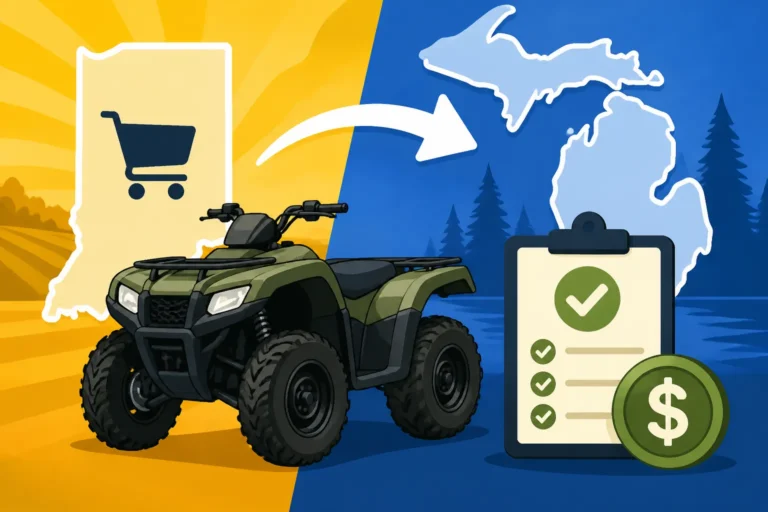
- Out-of-State Purchases: If you bought your ORV outside of Michigan, the titling process might involve slightly different forms or a VIN inspection, especially if the machine was previously registered and not titled in its home state. Consult [Michigan Title Rules for an ORV Bought Out of State].
- Deceased Owner: Transferring an ORV title after an owner dies involves specific legal steps, often requiring a death certificate and potentially probate court documents. The article [Transferring a Michigan ORV Title After an Owner Dies] provides guidance.
In all these cases, patience and thorough communication with the Secretary of State are key. It's far easier to address these issues upfront than to try to resolve them later.
What Happens If You Don't Title Your ORV?
Ignoring Michigan's titling requirements for your ORV might seem like a minor oversight, especially if you're used to other states' systems that focus more on registration. However, bypassing the titling process can lead to a cascade of problems, ranging from inconvenient fines to significant legal and financial setbacks. It's a risk that simply isn't worth taking for the sake of avoiding a trip to the Secretary of State office.
Legal Consequences and Fines
Operating an ORV that should be titled but isn't, especially on public lands or designated trails, puts you in a legally precarious position. While the state's focus is on titling, a law enforcement officer or Conservation Officer can issue citations for violations related to proper ownership documentation. You could face fines, and in some cases, your ORV could even be impounded until proof of ownership is established and the titling process is completed. This isn't just about avoiding a ticket; it's about adhering to the legal framework that ensures order and accountability within the ORV community.
Furthermore, if you're involved in an accident with an untitled ORV, your lack of proper ownership documentation could complicate insurance claims or legal liabilities. It might even be seen as negligence in some circumstances. The Michigan State Police and DNR routinely check for proper titling and permits, so operating an untitled machine is a gamble with potentially high stakes. The minor cost and time invested in titling your ORV upfront are far outweighed by the potential penalties and headaches you could face by neglecting it.
Selling an ATV in Michigan Without a Title: What Goes Wrong
Attempting to sell an ATV or UTV in Michigan without a valid title is a recipe for disaster. While you might find someone willing to buy a machine without a title, especially if it's priced very low, it immediately raises red flags for any informed buyer. Most legitimate buyers will (and should) insist on a clear, properly assigned title before handing over any money. Without it, they have no legal proof of ownership, and they'll face all the same titling hurdles you tried to avoid.
The absence of a title creates a murky legal situation. It could indicate that the machine is stolen, has a hidden lien, or was never properly transferred to your name. This significantly diminishes the value of your ORV and severely limits your pool of potential buyers. You might be forced to sell for a fraction of what it's worth, or struggle to sell it at all. The article [Selling an ATV in Michigan Without a Title: What Goes Wrong] delves into these pitfalls in detail. It's simply not worth the hassle or the financial hit. If you find yourself in this situation, address the missing title issue first, even if it means pursuing a bonded title, before attempting to sell.
Recovering a Stolen ORV Without Proper Paperwork
Imagine the worst-case scenario: your beloved ATV or UTV is stolen. It's a gut-wrenching experience. In this stressful situation, having a proper Michigan ORV title is your most powerful tool for recovery. When you report a theft to the police, the first thing they'll ask for is proof of ownership, and your title, along with the VIN, is that proof. The VIN from your title will be entered into national databases, alerting law enforcement across the country to the theft.
Without a title, proving to the police that the machine was yours in the first place becomes incredibly difficult. You might have a bill of sale or photos, but these are often not as definitive as a state-issued title. This lack of clear ownership documentation can severely hinder recovery efforts, making it harder for police to track, identify, and return your ORV even if they locate it. Insurance companies also rely heavily on titles for claims processing. If you can't prove ownership, your insurance claim might be denied or significantly delayed. This is a critical reason why securing your title and keeping it in a safe place (not on the machine itself, but a copy of your ORV paperwork can be carried with the machine) is so important, as highlighted in [Stolen ATV Recovery and the Title Trail].
Comparing Michigan to Other States: Why the Difference?
When you talk to fellow ORV enthusiasts from different parts of the country, you might hear them discussing annual registrations, license plates, and other requirements that sound completely foreign to a Michigan ORV owner. This can be confusing and lead to misunderstandings about what's legal or necessary. Michigan's unique approach to ORV ownership and operation, focusing on titling and separate permits rather than a unified registration, definitely sets it apart from many other states. Understanding these differences is especially important if you're moving to or from Michigan, or if you plan to take your ORV on a road trip to another state's trails.
States That Require Both Title and Registration
Many states combine the concepts of ownership (title) and permission to operate (registration) into a single, often annual, process. In these states, you'd typically apply for a title once to establish ownership, and then you'd also renew a "registration" annually or biennially. This registration often comes with a sticker or a small license plate that must be displayed on the ORV. The fees collected from these registrations usually fund trail systems, administrative costs, and sometimes even general state revenue.
For example, states like Wisconsin or Indiana have fairly robust ORV registration systems that are separate from their titling processes, or they combine both elements into a single renewal. If you were to purchase an ORV in one of these states and then bring it to Michigan, you would still need to title it in Michigan, even if it was "registered" elsewhere. Conversely, if you take your Michigan-titled ORV to a state with a registration requirement, you'll need to research their specific non-resident rules to ensure you're compliant. This often means purchasing a temporary non-resident permit or sticker to ride their trails.
Understanding Reciprocity for Out-of-State Riders
Reciprocity is a key concept for ORV riders who cross state lines. It refers to agreements or laws that allow a permit or license issued by one state to be recognized as valid in another. In the context of Michigan's ORV system, reciprocity primarily applies to the ORV license and trail permit, not the title. Michigan has some reciprocity with neighboring states regarding safety certificates, but for operating an ORV on public lands and trails, out-of-state riders typically need to purchase a Michigan ORV license and trail permit.
This means that even if you have a valid ORV registration and trail pass from, say, Ohio or Indiana, you generally cannot just bring that to Michigan and ride our trails. You would still need to purchase Michigan's specific annual ORV license and trail permit stickers. These stickers are relatively inexpensive and contribute directly to the maintenance of the trails you'll be enjoying. It's always best to check the Michigan DNR website or contact them directly before planning a trip to ensure you understand the latest requirements for non-residents. The article [ORV Permits for Out-of-State Riders in Michigan] offers more specifics.
Do Out-of-State Riders Need a Michigan ORV Title?
This is a frequently asked question, and the answer is generally no, an out-of-state rider does not need to get a Michigan ORV title for their machine unless they are becoming a Michigan resident. If you're just visiting Michigan with your ORV for a trail riding vacation, your out-of-state title (or whatever official proof of ownership your home state requires) is sufficient to prove ownership. Michigan's titling requirement is primarily for ORVs owned by Michigan residents or permanently housed in the state.
However, as discussed, you will need to purchase and display the Michigan annual ORV license and trail permit stickers to ride on Michigan's public trails and lands. So, while the title stays with your home state's regulations, the operational permits are specific to Michigan. If you move to Michigan and become a resident, you will then be required to title your ORV in Michigan, even if it already has a title from your previous state. This ensures consistency within Michigan's system and confirms that you're operating under the state's ownership framework. For detailed guidance on this, refer to [Do Out-of-State Riders Need a Michigan ORV Title?].
Keeping Your ORV Paperwork in Order
Once you've navigated the titling process, secured your annual ORV license and trail permits, and perhaps even put together a comprehensive bill of sale, your job isn't quite done. The ongoing responsibility of an ORV owner includes diligently managing all this paperwork. Misplacing a title, forgetting a permit, or not having key documents when you need them can quickly turn a fun day of riding into a stressful encounter. Proper organization is your best defense against potential hassles.
Storing Your ATV Title Somewhere Safe
Your Michigan ORV title is a critical legal document, akin to the title of your car or the deed to your home. It proves ownership, and if it's lost, replacing it can be a bureaucratic headache. Therefore, storing it in a secure location is paramount. Do NOT keep the original title in your ATV or UTV, or even in your trailer. These are places where it could easily be stolen, damaged by weather, or lost during a ride.
The best practice is to store your original title in a safe, secure place at home. This could be a fireproof safe, a secure filing cabinet, or a safe deposit box. Treat it like other important legal documents such as birth certificates, passports, or property deeds. Make a digital copy (scan or photo) and save it to a secure cloud service or an external hard drive, but never rely solely on a digital copy as the official document. Having a digital backup can be invaluable if the original is ever lost and you need to refer to the information on it for a replacement. Information on getting a replacement can be found in [Replacing a Lost Michigan ORV Title].
Carrying Essential Documents on the Trail
While you should never carry your original ORV title on the trail, you absolutely should carry certain essential documents. When a Conservation Officer or other law enforcement official stops you on a trail, they will likely ask for proof that you are legally allowed to operate the machine and that you are indeed the rightful operator.
Here’s what you should carry:
- Photo ID: Your valid driver's license or state ID.
- Proof of ORV Ownership: A copy of your ORV title. A clear photocopy or a digital image on your phone can serve as proof of ownership in a pinch, even if it's not the original.
- Proof of ORV Insurance: While not always required for ORVs (especially if not street-legal), it's always wise to carry proof of any insurance you have for the machine.
- ORV Safety Certificate (if applicable): If you are a younger rider or fall under the age requirements for needing one, carry your safety certificate.
- ORV License and Trail Permit: These must be physically affixed to your ORV, but it's not a bad idea to also have a picture of them or the purchase receipt handy, just in case they are damaged or become unreadable.
Keep these documents in a waterproof bag or pouch in a secure compartment on your ORV or on your person. This keeps them safe from the elements and ensures they are readily accessible. You can learn more about what to carry in [Keeping Your ORV Paperwork With the Machine] and [Michigan ORV Paperwork During a DNR Stop].
The Importance of a Bill of Sale
Even though Michigan ORV titles are the official proof of ownership, a comprehensive bill of sale remains an incredibly important document, especially for private-party transactions. A bill of sale acts as a detailed contract between the buyer and seller, documenting the terms of the sale. It typically includes:
- Date of Sale: Crucial for calculating Michigan's 15-day title transfer window.
- Buyer and Seller Information: Full names, addresses, and contact details for both parties.
- ORV Details: Make, model, year, and most importantly, the Vehicle Identification Number (VIN).
- Purchase Price: This is essential for calculating the Michigan use tax you'll pay at the Secretary of State.
- "As-Is" Clause: Most private sales are "as-is," meaning the buyer accepts the machine in its current condition with no warranty.
- Signatures: Signatures of both the buyer and seller, sometimes with a witness.
While the Secretary of State primarily relies on the signed title for transfer, a bill of sale can prevent disputes about the purchase price (and thus the amount of tax owed), clarify the condition of the machine at the time of sale, and serve as an additional record of the transaction. If you're ever in a situation where the title is delayed or has an issue, a detailed bill of sale can be vital in proving your purchase. You can easily find templates for a robust bill of sale from reliable online legal services like LawDepot, ensuring all necessary clauses are included for your protection. The article [Michigan ATV Bill of Sale Template Requirements] provides further detail on what to include.
Table: Michigan ORV Documentation Overview
To help clarify the various pieces of paperwork, here's a quick comparison of their purpose and requirements:
| Document Type | Primary Purpose | When It's Needed | Is it Annual? | Where to Keep It |
|---|---|---|---|---|
| ORV Title | Proves Legal Ownership of the Machine | When buying/selling ORV; required for financing; proof for insurance/theft | No (One-time per owner) | Securely at home (fireproof safe) |
| ORV License Sticker | Permits Operation on Public ORV Land (not trails) | Required to ride on any Michigan public ORV land | Yes | Affixed prominently to the front of the ORV |
| ORV Trail Permit | Permits Operation on Designated ORV Trails/Routes | Required to ride on Michigan's marked ORV trails, routes, and scramble areas | Yes | Affixed prominently to the front of the ORV |
| Bill of Sale | Documents Purchase Terms & Price for Private Sale | Highly recommended for private sales; clarifies tax basis & "as-is" condition | No | Keep a copy with title; digital backup recommended |
| Safety Certificate | Required Training for Younger Riders | For riders under specific age limits (check current Michigan DNR guidelines) | No | Carry a copy on your person/ORV (if required) |
Disclaimer
This article is for general informational purposes only and does not constitute professional advice. Laws, prices and regulations vary by location and change over time. Consult a qualified professional for guidance on your specific situation.