Riding the UP During Late September Color
Late September can be a beautiful time to ride Michigan’s Upper Peninsula, but color, weather, trail access, and daylight do not line up neatly across the region. You might find brilliant maples on one stretch and mostly green forest farther north. This guide helps you plan a fall ATV or UTV ride around changing conditions, choose a suitable area, and avoid common late-season surprises.
Plan around changing fall color and conditions
Treat color reports as a guide, not a guarantee
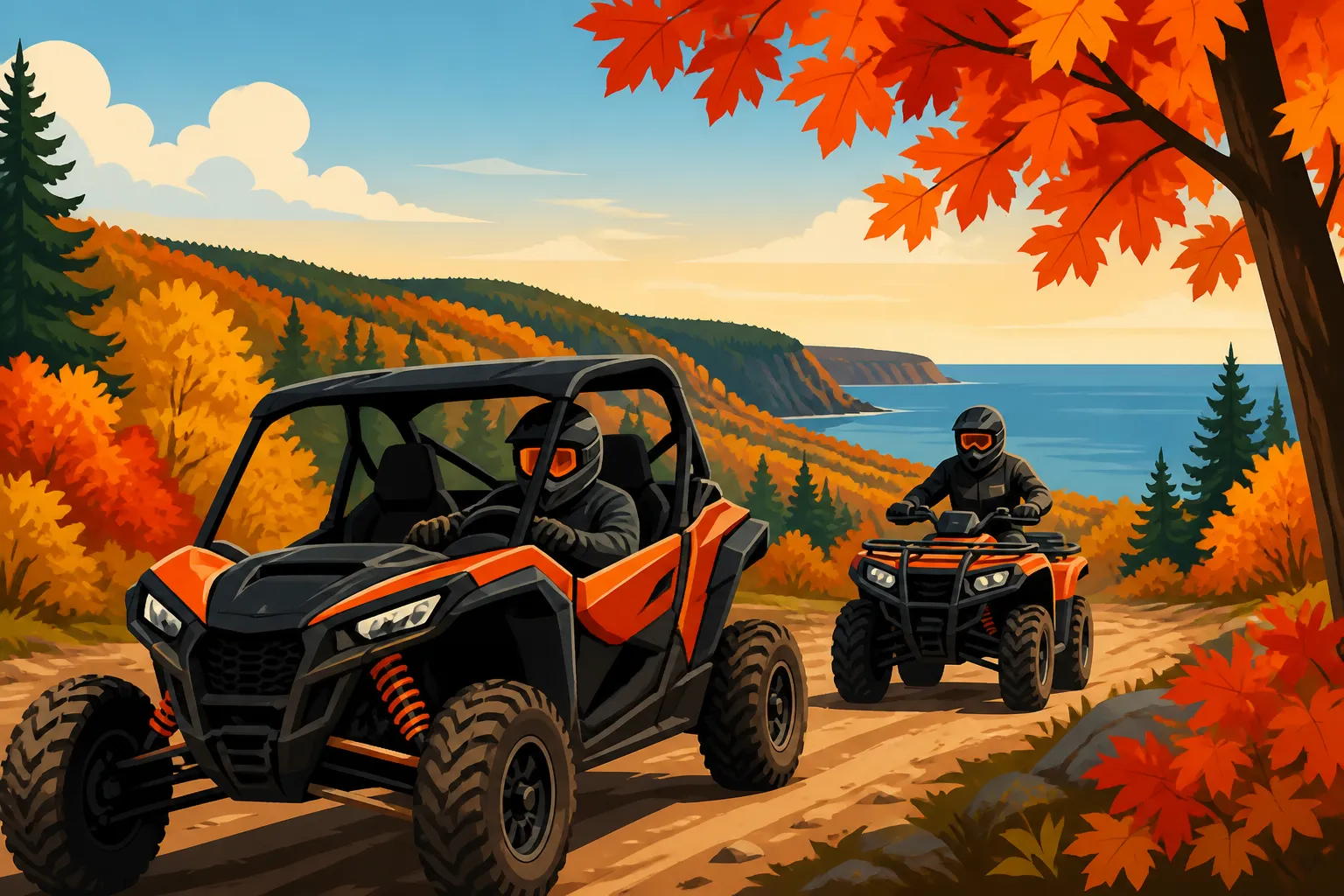
The Upper Peninsula is large, and its fall color does not arrive all at once. A ride near Marquette may look different from one around Ontonagon or the Keweenaw, even on the same weekend. Elevation, lake influence, recent temperatures, and local weather all affect what you see. Late September can bring strong color in some places while other areas are just beginning to turn.
That uncertainty is part of the appeal, but it can make trip planning frustrating. If your main goal is seeing fall color, avoid building the whole trip around one precise trail or a single peak-color prediction. Pick a base area with several riding options and allow time to change plans. A clear morning in the woods may offer better views than a rainy afternoon, even if the leaves are not at their brightest.
For a broad overview of destinations, start with [Upper Peninsula ATV Trails Worth the Drive]. Then narrow your options based on where you are staying, how far you want to travel between trailheads, and what kind of terrain your machine can handle. Areas around Marquette, Iron County, Ontonagon County, and the Keweenaw each offer a different setting; they are not interchangeable stops on a quick afternoon loop.
Expect a mix of leaf color, mud, and shorter days
Fall riding is not automatically dry or comfortable. A stretch of rain can leave low areas muddy, expose slippery roots, and make leaves slick over rocks. A trail that felt easy in dry summer weather may demand slower riding after rain, especially on shaded sections where the ground stays damp. In a side-by-side, allow more room to brake and turn; on an ATV, be ready to shift your weight and reduce speed before corners.
Temperature can also change quickly between a sunny opening and a shaded forest corridor. Pack a warm layer that you can put on during a stop, plus rain protection that does not interfere with riding safely. Check the forecast for the particular area you plan to ride rather than relying on conditions in a town hours away. Wind can bring down branches, and wet leaves can hide ruts or small obstacles.
Daylight is another practical limit. The sun sets earlier than it did in midsummer, and dense woods can feel dim well before sunset. Set a turnaround time that leaves room for delays, a wrong turn, or a slow section. A ride that starts late in the afternoon can become stressful when the group is still trying to find the trailer after dark.
Choose a ride that fits your group and machine
Match the route to your vehicle’s width and experience
Michigan riding areas can include trails and routes with different width limits and surface conditions. Before you go, confirm that the route allows your ATV or UTV. A full-size side-by-side should not be assumed to fit every trail just because it is listed as an ORV trail. The distinction matters when you are planning for a group that includes different machine sizes.
Check the riding-area map and posted signs before unloading. [Michigan ORV Trail Widths Explained] can help you understand why width categories matter, while [Michigan ORV Trail Maps and What the Signs Mean] is useful for interpreting the map and trail markers. If a sign or map indicates that a route is not suitable for your machine, do not treat that as a suggestion. Choose a compatible route instead.
For riders who are new to the area, a shorter out-and-back or a clearly mapped loop is often more enjoyable than an ambitious all-day route. Keep the first ride manageable, especially if the group includes children, newer riders, or passengers who are not used to hours on rough ground. A scenic stop is only relaxing if everyone still has enough daylight and energy to get back.
Build your itinerary around practical stops
A fall ride can involve long stretches between services, particularly in more remote areas. Before leaving town, identify fuel options, food, and a place to park or stage your machines. Do not assume that a gas station near your lodging will be convenient once you are out on the trails. [Fuel Stops Along Michigan ORV Trails] is a useful starting point for thinking through refueling, but confirm the locations and hours that apply to your particular route.
If your plan includes multiple riding areas, account for the time needed to load and transport the machines. Moving a trailer between trailheads can take longer than expected, and a scenic stop or slow group member can shift the schedule. It may be better to spend a full day exploring one area than to rush between distant destinations in pursuit of a color report.
| Planning choice | A good fit when | What to check |
|---|---|---|
| One base area for several days | You want flexibility if color or weather varies | Nearby routes, lodging, fuel, and legal staging locations |
| A single mapped loop | Your group prefers a clear start and finish | Loop length, width limits, closures, and daylight |
| A longer point-to-point ride | Riders are experienced and have transport arranged | Return plan, fuel range, road connections, and recovery options |
| A short ride with scenic stops | You have newer riders or want a relaxed day | Safe stopping areas, route access, and time to return |
Check access, maps, and permits before unloading
Confirm seasonal access and closures
Late September falls near the transition from summer riding toward fall and winter conditions. Access can vary by trail, road, land manager, and local restrictions. A route shown on an older map may be closed, temporarily unavailable, or subject to seasonal dates. Check the current information for the exact riding area before traveling, and look for posted notices at the trailhead when you arrive.
Start with [Michigan ORV Trail Closures and Seasonal Dates] and verify details with the relevant land manager or official trail information. Heavy rain may also affect whether riding is appropriate, even if the trail is technically open. [ORV Trails After Heavy Rain] offers useful context for why waiting can protect both riders and the trail surface. If conditions are soft or deeply rutted, turning around can be the responsible choice.
A navigation app can help you stay oriented, but it should not replace official maps or signs. Some riders use onX Offroad to review route options and prepare offline maps before leaving areas with reliable cell service. Treat any digital map as a planning aid, compare it with current official information, and follow posted closures if the two disagree. Cell coverage can be limited in wooded or remote areas, so download the information you expect to need before heading out.
Sort out permits, machine details, and road connections
Before the trip, check which permits apply to the places you intend to ride. Requirements can depend on whether you are using a designated trail, a public road, private land, or a managed recreation area. Do not assume a permit for one type of riding automatically covers another. Review [Michigan ORV License and Trail Permit Explained] and confirm the requirements for your specific route and machine.
Also consider whether your itinerary depends on riding short sections of public roads. Road access and local ordinances can differ by county or municipality, and an open route on a map does not mean every connecting road is legal for ORV use. Check signs and local rules before entering a road corridor. If your trip crosses jurisdictions, verify each section rather than relying on a general assumption about UP riding.
Save trail maps, lodging details, and emergency contacts offline. onX Offroad may be useful for viewing saved route information when service is weak, but keep a backup map and make sure someone at home knows your general plan. Before the group leaves the staging area, agree on what to do if riders become separated, a machine has a mechanical problem, or weather worsens.
Make the ride comfortable, safe, and considerate
Pack for a full day, not just the forecast
A late-September forecast can look mild while the wind, shade, and damp gear make a long ride feel cold. Dress in layers, use gloves that remain comfortable when wet, and bring eye protection suited to dust, leaves, and changing light. A helmet and any other required safety gear should be in good condition and fitted properly before the group starts.
Carry water, snacks, a basic first-aid kit, a charged phone, and any medication you may need. Bring tools and recovery equipment that match your machine and the route. The right kit depends on whether you are riding a short, popular loop or spending hours in a remote area, but a small roadside-style kit can be a big help when a simple issue interrupts the day. [Packing List for a Full Trail Day] can help you build a checklist without overloading your machine.
Tell someone where you plan to ride and when you expect to return. If your route changes, update that person when you have service. For groups, set a pace that keeps riders together without pressuring less experienced operators to ride beyond their comfort level. A scenic fall ride should not turn into a race to reach the next trail marker.
Respect local riders, residents, and the trail
Fall color draws visitors to small towns and rural roads that may be busy with everyday traffic, hunters, farm vehicles, and other recreation users. Ride predictably, keep noise down near homes, and use only legal routes. Yield as appropriate, slow down when visibility is limited, and leave room for other trail users to pass safely.
Holiday weekends can bring more traffic, especially at popular staging areas and well-known riding destinations. [Michigan ORV Trail Crowding on Holiday Weekends] is worth considering if your dates are flexible. Starting early, choosing a less-busy area, or riding on a weekday can make the experience calmer. Still, do not assume a quiet-looking trail is private or open; verify access and follow signs.
Pack out trash, avoid widening muddy sections, and do not ride around barriers or closure signs. Those choices help preserve access for future visitors and local riders. If you are camping, choose a legal site and check whether the campground allows trailers, machines, or direct trail access. [Camping Near Michigan ORV Trails] can help you think through lodging and trailhead logistics before you arrive.
Disclaimer
This article is for general informational purposes only and does not constitute professional advice. Laws, prices and regulations vary by location and change over time. Consult a qualified professional for guidance on your specific situation.