Holly Oaks ORV Park Terrain and Obstacles
Holly Oaks ORV Park can feel intimidating when you arrive without knowing whether the terrain suits your machine or your experience level. The park near Holly, Michigan, offers a mix of off-road conditions and obstacles, so this guide explains what riders may encounter, how to choose a sensible route, and what to check before unloading your ATV or UTV.
What the Terrain at Holly Oaks ORV Park Is Like
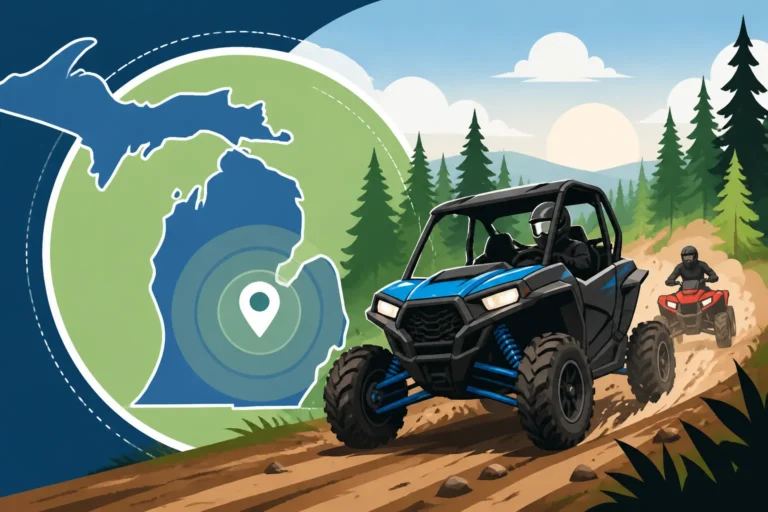
Holly Oaks is an off-road riding area in Holly, northwest of Detroit. Its terrain is not like following one smooth, uniform forest trail for miles. Riders should expect changing surfaces and areas with different levels of challenge, which makes it important to look around before committing to an obstacle or route.
Conditions can change with weather, maintenance, traffic, and park access decisions. A section that looked manageable on a previous visit may feel different after rain or after other riders have churned up the surface. Treat the terrain you see that day—not a remembered description or an old video—as your best guide.
A mix of surfaces rather than one continuous trail
At a park with varied off-road terrain, a ride may involve compacted ground, loose material, uneven tracks, slopes, and rough patches. The feel can shift quickly: a firm-looking approach may lead to a softer or more irregular section, while a route that appears steep from a distance may be more manageable once you assess its width, surface, and exit.
That variety is part of what makes a visit interesting, but it also means you should avoid assuming every route is suitable for every machine. A smaller ATV, a wide side-by-side, and a two-wheel-drive utility vehicle can behave differently on the same ground. Pay attention to the space available to turn around, the room between obstacles, and whether the route has a safe way out.
If you are comparing Holly Oaks with a traditional trail network, it may help to read [Michigan ORV Trail Difficulty Ratings](Michigan ORV Trail Difficulty Ratings) and [Michigan ORV Trail Widths Explained](Michigan ORV Trail Widths Explained). Trail ratings and width rules are useful context, but a park’s actual conditions still need to be judged on site.
Terrain changes with weather and use
Rain can make slopes slippery and soften ground that was firm during a dry visit. Repeated traffic can also create ruts, loose berms, or uneven approaches. These changes matter even when a section looks familiar: tires may lose traction sooner, a vehicle may settle into a rut, or a line that was easy to follow may have become rougher.
After wet weather, give yourself extra time to inspect the route. Look for standing water, washed-out edges, deep ruts, and places where the surface changes from firm to soft. If the route is already showing signs of damage, do not add to it by spinning the tires or trying to power through. Turning around is often the more responsible—and less costly—choice.
For a broader look at how weather affects trail conditions, see [ORV Trails After Heavy Rain](ORV Trails After Heavy Rain) and [Mud Season Damage on Michigan Trails](Mud Season Damage on Michigan Trails). The same basic habits apply at a riding park: slow down, protect the terrain, and adjust your plans to the conditions you find.
Common Obstacles and How to Approach Them
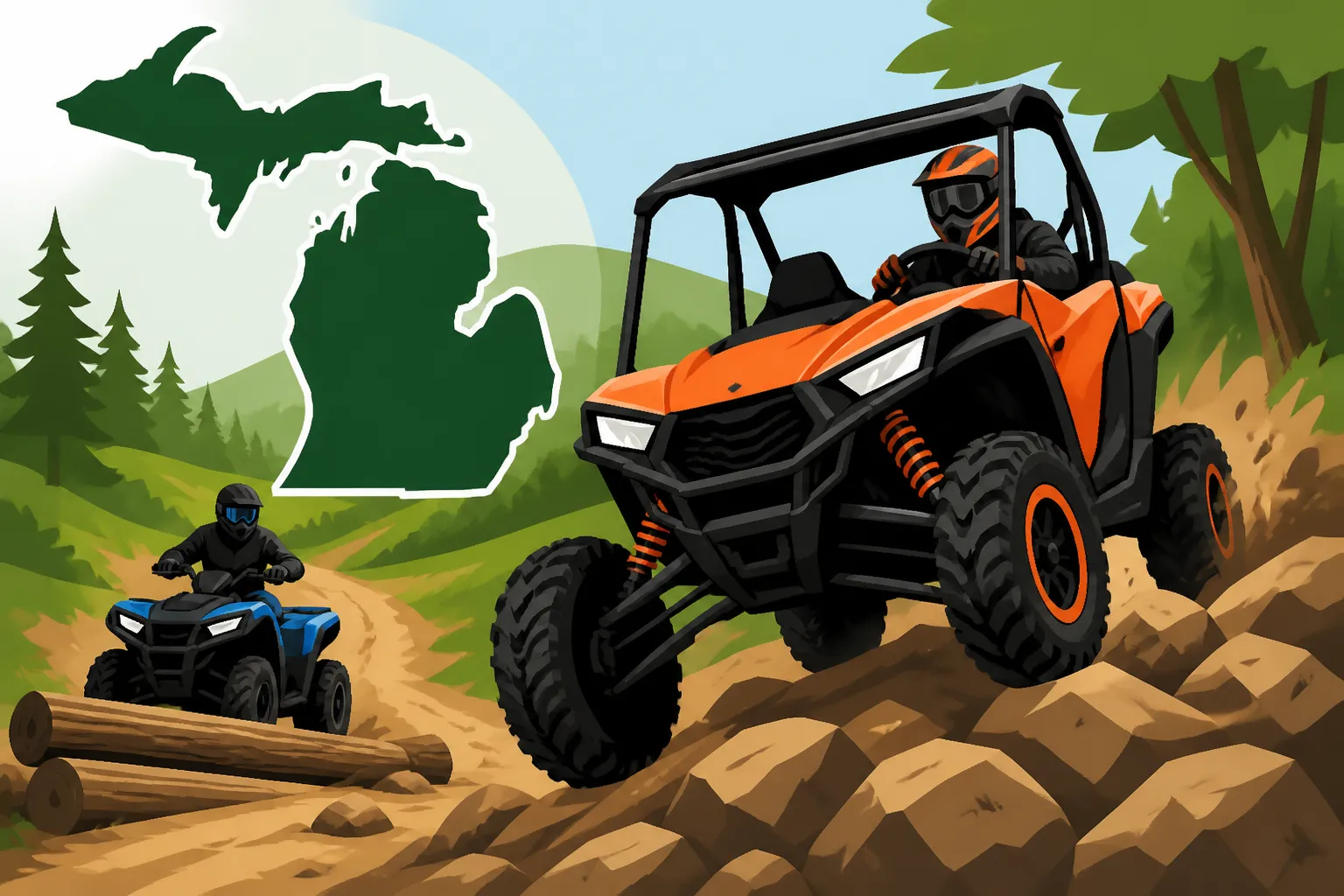
“Obstacle” can mean more than a large, dramatic feature. It may be a steep or uneven grade, a rut, a loose climb, a tight turn, or a section that requires careful placement of the tires. The challenge is often less about horsepower than about choosing a good line, maintaining control, and knowing when a route is beyond your comfort level.
Do not ride an obstacle simply because someone else has taken it on. Their machine, setup, experience, and understanding of the route may be very different from yours. Take a moment to observe how the surface behaves and whether you have enough room to stop or back out safely.
Slopes, ruts, and loose approaches
On a slope, look at both the approach and the way out. Check whether the surface is firm or loose, whether the grade changes sharply, and whether the route has a clear path if you need to stop. Avoid approaching at a speed that leaves you with no time to react. A steady, controlled pace gives you more options than a rushed attempt.
Ruts can affect steering and ground clearance. A rut that seems shallow from the seat may be deeper than it looks, especially if the edges are loose or the bottom is soft. With a side-by-side, also consider the width of the vehicle and whether both tires can stay on a stable line. Do not let a passenger’s encouragement or a growing line of waiting riders push you into a maneuver you have not assessed.
If a climb or descent feels questionable, pause and choose another route if one is available. Before attempting a steep section, understand how your machine responds to braking and low-speed control. Riders still building confidence may find it useful to review [Michigan Trail Rides for Beginners](Michigan Trail Rides for Beginners) before heading out.
Rocks, uneven ground, and tight turns
Uneven ground can shift a vehicle’s weight from side to side. On an ATV, standing with knees slightly bent can help you respond to small changes in balance, but it does not make every slope or obstacle safe. On a UTV, passengers should be seated and secured according to the vehicle’s instructions, with arms and legs kept inside the cab.
When approaching a rocky or irregular section, slow down enough to identify where the tires will travel. Avoid sudden steering inputs, and do not assume that a route is passable just because another machine has crossed it. A different wheelbase, ground clearance, tire size, or vehicle width can change the difficulty considerably.
Tight turns can also be more demanding than they look. Check the space around the vehicle, watch for other riders, and avoid stopping where you block an approach or create a blind corner. If you need to reverse, do it deliberately and make sure the path behind you is clear. Good trail etiquette matters in shared riding areas; [Trail Etiquette on Shared Routes](Trail Etiquette on Shared Routes) offers helpful habits that carry over to a busy ORV park.
Choosing Routes for Your Machine and Experience
A satisfying day at Holly Oaks does not require tackling the toughest-looking feature. It is usually more enjoyable to begin with ground you can read confidently, learn how your machine responds, and add difficulty only if the conditions and your comfort level support it. That approach helps new riders avoid damage and gives experienced riders a chance to assess the day before taking on more demanding terrain.
Vehicle fit matters as much as rider confidence. A narrow ATV may fit through a line that a wider side-by-side cannot safely use. A heavy utility UTV may need a different approach on loose ground than a lighter sport machine. Before trying a feature, think about clearance, turning room, traction, passenger readiness, and whether your vehicle is appropriate for the route.
Use a simple route-check before committing
Before entering a section, take a moment to answer these questions:
- Can I see the full route? If the crest, exit, or landing area is hidden, do not guess. Find a safe place to stop and inspect the line without standing in another rider’s path.
- Does the route suit my machine? Consider width, ground clearance, traction, and the space needed to turn around.
- What are the conditions today? Look for recent rain, loose material, ruts, standing water, or signs that the surface has changed.
- Is there a safe way to stop or exit? If you lose traction or decide to turn back, you need room to do so without creating a hazard.
- Are other riders approaching? Avoid entering a narrow or blind section if someone is already using it.
If any answer gives you pause, choose another line or wait until you can assess the section more clearly. A quick walk-around may reveal a drop, soft edge, or tight squeeze that was difficult to see from the driver’s seat. Keep people out of the path of moving vehicles while you look.
Make a plan for mixed-ability groups
A group ride can become stressful when everyone has a different idea of what “easy” means. Before riding, agree that anyone can call for a pause or choose an easier route without being teased. Keep the group size manageable around narrow features, and leave enough space between vehicles to avoid dust, sudden stops, or pressure from the rider behind.
For families, the best plan may be to focus on steady riding and observation rather than obstacle challenges. Young riders need routes that fit their age, training, and machine size, as well as close supervision. Review [Michigan ORV Age Rules at 10, 12 and 16](Michigan ORV Age Rules at 10, 12 and 16) and [Supervising a Young Rider on the Trail](Supervising a Young Rider on the Trail) before bringing children to an off-road riding area.
Navigation tools can help with trip planning, but they do not replace posted park signs or on-site judgment. Some riders use onX Offroad to prepare for a trip and keep track of their location. Check that you have the correct area open before relying on any map, and follow signs and staff directions if they differ from what you expected.
Planning a Safer Visit to Holly Oaks
A little preparation makes the day easier, especially if this is your first visit. Check the park’s official visitor information for current access, operating rules, closures, and any requirements that apply to your machine. Do not rely on an old social post or a previous visit to answer questions about access today.
The same goes for riding permissions and equipment. Michigan ORV requirements can depend on where and how you ride, while park rules may add their own conditions. If you are unsure what applies, review [Michigan ORV License and Trail Permit Explained](Michigan ORV License and Trail Permit Explained) and confirm the park’s posted requirements before you travel.
What to check before leaving home
Use this practical checklist to reduce last-minute surprises:
| Check | Why it matters |
|---|---|
| Park access and closures | Conditions and available riding areas can change |
| Machine dimensions and condition | The vehicle must fit the intended route and be mechanically sound |
| Required permits and documents | Requirements vary by riding location and machine |
| Safety equipment | Helmets and other protective equipment reduce risk |
| Fuel and water | A prepared rider is less likely to cut a ride short |
| Weather and recent rain | Wet or changing ground can make familiar routes harder |
| Group plan | Riders should agree on pace, meeting points, and when to turn back |
Inspect the machine before unloading. Check tires, brakes, steering, controls, and any safety equipment required by the vehicle manufacturer or park rules. For a UTV, confirm seat belts and doors or nets are properly secured. For an ATV, wear a helmet that fits and fastens correctly, and bring eye protection suited to dusty conditions.
Bring water, a basic first-aid kit, and a way to contact your group if you become separated. Keep your phone protected from dust and impacts. If you use onX Offroad as part of trip planning, download or prepare the information you may need before you head into areas where reception could be unreliable. Treat navigation as a backup aid, not permission to leave designated areas.
Respect signs, other riders, and the terrain
Follow posted directions and stay within areas open to your machine. Do not ride around a closure, cut across vegetation, or create a new route because an established line looks crowded. A closed or restricted section may be unavailable for safety, maintenance, or land-management reasons.
Give other riders room, especially near blind approaches and narrow obstacles. Wait until the route is clear before entering, and avoid stopping in a place where oncoming riders cannot see you. If another rider is having difficulty, offer help only when it is safe to do so and without putting yourself in the path of a moving vehicle.
A good visit is not measured by how many difficult features you attempt. It is measured by getting home with your machine in one piece, your group in good spirits, and the riding area no worse for your visit. For more trip-planning context, see [Michigan ORV Staging Areas and Parking](Michigan ORV Staging Areas and Parking) and [Packing List for a Full Trail Day](Packing List for a Full Trail Day).
Disclaimer
This article is for general informational purposes only and does not constitute professional advice. Laws, prices and regulations vary by location and change over time. Consult a qualified professional for guidance on your specific situation.