What You Need to Ride the Silver Lake Dunes
A trip to the Silver Lake Sand Dunes can get complicated before you even reach the sand: riders need the right permits, a dune-ready machine, required safety equipment, and a plan for entry and staging. This guide walks through what to prepare, what to check before unloading, and how to avoid common first-ride surprises at Silver Lake State Park in Oceana County.
Sort out permits and entry before you leave
Know which permits and passes apply
Silver Lake’s ORV area is part of Silver Lake State Park, but park entry and riding access are not the same thing. Depending on your vehicle and how you access the park, you may need a Recreation Passport, an ORV license, and a separate permit for the dune riding area. Requirements can differ for residents, nonresidents, rentals, and vehicles already carrying certain passes, so confirm the current rules with Michigan’s Department of Natural Resources before your trip.
Do not assume that a trail permit covers the dunes, or that a park pass automatically authorizes ORV riding. Check what applies to each vehicle, how the required license or permit must be displayed, and where to purchase anything you still need. Start with [Silver Lake Dune Vehicle Requirements Checklist] and [Recreation Passport vs ORV Trail Permit in Michigan] to keep the different requirements straight.
If you are comparing permit expenses, use [Silver Lake Dune Permit Cost for One Day] as a starting point, then confirm current prices and purchase instructions through the state. Fees and procedures can change, and a rental shop may handle some requirements for its customers while expecting the driver to take care of others.
Prepare your documents and arrival plan
Before driving north, gather the documents and information you may be asked to show. This can include your driver’s license, proof of vehicle ownership or rental paperwork, and evidence that required permits are valid. If the ATV or UTV belongs to someone else, ask the owner for the paperwork and confirm that the machine is eligible for the ride. A bill of sale or a photo of a document may not be accepted as a substitute for required vehicle records.
Also check the operating schedule, entry instructions, and any temporary closures before setting out. A busy weekend can involve delays at the entrance, permit or inspection checks, and time spent getting vehicles ready. Arriving with documents easy to reach—and with everyone in your group aware of the rules—can save a frustrating scramble in the parking area.
If your route includes public roads or trails beyond the dune area, check those rules separately. [Michigan ORV License and Trail Permit Explained] helps explain why the permit requirements for one riding area may not answer every question about riding elsewhere.
Make sure your vehicle is suitable for the sand
Check the machine before the trip
A machine that runs well on a wooded trail is not automatically ready for a dune ride. Before leaving home, inspect the brakes, steering, tires, throttle, lights, and any required safety equipment. Look for leaks, loose fasteners, damaged belts, and worn tires. On a side-by-side, check seat belts, doors or nets, and the condition of the rollover protection. On an ATV, confirm that the machine is designed for the number of riders you plan to carry.
Sand can put a machine under sustained strain. A loose belt or a small cooling issue that seemed harmless on a short local ride can become a bigger problem when you are climbing or moving through soft terrain. Pack basic recovery and repair supplies appropriate to your vehicle, but do not rely on tools as a substitute for a pre-trip inspection.
Tire setup matters, but there is no single pressure that suits every vehicle, tire, load, and riding style. Adjustments that work for one machine may be inappropriate for another. Review your manufacturer’s recommendations and get advice from a knowledgeable shop if you are uncertain. For more on the trade-offs, see [Tire Pressure for Riding Silver Lake Sand] and [Paddle Tires for Silver Lake Riding].
Display the required flag and follow vehicle rules
A visible whip flag is an important part of dune riding because terrain changes can hide vehicles from one another. Check the current Silver Lake rules for flag height, visibility, attachment, and any other equipment requirements before you arrive. Make sure the flag is secure and will stay upright, and carry a spare or repair option if your setup is prone to damage.
Vehicle requirements can apply to more than the flag. The park may have rules concerning equipment, passenger capacity, and vehicle condition, and staff may inspect machines before entry. Read [Whip Flag Height Rules at Silver Lake] and [Silver Lake Dune Vehicle Requirements Checklist] before packing. If a machine does not meet the posted requirements, you may have to leave it out of the riding area.
| Before you ride | What to check | Why it matters |
|---|---|---|
| Permits and park entry | Which passes apply to each vehicle and rider | A park pass and an ORV riding permit may serve different purposes |
| Vehicle condition | Brakes, steering, tires, throttle, belts, and visible damage | Soft sand can expose mechanical problems quickly |
| Flag and required equipment | Current height, visibility, mounting, and equipment rules | Other riders need to see your machine across changing terrain |
| Passenger setup | Approved seating, seat belts, helmets, and age-related rules | A passenger must be carried safely and legally |
| Trip timing | Operating schedule, closures, and expected entry delays | A late arrival or closure can disrupt the whole day |
Pack for a safer and more comfortable ride
Bring protective gear for every rider
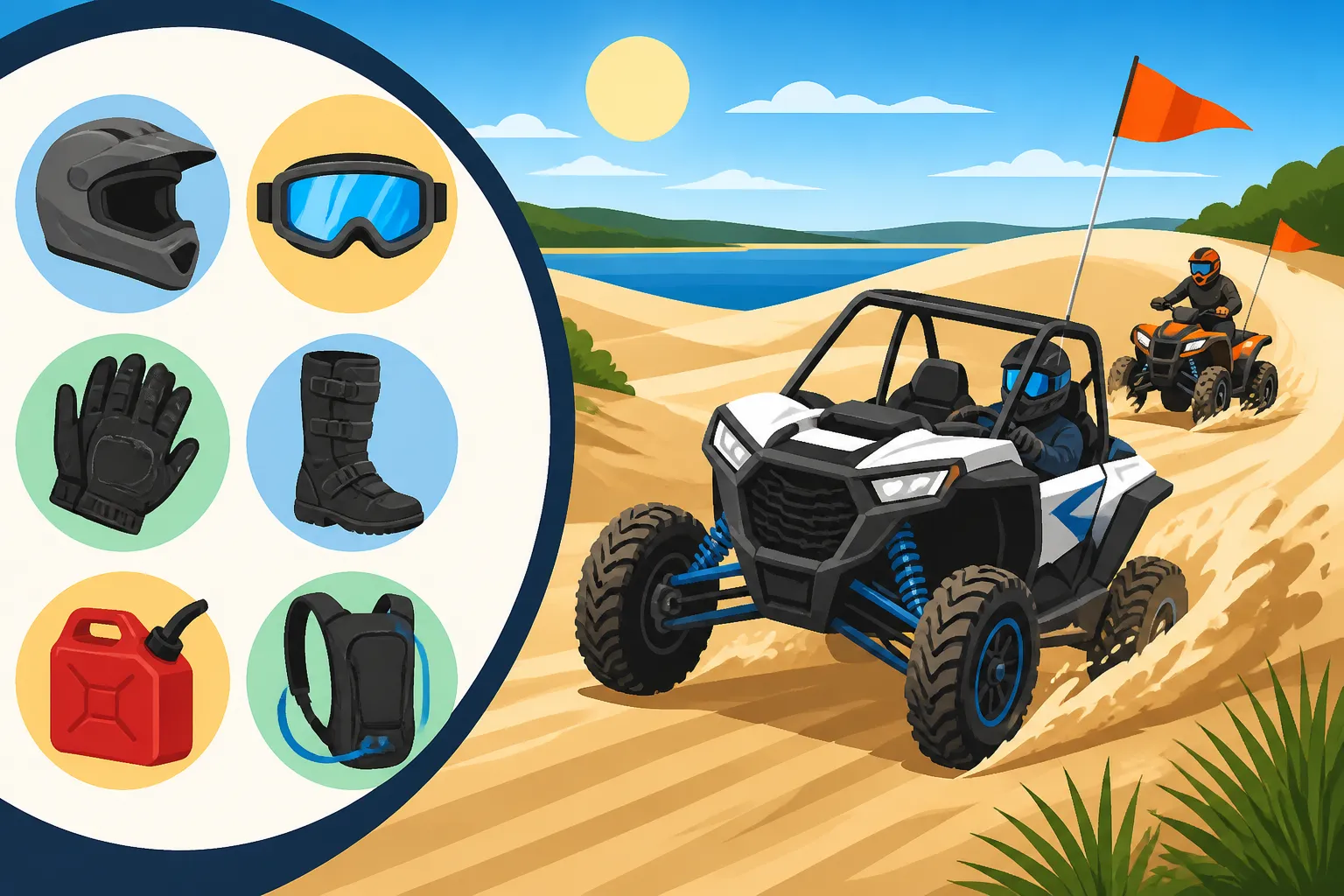
A dune day is dusty, sunny, and physically demanding. Bring protective gear that fits each person, not just the driver. Depending on the machine and applicable rules, riders may need helmets, eye protection, and other protective equipment. In an open ATV, goggles can help keep sand out of your eyes; in a side-by-side, suitable eye protection is still useful when dust enters through open sides.
Wear sturdy clothing and footwear that cover exposed skin and stay secure while riding. Bring water, sunscreen, and a change of clothes, especially if you are traveling with children. Sand gets into pockets, zippers, and bags, so use containers that close securely and keep phones and documents protected. Do not leave essential safety gear in a vehicle parked far from the riding area.
Check age, passenger, and supervision rules before bringing young riders. A child who is comfortable in a passenger seat still needs correctly fitted protection and a machine designed for that use. [Silver Lake Dunes With Kids: What to Know] and [Michigan ORV Rules for Riders Under 16] can help you think through the extra planning involved.
Carry practical recovery and communication supplies
Bring enough water and food for the time you expect to spend at the dunes, plus a little extra in case entry takes longer than planned. A charged phone is useful, but service may be unreliable in some riding areas, so make a meeting plan that does not depend on calling each other. Agree on a place to regroup if your party gets separated, and make sure everyone knows how to describe the location to park staff.
For the machine, consider carrying basic tools, a tire repair kit suited to your setup, and recovery equipment you know how to use. A recovery strap is not useful if nobody in the group knows where it can safely attach. Keep loose gear secured so it cannot shift during a ride, and avoid carrying items that could interfere with steering, pedals, belts, or protective equipment.
If you are navigating the wider area, an app such as onX Offroad can help you review mapped roads and riding routes before heading out. Treat it as a planning aid, not permission to ride anywhere shown on a map. The Silver Lake dune area has its own boundaries and rules, and posted signs and official information take priority. You can also use onX Offroad to organize a broader trip, but do not assume that a route outside the dunes is open to ORVs simply because it appears on a map.
Plan the ride and avoid common first-day problems
Expect a different pace on sand
Sand riding takes more attention than many first-time visitors expect. A machine may handle differently as the surface changes, and steep slopes can limit visibility. Keep space between vehicles, choose a pace that leaves room to react, and avoid following another rider so closely that you cannot see the terrain ahead. If you are new to dunes, start with conservative routes and work up gradually rather than trying to match the fastest riders.
A group should agree on a simple plan before entering. Decide who leads, who rides last, where to stop, and what to do if someone gets stuck or has a mechanical problem. Do not split up without a clear regrouping point. If a vehicle becomes stuck, avoid hurried recovery attempts that could put people in the path of another machine. [Silver Lake Dune Riding for First-Timers] and [Getting Stuck in the Dunes at Silver Lake] cover useful situations to consider before you ride.
Check conditions and time your arrival thoughtfully
Wind, weather, crowd levels, and changing surface conditions can affect how comfortable the day feels. Check local conditions and park notices before you leave, and be prepared to change plans if conditions are poor or the area is closed. Avoid assuming that a past visit tells you exactly what to expect this time. If you are bringing a trailer, allow time to park, unload, secure gear, and complete any required checks before riding.
Busy periods can add waiting and make the riding area feel more demanding, especially for beginners. Build a buffer into your schedule rather than planning around a tight arrival. [Silver Lake Dune Entry Line Wait Times] and [Best Time of Day to Ride Silver Lake Dunes] can help with planning, but confirm the day’s operating information before setting out.
For riders arriving from outside the dune area, onX Offroad can help with advance route planning around nearby roads and destinations. Before following any mapped route, verify that it is open to your type of vehicle and legal for the way you intend to ride. If you are unsure, stay on the designated access route and ask park staff rather than treating a map line as authorization.
Disclaimer
This article is for general informational purposes only and does not constitute professional advice. Laws, prices and regulations vary by location and change over time. Consult a qualified professional for guidance on your specific situation.