Riding the Silver Lake Sand Dunes in Michigan
Silver Lake’s open sand can look like an invitation to ride anywhere, but only a designated area is open to off-road vehicles, and the rules are easy to miss when you’re focused on the dunes. This guide explains how to plan a ride, prepare your ATV or UTV, follow local requirements, and make the most of your time at Michigan’s best-known sand-riding destination.
Understand the Silver Lake Sand Dunes riding area
Where riding is allowed
Silver Lake State Park is on Michigan’s west coast, near Mears and the community of Silver Lake. Its dunes stretch along Lake Michigan, but the entire dune system is not an open riding area. ORV use is limited to the designated riding area, which is separated from land reserved for other park uses. That distinction matters: dunes that look accessible from a distance may be outside the permitted boundary.
Before unloading, check the park’s official map and the signs at the entrance. Pay attention to boundary markers as you ride, especially when you’re moving between open sand, staging areas, and the edges of the riding zone. If the route or boundary is unclear, stop and check rather than following tire tracks. Tracks show where someone went; they do not prove that the route is legal.
First-time visitors sometimes expect the whole landscape to function like a large, unmarked trail network. It doesn’t. The riding area has its own access points, use rules, and traffic patterns, so spend a few minutes orienting yourself before heading onto the sand. For general route-planning ideas elsewhere in the state, see [Michigan ORV Trail Maps and What the Signs Mean].
How the dunes differ from forest trails
A forest trail usually gives you a defined corridor with trees, turns, and a fairly consistent surface. At Silver Lake, sand shifts under the tires, sightlines can change as you crest a dune, and other vehicles may approach from a direction you didn’t expect. A slope that looked gentle from below can feel much steeper at the top, while a broad, open patch can hide soft sand or a sudden change in terrain.
This makes dune riding as much about awareness and spacing as it is about vehicle power. Riders need to watch the terrain, look for other machines, and avoid cresting a rise without knowing what is on the other side. If you’re following a group, keep enough space to react if the lead vehicle slows or gets stuck. A line of machines moving too close together can create dust, reduce visibility, and leave the riders behind with little room to maneuver.
The open landscape can also make it harder to judge distance and slope. Use a steady pace that lets you respond to the ground, not a speed that depends on guessing what lies beyond the next rise. When conditions or visibility make a section difficult to read, choose a safer route or wait until you can see clearly. A successful ride is not measured by how aggressively you cross the dunes.
Plan your visit before you load the machine
Check access, permits, and operating details
Requirements for entering a state park and riding an ORV are not necessarily the same thing. A park-entry requirement, an ORV license, a trail permit, or a separate dune-area process may each apply to a particular visit or machine. Confirm what is required for your situation before you leave home, and check the official Silver Lake State Park information for current access procedures, operating dates, and any temporary restrictions.
Make sure you understand which permits apply to each vehicle. A family bringing two machines should not assume that one rider’s paperwork covers both. Keep the required proof accessible, and check that stickers or other displayed credentials are attached as directed. If you are visiting from out of state, look into the rules for nonresident riders rather than assuming your home-state registration or permit is enough. [Michigan ORV License and Trail Permit Explained] gives broader context on the different kinds of riding credentials.
Conditions and access details can change with park operations, weather, maintenance, or crowd management. The practical habit is to confirm information close to your trip, not rely solely on an old social post, a previous year’s plan, or directions from a friend who visited under different conditions. If a sign at the park conflicts with what you expected, follow posted instructions and ask park staff when clarification is available.
Choose a realistic day and arrival plan
A dune outing involves more than the time spent riding. You may need time to enter the park, complete any required checks, unload, secure gear, orient your group, and pack up afterward. If you arrive with only a narrow window, even a small delay can make the day feel rushed. Build in extra time, particularly if your group includes first-time riders or several machines.
Crowds can affect how comfortable the dunes feel. On a busy day, expect more vehicles in staging and on popular parts of the riding area, and be prepared to wait or adjust your route. A less crowded period may make it easier to learn the terrain, but always confirm that the area is open and operating before making a long drive. For more planning help, see [Silver Lake Dune Entry Line Wait Times] and [Best Time of Day to Ride Silver Lake Dunes].
Think about what your group wants from the visit. A confident rider hoping to explore varied terrain may need a different plan from a family introducing a child to sand riding. Agree on a meeting point, a turnaround time, and what to do if someone gets separated. If phones have weak reception or a device battery runs low, a group can lose the ability to coordinate quickly. An offline map from onX Offroad can help you keep track of your position, but use park maps and posted boundaries as the authority for where riding is allowed.
Prepare your ATV or UTV for sand
Inspect the machine before you unload
Sand places different demands on a machine than a paved road or packed trail. Before the trip, check tires for damage and confirm that the machine is in good working order. Inspect the brakes, steering, throttle response, belts or chains as applicable, and visible fluid levels. Secure loose body panels and accessories, and make sure your lights and controls function as intended.
A basic inspection can prevent a small problem from turning into a long, frustrating interruption. For example, a loose battery connection may seem harmless in the driveway, but it becomes a bigger issue when the machine stops far from the staging area. Similarly, a damaged tire can lose air or become difficult to control in soft sand. Bring the tools and recovery equipment you are qualified to use, and know how to operate them before you need them.
Check your owner’s manual for recommendations that are specific to your machine. Tire pressure, maintenance intervals, and operating advice can vary by model and tire. Avoid copying a setup from another rider without understanding whether it suits your own vehicle, load, and conditions. [Tire Pressure for Riding Silver Lake Sand] covers a related preparation question, but your manufacturer’s guidance and your machine’s actual setup should guide your choices.
Think about tires, heat, and load
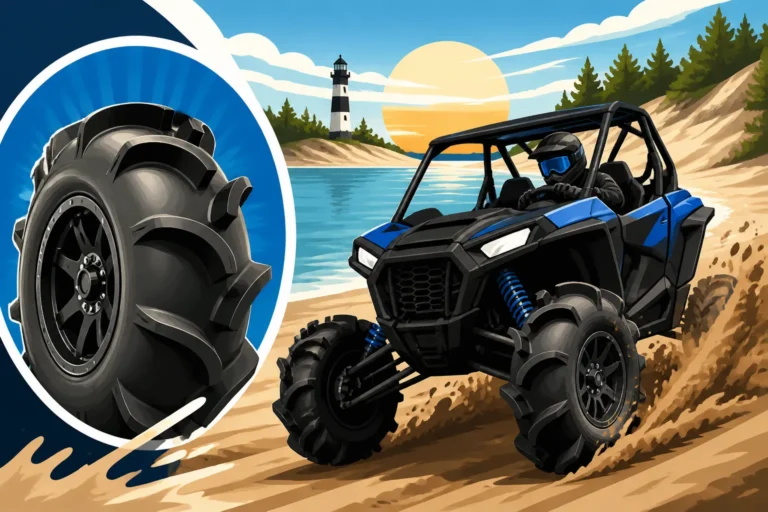
Tires have a major effect on how an ATV or UTV behaves in sand. The right choice depends on the vehicle, the rider’s experience, and the terrain. Some riders use tires designed to improve flotation or traction in loose sand, while others ride on a more general-purpose setup. Whatever you choose, inspect the tires before the trip and understand how the machine responds before tackling steeper or softer areas.
Sand can also make a vehicle work harder. Avoid assuming that a machine is ready for a full day of demanding use just because it handled a short ride on a firm surface. Pay attention to warning lights, unusual sounds, changes in engine temperature, belt performance, and other signs that the vehicle needs a break. If you notice a problem, move to a safe location and address it rather than continuing until the machine fails.
Carry only what you need and secure it properly. Extra passengers, cargo, and accessories affect handling and can raise the chance of a tip or loss of control on uneven ground. Check the vehicle’s passenger seating and load guidance before the trip, and never squeeze extra riders onto a machine because the group wants to stay together. If you are researching equipment choices, [Paddle Tires for Silver Lake Riding] offers a specific topic to compare with your vehicle’s needs.
Ride safely and share the dunes
Use a pace and route you can manage
The safest starting point is to ride within your own ability and your machine’s limits. If you’re new to dunes, begin on terrain that lets you practice steering, braking, and maintaining control without committing to a steep climb. Take time to learn how the vehicle behaves in loose sand. A short, cautious warm-up is more useful than following an experienced friend directly into a difficult section.
Approach slopes with care and do not continue into a climb if you are uncertain about the route, the surface, or what is beyond the crest. Avoid abrupt changes in direction or speed, and leave room between machines. If another rider is in front of you, wait until you can see enough of the route to follow safely. If you cannot see the landing or the far side of a rise, do not assume it is clear.
When you stop, choose a visible place that does not block a route or create a surprise for approaching riders. Avoid parking just beyond a crest or in a blind spot. Keep children close and make sure they know where to wait if the group pauses. It can be tempting to take a quick break wherever the machine stops, but a few seconds spent choosing a safer location can prevent a collision.
Follow the rules and look out for other visitors
Use only the area and routes open to ORVs, and follow all posted signs and staff directions. Riding across a boundary because the sand looks firm or because another vehicle went that way can damage protected areas and create problems for future access. If you’re uncertain about a line, stop and verify it with an official map rather than relying on tire tracks or a remembered route.
Expect to share the riding area with other vehicles and visitors. Give people space, keep your attention on the terrain, and avoid behavior that makes it harder for others to see or react. Do not ride in a way that sends sand toward another group or creates unnecessary congestion. A considerate approach helps everyone enjoy the dunes, especially when visibility is reduced by dust or traffic.
Wear the protective equipment required for your machine and the rules that apply to your ride. Helmets, eye protection, and seat belts where equipped are important parts of a safe outing, not just items to bring for an inspection. Make sure each passenger understands how to sit, hold on, and respond if the driver needs to stop. For a broader view of rider protection requirements, see [Michigan Helmet Law for ATV Riders] and [Michigan Eye Protection Requirement Without a Windshield].
Pack for a full day on the sand
Bring practical safety and recovery supplies
A well-packed group is better prepared for small problems and less likely to turn them into emergencies. Carry water, basic first aid supplies, a phone with a charged battery, and any medication someone in the group may need. Bring a suitable tool kit and recovery items that match your vehicle and your experience. Store supplies so they remain secure if the machine hits rough terrain or turns suddenly.
Before riding, talk through a simple response plan. Decide where the group should meet if riders become separated, who will stay with a disabled machine, and how someone can get help. Keep the plan simple enough that every rider, including a teenager who is riding independently, can remember it. If you have a communication device or map app, learn how to use it before the ride rather than trying to set it up during a stressful moment.
Navigation tools are helpful, but they do not replace awareness. onX Offroad can support trip planning and help riders understand their position, especially when they have downloaded map information in advance. Still, do not treat a third-party map as permission to cross a closed area or ignore a park sign. Check official Silver Lake maps and on-site directions for boundaries and closures.
Plan for heat, sand, and changing conditions
Sand can reflect heat, and riding often demands more physical effort than a passenger expects. Drink water regularly rather than waiting until you feel thirsty, and take breaks before fatigue affects your decisions. Children may not notice how tired they are until they become irritable or stop paying attention, so build breaks into the day instead of waiting for someone to ask.
Protect your eyes and skin from sun, wind, and blowing sand. A suitable helmet and eye protection help reduce irritation, while clothing that covers exposed skin can make a long ride more comfortable. Bring a way to clean dust or sand from your face and hands before eating or handling contact lenses. If weather changes or visibility drops, pause in a safe location and reconsider whether continuing makes sense.
Keep your vehicle and personal items protected from sand as much as possible. Secure food and water containers, close storage compartments, and avoid leaving loose belongings where wind or a passing vehicle can scatter them. When you finish riding, inspect the machine for buildup and address maintenance needs before the next outing. Good cleanup habits make it easier to notice damage and keep sand from worsening wear on moving parts.
Choose the right setup for your group
ATV or UTV for a dune visit
The best machine depends on who is riding, how much experience they have, and what kind of outing they want. An ATV can feel compact and responsive, but the rider needs the strength, judgment, and skill to control it. A UTV offers a seated cabin-style setup and may accommodate multiple passengers if the machine is designed for them, but it is larger and still requires careful attention to slopes, visibility, and passenger safety.
Do not choose a vehicle solely because it looks more powerful or can carry more people. A larger machine can be harder to position in tight or busy areas, and passengers can add weight that affects how it handles. A smaller ATV is not automatically easier for a young or inexperienced rider; fit, training, supervision, and the machine’s controls matter. [Best First ATV Size for a 12-Year-Old] and [Youth Quad Weight and Rider Fit] offer useful considerations for families deciding what is appropriate for a young rider.
If your group includes riders with different skill levels, plan around the least experienced person. That may mean staying on more manageable terrain, choosing a machine with suitable passenger capacity, or splitting the group with a clear meeting plan. Do not let peer pressure or the excitement of the dunes push someone into a vehicle or route that feels beyond their ability.
Renting versus bringing your own machine
Bringing your own ATV or UTV gives you familiarity with the controls and lets you prepare the vehicle in advance. It also means you are responsible for transport, permits, maintenance, and making sure your setup is suitable for sand. If you are hauling a machine, check your trailer, tie-down points, and cargo before leaving. [Securing an ATV on a Trailer Legally] is a useful companion topic for planning the drive.
Renting can simplify transport and provide access to a machine suited to the outing, but it does not remove the need to understand the rules or ride safely. Before booking, ask what equipment is included, what the rental briefing covers, which areas are approved for the machine, and what happens if the vehicle becomes stuck or needs assistance. Clarify passenger limits and confirm that everyone who plans to drive meets the shop’s requirements. For more preparation, see [Questions to Ask a Rental Shop First].
Whether you bring or rent, take time to understand the controls and vehicle behavior before heading into demanding terrain. A machine that feels familiar on a driveway can respond differently in loose sand, particularly when loaded with passengers. The operator should know where the controls are, how to stop safely, and how to respond if the vehicle starts to lose traction. If anyone in the group feels unsure, pause and get help before continuing.
| Planning decision | What to check | Why it matters |
|---|---|---|
| Riding area | Official park map, signs, and marked boundaries | Keeps your ride within the designated ORV area |
| Permits and entry | Requirements for the park, each machine, and each rider | Prevents arriving without required credentials |
| Machine condition | Tires, brakes, steering, controls, and visible damage | Helps catch problems before they interrupt the ride |
| Passenger plan | Seating capacity, rider age, and safety equipment | Reduces risk from overloaded or unsuitable machines |
| Navigation | Official map plus any downloaded navigation tools | Helps with orientation without replacing park rules |
| Group safety | Meeting place, communication plan, and supplies | Makes it easier to respond if someone gets separated |
| Riding conditions | Weather, visibility, crowding, and terrain | Helps the group choose a manageable pace and route |
Handle common problems calmly
If your vehicle gets stuck or stops working
Getting stuck is frustrating, especially when other riders are waiting or the group is far from the staging area. First, stop and make sure everyone is safe. Look around for approaching machines and move passengers to a safe, visible location if it is appropriate to do so. Do not stand in a blind area or directly in the path of other vehicles while trying to solve the problem.
Use recovery equipment only if you know how to use it safely and the recovery method suits the vehicle. Avoid improvised towing with unsuitable straps, attachment points, or another machine that cannot control the load. If you are uncertain, contact the appropriate park staff or rental provider for guidance rather than turning a minor stuck situation into a damaged vehicle or an injury. Rental customers should know the shop’s recovery procedure before leaving.
If a machine breaks down, secure it as best you can and keep the group together. Use your planned communication method, and provide a clear location when asking for help. When riding with others, decide in advance whether one person will stay with the disabled vehicle and how the rest of the group will get assistance. Do not leave a rider alone without a plan simply because the staging area feels close.
If someone is injured, separated, or overwhelmed
Stop the ride if someone is hurt, disoriented, or too tired to continue safely. Provide first aid within your ability and seek emergency help when the situation calls for it. Give responders a clear location and describe the injury or problem as plainly as possible. Avoid moving someone with a potentially serious injury unless there is an immediate danger that makes remaining in place unsafe.
If a rider is separated from the group, use your agreed meeting point and communication plan. Avoid sending several machines off in different directions without coordination; that can create additional confusion. One person should take responsibility for communicating, while the rest of the group waits in a safe place or follows the plan you agreed on before riding.
Sometimes the problem is not a mechanical failure but a rider who has reached their limit. Fatigue, fear, heat, or frustration can make a person less able to react. It is perfectly reasonable to shorten the ride, take a longer break, or return to the staging area. A relaxed trip that ends early is better than pushing someone into a situation they no longer feel able to manage.
Make the trip easier for everyone
Be considerate at the park and in nearby communities
Silver Lake is a destination for riders, beachgoers, campers, and nearby residents. Keep noise and speed under control when you are not in the designated riding area, follow parking instructions, and avoid blocking access roads or other vehicles. Be patient in lines and staging areas, especially when families are unloading several machines or learning the process for the first time.
Plan fuel, food, and supplies before you reach the riding area. Do not assume that every need can be handled at the dune entrance, and do not leave trash or loose equipment behind. If you are staying nearby, follow campground or lodging rules for trailers, machine storage, and nighttime noise. Small courtesies help protect the relationship between visitors and the communities that make riding trips possible.
If your trip includes riding on public roads to reach another location, remember that road access is a separate question from permission to ride in the dunes. Michigan road use depends on local rules, posted restrictions, and the type of road. A machine that is allowed in a designated ORV area is not automatically legal on a nearby public street. See [Michigan County ORV Ordinances Explained] for background, and check local rules before planning a road connection.
Leave the dunes in good shape
Stay within the open riding area and avoid sensitive vegetation, closed sections, and places marked for other uses. Cutting across a boundary may seem like a shortcut, but repeated off-route riding can damage the landscape and threaten access for everyone. If you see a closure or a route that is difficult to identify, pause and confirm rather than guessing.
When you finish, check the vehicle for damage, remove sand from places where it could interfere with operation, and secure the machine for transport. Take your trash with you and make sure your parking area is clear before leaving. If you notice a hazard or damaged sign, report it through an appropriate park channel rather than trying to move or repair official equipment yourself.
A little preparation changes the whole experience. When riders understand where they can go, bring suitable equipment, and communicate clearly, they spend less time troubleshooting and more time enjoying the landscape. Keep the official map close, leave room for other riders, and choose routes that match the group’s ability. That approach makes Silver Lake more enjoyable for first-timers and seasoned dune riders alike.
Disclaimer
This article is for general informational purposes only and does not constitute professional advice. Laws, prices and regulations vary by location and change over time. Consult a qualified professional for guidance on your specific situation.