Riding on a Paved Michigan County Road
It’s a common frustration for many Michigan ATV and UTV owners: you’re cruising along a beautiful gravel county road, enjoying the scenery, and suddenly it turns to pavement. Or maybe you just want to take a quick spin down the street to a friend’s house or the local gas station. You wonder, "Can I actually ride my ORV on this paved Michigan county road?" The answer, as with many things involving ORVs and public roads in Michigan, isn't always a simple yes or no, but it's definitely something you need to understand clearly to avoid trouble. This guide will cut through the confusion, helping you understand when and how you might legally navigate Michigan's paved county roads with your ORV.
The Reality of Riding ORVs on Paved Michigan County Roads
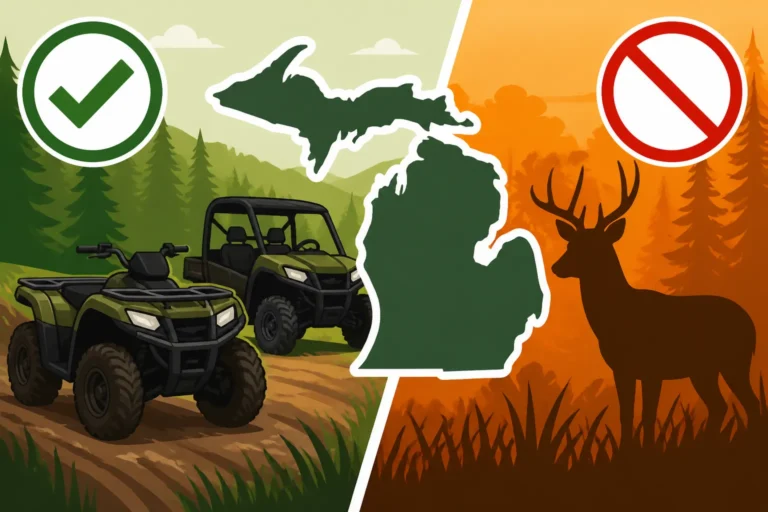
Let's start with the hard truth that many riders initially find disheartening. Michigan law, by default, restricts off-road vehicles (ORVs) from operating on the "maintained portion" of public roads. For most people, and especially for law enforcement, a paved road is the maintained portion. This means that pulling onto a paved county road with your standard ATV or UTV can quickly lead to a ticket, even if you're just trying to get from one section of a trail to another. It's a fundamental rule that aims to separate slower, less road-worthy machines from faster, traditional vehicle traffic for safety reasons.
The Basic Rule: "Maintained Portions" and What That Means
Michigan's ORV laws are quite specific about where you can and cannot ride. The key phrase to understand here is the "maintained portion" of a public road. Generally, this refers to the graded, prepared, and improved surface intended for vehicular travel. On a gravel road, this might include the full width of the travel lane. But on a paved road, the "maintained portion" almost unequivocally means the asphalt or concrete itself, including the shoulder if it's paved and integral to the travel way. This distinction is crucial because while ORVs are permitted on certain unpaved county roads (often designated as ORV routes or trails), that permission almost always evaporates the moment the road surface changes to pavement.
Think of it this way: the state wants to keep ATVs and UTVs off surfaces where cars and trucks are typically moving at higher speeds and where the ORV's knobby tires and suspension aren't ideally suited for stability and traction. An ATV might handle beautifully on a dirt two-track, but that same machine can feel squirrely and unstable on slick, hard pavement, especially during quick maneuvers or braking. This general prohibition means that if you're on a designated ORV route that unexpectedly transitions to pavement, you generally need to exit the paved section or find an alternative legal route. Many riders get caught off guard when a dirt road they've been enjoying suddenly becomes a paved residential street, leading to a quick and unexpected stop by local law enforcement. For a deeper dive, check out [Michigan's Maintained Portion of the Road, Defined].
Exceptions and Local Ordinances: A Glimmer of Hope
While the general rule prohibits ORVs on paved county roads, Michigan law does provide avenues for exceptions. The most common "glimmer of hope" comes from local government. Counties and townships in Michigan have the authority to pass ordinances that can open certain roads to ORV use. However, it's critical to understand that these ordinances most commonly open unpaved roads or specific segments of roads that link existing trail systems. It is far less common for an ordinance to open a truly paved county road for general ORV traffic, unless it's a very specific, limited segment acting as a necessary connector between ORV routes.
When such an ordinance does exist, it will lay out very specific rules: designated times, speed limits, age restrictions, and sometimes even specific equipment requirements. You cannot assume that because one county has opened some roads, your county has done the same, or that "opened roads" necessarily includes paved surfaces. Each local ordinance is unique, reflecting the specific needs and concerns of that community. For instance, a small, rural township might open a paved road connecting two major ORV trailheads, but this would be explicitly stated in their ordinance. Always remember, the burden of knowing the local rules falls squarely on the rider. Understanding the nuances of [Michigan County ORV Ordinances Explained] is key.
Navigating Local Ordinances and Finding Legal Paved Routes
So, if you’re hoping to ride on a paved Michigan county road, you can't just wing it. You need to do your homework. This isn't about guesswork; it's about verifying the specific rules that apply to your desired route. Even then, your options for riding a standard, non-street-legal ORV on pavement are likely to be very limited, if they exist at all.
How to Find Your County's ORV Ordinance
If you suspect there might be an exception or a local ordinance allowing ORV use on a specific paved road, you need to investigate. This isn't always as simple as a quick Google search, although that's a good place to start. The most reliable sources for this information are directly from the local government.
Here's a breakdown of where to look and what to do:
- County Clerk's Office or County Website: Most counties will have their ordinances listed online. Look for sections pertaining to "ORV," "Off-Road Vehicle," or "Traffic and Vehicles." The ordinance will typically detail which roads are open, any restrictions (like speed limits, operating hours, or specific times of year), and whether it applies to paved or unpaved surfaces. Be specific in your search; look for phrases like "paved roads" or "all-terrain vehicles on paved surfaces." If the ordinance specifically states "unpaved roads only" or doesn't mention paved roads, assume they are prohibited. You can get more information on how to research this by reading [How to Find Your Michigan County's ORV Ordinance].
- Local Sheriff's Department or DNR Office: These agencies are responsible for enforcement and can often clarify specific rules. However, don't rely on casual advice; try to get official documentation or point to the specific ordinance you're questioning. They are the ones who will write the tickets, so their interpretation is vital.
- Township Offices: Many ORV ordinances are passed at the township level, especially in rural areas. If you know the specific township where you want to ride, contact their clerk's office.
When reviewing an ordinance, pay close attention to the exact language. If it doesn't explicitly state that paved roads are open, or if it specifically restricts ORVs to unpaved surfaces, then you should consider those paved roads off-limits for non-street-legal ORVs. There’s no room for ambiguity here when your wallet (and potentially your freedom) is on the line.
The "Street Legal" Conversion for Paved Roads
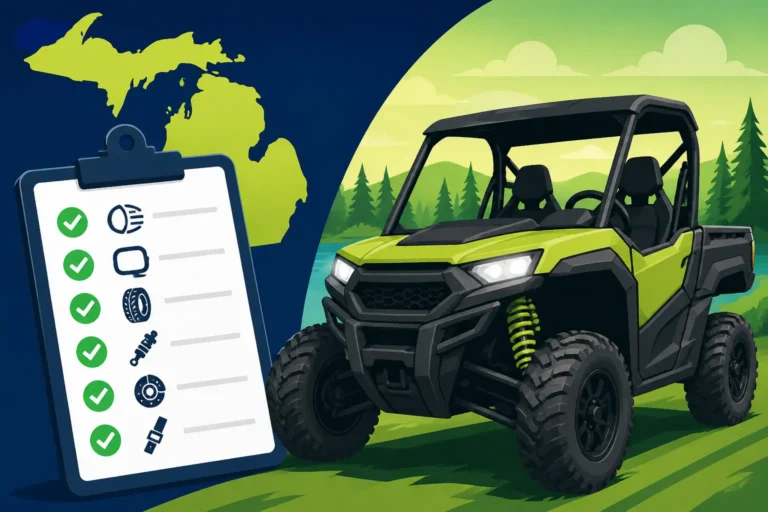
For most riders who genuinely want the flexibility to ride their UTV on paved Michigan county roads, the most reliable and widely accepted solution is to make your machine "street legal." This isn't just about sticking a license plate on it; it involves a series of modifications and an inspection process to ensure your ORV meets the safety and equipment standards required for conventional vehicles on public roads. Once properly titled as an "assembled vehicle" or "street-legal UTV" and registered with the Michigan Secretary of State, your UTV (and in some rare cases, an ATV) can generally operate on any public road, including paved county roads, just like a car.
The conversion typically includes:
- DOT-Approved Tires: Your knobby off-road tires aren't usually road-legal. You'll need tires rated for highway use.
- Lights: This means headlights (high and low beam), taillights, brake lights, and crucially, turn signals for both front and rear. Companies like SuperATV offer comprehensive street-legal kits that provide many of these components, making the conversion process much smoother.
- Mirrors: You'll need at least two mirrors, typically a rearview mirror and a driver's side mirror.
- Horn: A working horn is essential.
- Windshield: A DOT-approved windshield (often with a wiper) is typically required, depending on the specific vehicle classification.
- Seatbelts/Restraints: Ensuring all seating positions have proper restraints.
- License Plate Mount and Illumination: A place for your vehicle plate with a light to make it visible at night.
Once your ORV has these components, you'll need to go through an inspection process, often at a Secretary of State branch, to verify its compliance. After passing inspection, you'll apply for a title as an assembled vehicle and obtain a traditional license plate. This route transforms your UTV from a recreational machine with limited road access into a versatile vehicle capable of legal paved road travel. This is a significant undertaking, but for those who want to use their UTV as more than just a trail machine, it’s often the best path. For more details on this route, consider reading [Michigan's Assembled Vehicle Route for a UTV] and [Safety Glass, Mirrors and Horns: Michigan's Street-Legal List].
Understanding the Specifics: Speed, Safety, and Enforcement
Making your ORV street legal or finding a rare paved road opened by ordinance isn't the end of the story. You still need to understand the practical implications of riding these machines on paved surfaces, especially when it comes to speed, safety, and how law enforcement views your presence.
Speed Limits and Traffic Laws on Paved Roads (Street Legal ORVs)
If you've gone through the effort of making your UTV street legal and have it properly plated, congratulations! You now have the right to operate it on most public roads. However, with that right comes the full responsibility of adhering to all traffic laws that apply to other vehicles. This means:
- Posted Speed Limits: You must obey all posted speed limits. While many UTVs can reach speeds of 50-60 mph or more, they are not designed for sustained highway speeds like cars. You still need to operate them safely and within their design capabilities, but you are legally bound by the posted limits, even if that means going slower than the flow of traffic on some roads. Be aware that you can still receive [Fines for Speeding on an ORV] even if it's street legal.
- Traffic Signals and Signs: Stop signs, traffic lights, yield signs – all apply to you. Treat your street-legal UTV exactly as you would any other car or truck.
- Lane Discipline: Stay in your lane, signal turns, and follow all rules of the road. No weaving or riding on the shoulder unless explicitly allowed and safe.
- Driver's License and Insurance: You'll need a valid driver's license and proper vehicle insurance, typically including Michigan's No-Fault coverage, just like any other road-going vehicle. This is distinct from an ORV trail permit, which is a different permit entirely. Understanding [Michigan No-Fault Rules for a Street-Legal Side-by-Side] is crucial for street-legal UTVs.
Even with a street-legal UTV, remember that it handles differently than a car. Braking distances, stability in turns, and overall responsiveness are unique to these machines. Always drive defensively and be aware of other vehicles that might not expect to see an ORV on the pavement.
Safety Considerations and the "Spirit of the Law"
Beyond the letter of the law, there's the spirit of it. ORVs are fundamentally different from passenger cars. Their higher center of gravity, shorter wheelbase, and often knobby tires (even DOT-approved ones) can make them less stable on hard, paved surfaces, especially at speed or in emergency maneuvers.
- Traction and Handling: Paved roads offer less grip for aggressive off-road tires, which can lead to longer braking distances and less predictable handling, especially in wet conditions.
- Visibility: While you'll add lights and mirrors for street legality, an ORV is generally smaller and lower profile than a typical car, which can make it harder for other drivers to see you, especially at dusk or dawn.
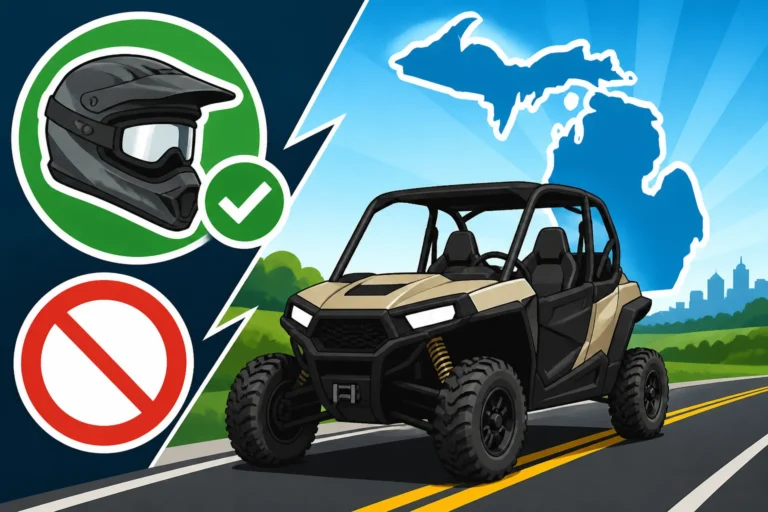
- Safety Gear: Even if a helmet isn't strictly mandated for street-legal UTVs with certain features (like a windshield and roof), it's always a good idea to wear one, along with appropriate eye protection and sturdy clothing. Companies like SuperATV also make accessories like full doors and hard tops that can enhance safety and comfort during road use.
- Law Enforcement Perspective: Even if you're perfectly legal, law enforcement officers are trained to look for ORVs operating unsafely or in prohibited areas. Make sure all your paperwork is in order – [Michigan ORV License and Trail Permit Explained], title, registration, and insurance – and that your machine is visibly compliant with all street-legal requirements. Avoid giving them any reason to pull you over.
Practical Steps Before Hitting Any Paved Road
Before you even consider rolling your ATV or UTV onto a paved Michigan county road, you need to be absolutely sure you're compliant. Failing to do so can result in significant penalties, including fines and the impoundment of your machine.
Checklist for Riding on Paved Roads (Legally)
To ensure you're squared away, whether you're relying on a rare local ordinance or your street-legal conversion, run through this checklist:
- Verify Local Ordinances: If your ORV is not street legal, have you personally verified a specific local ordinance that explicitly opens the paved road you intend to use? Does it define specific times, speed limits, or other restrictions? Do you have a copy of this ordinance or know where to find it instantly?
- Street-Legal Conversion Complete (if applicable): If your ORV is street legal, is it fully compliant with all Michigan requirements? Do you have DOT-approved tires, all necessary lights (headlights, taillights, brake lights, turn signals), a horn, mirrors, and a windshield? Have you passed the required inspection?
- Proper Titling and Registration: Is your ORV properly titled with the Michigan Secretary of State as an "assembled vehicle" or "street-legal UTV" (if applicable), and do you have a current license plate? Is your standard ORV (if not street-legal but allowed by ordinance) titled and have the proper ORV sticker? You can find information on this process via the [Michigan ORV Title Application Form and Where to Get It].
- Valid Driver's License: Do you possess a valid driver's license (not just an ORV safety certificate)? This is required for street-legal vehicles.
- Proof of Insurance: Do you have valid Michigan No-Fault insurance for your street-legal ORV, or liability insurance as required for any ORV on public lands/roads (even if by ordinance)?
- ORV License and Trail Permit (if applicable): Even for street-legal ORVs, if you plan to access a designated ORV trail from the paved road, you’ll still need the current Michigan ORV license and trail permit. Make sure your ORV sticker is properly affixed to your machine. For non-residents, ensure you understand [Michigan ORV Permits for Out-of-State Riders in Michigan].
- Required Safety Gear: Are you wearing a helmet, eye protection, and other appropriate safety gear, regardless of specific legal mandates?
- Paperwork on Hand: Do you have your driver's license, registration, proof of insurance, and ORV permit (if applicable) easily accessible? Consult [Documents to Bring to a Secretary of State ORV Appointment] to know what to carry.
Consequences of Illegal Paved Road Riding
Ignorance of the law is never an excuse. Riding an ORV illegally on a paved Michigan county road can lead to some serious headaches and expenses:
- Tickets and Fines: You can receive a civil infraction or even a misdemeanor charge, depending on the severity and frequency of the offense. Fines can be substantial.
- Vehicle Impoundment: Law enforcement has the authority to impound your ORV, leaving you with towing and storage fees on top of any fines.
- Insurance Implications: If you're involved in an accident while operating illegally, your insurance company may deny your claim, leaving you personally responsible for damages, medical bills, and legal fees. Furthermore, not having the required Michigan No-Fault insurance for a street-legal vehicle can lead to its own penalties. Understand [Michigan ORV Accident Reporting Requirements] to know your responsibilities if the worst happens.
- Points on Your License: Some violations can result in points being added to your driving record, impacting your car insurance rates.
In Michigan, the default is that paved county roads are off-limits for ORVs. While local ordinances and street-legal conversions offer pathways for legal use, they require diligent research and significant investment, respectively. Always err on the side of caution, verify your route, and ensure your machine and paperwork are in perfect order before venturing onto any paved road with your ATV or UTV.
Disclaimer
This article is for general informational purposes only and does not constitute professional advice. Laws, prices and regulations vary by location and change over time. Consult a qualified professional for guidance on your specific situation.