Does a Street-Legal UTV Need a Windshield in Michigan?
One of the biggest head-scratchers for Michigan off-road enthusiasts looking to make their UTV street-legal is figuring out the exact requirements for things like windshields. It feels like every buddy has a different take, and trying to decipher the actual state rules can be a real headache. You want to enjoy cruising on those county roads without the constant worry of a ticket, right? This guide is going to clear up all that confusion about whether your street-legal UTV really needs a windshield in Michigan and, if so, what kind.
The Core Rule: Michigan's Eye Protection Requirements for Street-Legal UTVs
Let's cut right to the chase because this is where a lot of the confusion stems from. Michigan's laws regarding street-legal UTVs, or "assembled vehicles" as they're often titled, don't always demand a windshield. However, they always demand proper eye protection when you're operating on public roads. This distinction is crucial and often misunderstood. It’s not just about having something in front of you; it’s about meeting specific safety standards.
When a Windshield is Required: The "Safety Glass" Mandate
Here's the deal: if you do choose to install a windshield on your UTV for road use in Michigan, it absolutely, unequivocally must be made of safety glass. This isn't just a suggestion; it's a legal requirement. What does "safety glass" mean in this context? It refers to glass that is designed to minimize injury if it shatters. Think laminated glass, which holds together when broken, or tempered glass, which breaks into small, dull pieces. Regular old plexiglass or acrylic windshields that are perfectly fine for protecting you from mud and branches on the trail simply won't cut it for street legality.
The frustration here is real. Many riders invest in aftermarket windshields for their UTVs, thinking they're checking off a box for street legality, only to discover later that their chosen material isn't compliant. It's a common trap to fall into, especially when you're just trying to get ready for the season. If your windshield isn't safety glass, then from a legal standpoint, it's pretty much the same as not having a windshield at all. And if you're riding with a non-compliant windshield, you still need to wear appropriate eye protection, which kind of defeats the purpose of the windshield in the first place, doesn't it? Make sure you check the product specifications diligently if you're buying a windshield for road use.
When a Windshield is Optional: The Eye Protection Alternative
So, what if you prefer the open-air feel of your UTV or just don't want the added expense and complexity of a safety glass windshield? Michigan understands that. The law allows you to operate a street-legal UTV without a windshield, provided you and all your passengers wear Department of Transportation (DOT) approved eye protection. This means proper goggles, a face shield on a helmet, or safety glasses specifically designed to protect against impact.
This is fantastic news for riders who love that raw, connected-to-nature experience or those who have custom builds where a traditional windshield might not even fit properly. It gives you flexibility. For many, choosing to forgo the windshield and rely on quality eye protection is a more straightforward and often less expensive route to road legality. Just remember, "eye protection" means more than just your everyday sunglasses. You need something robust enough to shield against unexpected debris at road speeds. You can find more details about what counts as approved eye protection here: [Eye Protection That Meets Road Rules].
The Rationale Behind the Rule: Safety First
It's easy to get caught up in the specifics of the law and wonder why these rules are even in place. The core reason, like most vehicle regulations, boils down to safety. When you're driving on trails, your speeds are generally lower, and the types of hazards (branches, mud, dust) are different. On public roads, however, you're dealing with higher speeds, other vehicles, and the potential for larger, faster-moving debris – from small rocks kicked up by a passing car to unexpected objects falling from trucks.
A safety glass windshield is designed to protect occupants from these higher-speed impacts, either by resisting breakage or by breaking in a way that minimizes sharp shards. If a non-safety glass windshield shatters, it can create additional hazards for the occupants. Similarly, good quality, DOT-approved eye protection is crucial to prevent serious eye injuries from road debris when there's no windshield. It's about protecting you, your passengers, and ensuring that your off-road machine is as safe as possible when it shares the pavement with cars and trucks.
Navigating Windshield Options for Michigan Road Use
Okay, so you've weighed your options, and maybe you still want a windshield for comfort, weather protection, or just the aesthetic. That's perfectly understandable! But remember, it has to be the right kind. This section will help you avoid common pitfalls and find a windshield that meets Michigan's street-legal requirements.
Why Standard ATV/UTV Windshields Often Don't Pass Muster
This is where many enthusiastic UTV owners hit a snag. Most off-the-shelf windshields designed for pure off-road use are made from materials like polycarbonate or acrylic. These materials are fantastic for trail riding. They're incredibly durable, resisting cracks and shatters from impacts with branches, rocks, and rollovers. They can be lightweight and flexible, making them ideal for the rough-and-tumble world of the trails.
However, their properties, while great for off-road, don't meet the "safety glass" standard for road use. They might scratch easily, obscure vision over time, or, crucially, they don't break in the controlled way that safety glass does. A law enforcement officer or an inspector at the Secretary of State will be looking for specific markings (like "AS1" or "AS2") on the glass itself, which signify that it's automotive safety glass. If those markings aren't there, or if the material is clearly plastic, your UTV will not pass inspection for street legality on that point. It's a frustrating scenario to imagine: you've spent money, installed a windshield, and then you're told it's not good enough because it's the wrong material.
Sourcing Compliant Safety Glass Windshields
So, how do you find the right kind of windshield? You need to look for UTV windshields specifically marketed as "DOT-approved" or "street-legal" with safety glass. These will explicitly state that they meet AS1 or AS2 standards, indicating they are laminated or tempered glass. Many reputable aftermarket manufacturers have recognized the growing demand for street-legal UTVs and now offer these specialized windshields. For example, some SuperATV full glass windshields are specifically designed with this in mind, offering the clear visibility and safety features required for road use, complete with the necessary markings.
When you're shopping online or at a dealer, don't just assume. Read the product descriptions carefully. Look for phrases like "laminated safety glass," "tempered glass," or "DOT approved." If it doesn't explicitly state it, it's probably not the type you need for Michigan road legality. It's always better to ask the seller directly to confirm compliance before you commit to a purchase. While these safety glass windshields might carry a higher price tag than their polycarbonate cousins, they're an essential investment if you want a windshield and want to legally hit the pavement. Learn more about the potential costs at [Safety Glass Windshield Cost for a Side-by-Side].
Installation and Inspection Considerations
Once you've got your hands on a proper safety glass windshield, correct installation is key. A poorly installed windshield that rattles, leaks, or obstructs vision could still cause problems during an inspection. Ensure it's securely mounted, offers a clear field of vision, and doesn't have any cracks or damage that would impair its safety features.
When you take your UTV to the Secretary of State for its [Michigan Street-Legal UTV Inspection at the Secretary of State], the inspector will thoroughly check the windshield. They'll look for:
- Material: Confirming it's actual safety glass and not plastic.
- Markings: Verifying the AS1 or AS2 stamp.
- Condition: Checking for cracks, chips, or excessive scratches that could impair visibility or compromise safety.
- Wipers (if equipped): While not explicitly covered here, if you have a windshield, functional wipers are generally a good idea for visibility in inclement weather.
Don't let a small detail like this hold up your street-legal conversion. Getting it right the first time will save you headaches and potential re-inspection fees.
Beyond the Windshield: Other Street-Legal Requirements to Consider
While the windshield or eye protection is a critical piece of the street-legal puzzle, it's important to remember that it's just one component of a larger picture. Michigan has a comprehensive set of requirements for making your UTV road-worthy. Overlooking any one of these can put a damper on your riding plans and potentially lead to fines.
Essential Safety Gear for Road-Legal UTVs
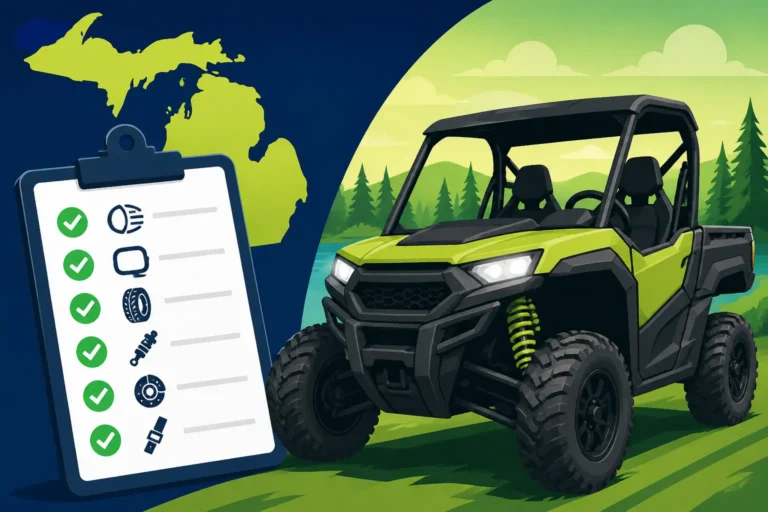
Beyond eye protection, your UTV needs a host of other safety features to comply with Michigan's rules. Think about things like:
- Seatbelts: Everyone in the UTV must be securely belted in.
- Tires: Your UTV will need DOT-approved tires, which are designed for road use and speed, not just off-road traction. You can't just run your knobby trail tires on the pavement legally. This is a common oversight that can lead to failing inspection. Take a look at [DOT Tires on a Street-Legal Side-by-Side] for more info.
- Fenders/Mudguards: To prevent throwing debris onto other vehicles.
- Brakes: They must be fully functional and capable of safely stopping the vehicle.
While Michigan generally has a helmet law for ORV riders, if your street-legal UTV does have a safety glass windshield and a roof, you might be exempt from wearing a helmet. It's always a good idea to confirm the specifics, but having that proper windshield can sometimes mean a more comfortable ride without the helmet. Dive deeper into those specifics with [Michigan Helmet Exemptions for Street-Legal Vehicles].
Lights, Horns, and Mirrors
These are non-negotiable for any vehicle operating on public roads, and your street-legal UTV is no exception. You'll need:
- Headlights and Taillights: Fully functional, bright, and visible.
- Brake Lights: Clear and responsive when you apply the brakes.
- Turn Signals: Front and rear, indicating your intentions to other drivers. Learn more about wiring them up with [Turn Signals and Hazard Lights on a Street-Legal Build].
- Horn: A working horn is crucial for alerting others. Find out what qualifies as compliant with [Horn and Audible Warning Device Rules in Michigan].
- Mirrors: You must have at least one rearview mirror, and often two (one on each side) are required for adequate visibility. Don't skimp on these; good visibility is vital for road safety. We cover this in detail with [Mirrors Required on a Street-Legal Side-by-Side].
Many riders opt for complete street-legal kits that bundle these items together, making the conversion process a bit simpler. Even with a kit, double-check that each component meets Michigan's specific requirements.
The Assembled Vehicle Title Process
It's not enough to simply bolt on the required parts; your UTV needs to be officially recognized as a street-legal vehicle by the state. This involves applying for an "assembled vehicle" title, which is a specific process in Michigan. You'll need to fill out the necessary forms, gather documentation, and sometimes even undergo a physical inspection to verify that all components meet the legal standards.
This entire process can feel a bit daunting, involving paperwork and appointments. It’s definitely not a quick weekend project. Understanding the full scope of what's involved, from the initial application to the final title, is essential. Take a look at [Michigan Assembled Vehicle Route for a UTV] and [Michigan Assembled Vehicle Title Application] for more in-depth guidance on this critical step. It ensures that your modified machine is legally recognized and ready for adventures on and off the road.
So, to wrap things up, does your street-legal UTV need a windshield in Michigan? Not always. But if you choose to have one, it absolutely must be safety glass. Otherwise, you and your passengers are required to wear DOT-approved eye protection. Don't let the rules intimidate you; instead, see them as a way to ensure everyone's safety while you enjoy the incredible versatility of your UTV on Michigan's roads and trails. Making informed choices about your gear means more stress-free riding for you.
Disclaimer
This article is for general informational purposes only and does not constitute professional advice. Laws, prices and regulations vary by location and change over time. Consult a qualified professional for guidance on your specific situation.