VIN Inspection Requirements for a Michigan ORV Title
Navigating the world of Off-Road Vehicles (ORVs) in Michigan is usually a blast, but when it comes to the paperwork, things can get confusing fast. One of the trickiest hurdles many folks encounter is understanding when and why their beloved ATV or UTV needs a VIN inspection to get a title. It feels like just another hoop to jump through, especially if you're eager to hit the trails! This guide is here to cut through that confusion, giving you a clear roadmap of when a VIN inspection is required for a Michigan ORV title and how to prepare for it, so you can get back to what matters: riding.
Understanding the Basics: When Does Michigan Require a VIN Inspection for an ORV Title?
It can be incredibly frustrating to think you have all your ducks in a row for titling your ORV, only to be told you need a VIN inspection. Most people assume the VIN is just a number, but to the Michigan Secretary of State, it's the absolute identifier of your machine. When that identifier comes into question, an inspection becomes necessary. It's not about making things harder; it's about ensuring every ORV titled in Michigan is legitimate and properly identified.
New ORVs vs. Used ORVs
Let's start with the easiest scenario: a brand-new ORV. When you purchase a new ATV or UTV from a licensed dealer here in Michigan, or even out of state, the process is usually pretty straightforward. The dealer will typically provide you with a Manufacturer's Certificate of Origin (MCO), sometimes called a Manufacturer's Statement of Origin (MSO). This document is essentially the birth certificate of your machine, and it includes the VIN.
For a new machine, the MCO is usually all the Secretary of State needs to verify the VIN. It's considered an authoritative document that confirms the vehicle's identity directly from the manufacturer. This means that, in most cases, you won't need a separate physical VIN inspection for a new ORV. The process is streamlined because the MCO serves as sufficient proof. You’ll take the MCO and your bill of sale to the Secretary of State, pay your sales tax and titling fees, and walk out with your title application submitted. You can learn more about the initial steps in [How to Title an ATV in Michigan].
However, the waters get a lot murkier when you're dealing with a used ORV. If you buy a used ATV or UTV from a private seller, the previous owner's title is typically the key document. As long as that title is properly assigned to you, the VIN on it matches the machine, and there are no other red flags, you shouldn't need an additional VIN inspection. The Secretary of State relies on the chain of ownership and the existing title to confirm the VIN. But, as you might guess, "no other red flags" is where many people run into unexpected delays.
The "Problem" Scenarios That Trigger an Inspection
Here's where the rubber meets the road, or rather, where your ORV might need a closer look. It's these specific "problem" scenarios that often catch folks off guard and can lead to a mandatory VIN inspection. It's certainly annoying when you've planned out your day to get a title, only to be told you need to go elsewhere first, but these checks are in place for a good reason – mainly to prevent fraud and ensure you're titling a legitimate machine.
One of the most common triggers is a missing or illegible VIN. If the VIN tag or stamp on your ORV is corroded, painted over, damaged, or simply missing, the Secretary of State can't verify the machine's identity. This immediately flags the need for an inspection. They need to be absolutely certain the number they're putting on your title belongs to your machine.
Then there are rebuilt or homemade machines. If you've pieced together an ORV from various parts, or built one from scratch, it won't have a standard manufacturer's VIN. In these cases, Michigan requires a special inspection to assign a new VIN or verify the integrity of the machine before it can be titled. This process is detailed in [Titling a Rebuilt or Homemade UTV in Michigan].
Salvage titles are another big one. If an ORV has been declared a total loss by an insurance company, it's often issued a salvage title. Before it can be re-titled for use, Michigan typically requires an inspection to ensure the vehicle has been properly repaired and is safe to operate. This protects buyers from unknowingly purchasing unsafe vehicles. You can understand more about this in [What a Salvage Title Means for an ATV Buyer] and [Michigan Salvage ATV Title Inspection].
Out-of-state titles with discrepancies can also trigger an inspection. Maybe the VIN on the out-of-state title is slightly different from what's stamped on your frame, or perhaps the title format is unfamiliar to Michigan officials. Any inconsistency can lead to a requirement for a physical inspection to reconcile the information.
If you're trying to title an ORV that has no previous title, or perhaps one that was abandoned on your property, you'll almost certainly need a VIN inspection. When there's no clear chain of ownership or documentation, the state needs to do its due diligence. Similarly, if you've gone through a court order to gain ownership of an ORV, an inspection might be part of the final steps to ensure the vehicle matches the court's decree. Without a title, showing proof of ownership can be a huge headache, as discussed in [Proof of Ownership When a Michigan ORV Has No Title].
Finally, sometimes a simple typographical error or an unclear digit on a previous title can be enough. If the Secretary of State staff can't confidently read or match the VIN, they might request an inspection to ensure accuracy. It's a pain, but ultimately it's to prevent future problems down the road. If you find yourself in this situation, checking out [Fixing a Wrong VIN on a Michigan ORV Title] can offer some guidance.
Types of VIN Inspections and What They Involve
When you're told you need a VIN inspection for your ORV, it's not a one-size-fits-all process. Depending on the reason for the inspection, it could range from a quick visual check at the Secretary of State branch to a more thorough examination by law enforcement. Knowing the difference can help you prepare mentally and practically for what's ahead. It often feels like you're being sent on a wild goose chase, especially if you're not sure who to even talk to, but each type of inspection serves a specific purpose in the titling process.
The Informal Secretary of State Visual Check
This is probably the least intrusive type of "inspection," and it often happens almost incidentally. Let's say you've made an appointment at your local Secretary of State branch – a smart move, as [Michigan Secretary of State Appointments for ORV Title Work] explains – and you're in the middle of submitting your paperwork for a used ORV title transfer. You hand over the previous owner's title and your application.
During the review, the clerk might notice something minor. Maybe the VIN you wrote on the application form has a transposed digit compared to the physical title, or perhaps a digit on the actual title document is smudged and hard to read clearly. In these cases, they might simply ask you to step outside to your ORV, which you hopefully brought with you for just this reason, so they can visually confirm the VIN stamped on the machine. This isn't a deep dive into the vehicle's history or construction; it's a quick verification that the number on the documents matches the number on the vehicle. They're just ensuring accuracy for their records. It's a minor inconvenience, but it usually resolves the issue on the spot without needing a separate appointment or specialized inspector.
Law Enforcement/Special Investigator Inspections
Now, if the situation is more complex or raises bigger questions about your ORV's identity or origin, you'll be directed to a law enforcement VIN inspection. This is a much more formal process, and it's typically handled by a police officer, a sheriff's deputy, or sometimes even a Michigan State Police VIN inspector. These inspections are required for scenarios where the vehicle's history is unclear, the VIN is suspicious, or a new VIN needs to be assigned.
You'll definitely need this type of inspection for:
- Reconstructed or Homemade ORVs: As mentioned earlier, if you've built an ORV or significantly rebuilt one, you'll need this inspection to get a new VIN assigned by the state. The officer will look at the components, ensure structural integrity, and that all necessary safety features are present before a new VIN is issued.
- ORVs with Missing or Tampered VINs: If the VIN plate has been removed, altered, or is completely unreadable due to damage or corrosion, law enforcement needs to investigate. They'll look for secondary VINs (often hidden in different parts of the frame) to verify the machine's true identity. This is a critical step to ensure the ORV isn't stolen or illegally modified.
- ORVs Without a Prior Title: If you're trying to title an ORV for which no title exists – perhaps it's a very old machine, one found abandoned, or one where the paperwork was simply lost generations ago – a law enforcement inspection is usually mandatory. They'll confirm it's not stolen and try to determine its origin.
- Stolen Vehicle Recovery: In unfortunate situations where an ORV was stolen and then recovered, even if it's your own machine, a VIN inspection might be required to clear its status and ensure all records are updated correctly before a clean title can be issued. For tips on checking for stolen vehicles, refer to [How to Check If an ATV Is Stolen Before You Buy].
To schedule one of these, you usually need to contact your local police department, sheriff's office, or the Michigan State Police directly. They will explain their procedure, which might involve bringing the ORV to a specific location (like the police station) or, in some cases, an officer might come to your property. Be prepared for them to meticulously examine the VIN, check for signs of tampering, and verify that the number matches any existing paperwork you have. They might also look at other identifying marks on the engine or frame.
Salvage Title Inspections
A specialized version of the law enforcement inspection is required for ORVs that have been issued a salvage title. As discussed, a salvage title indicates the ORV was declared a total loss, often due to significant damage from an accident, flood, or fire. Before such a machine can be put back on the trail and receive a regular "rebuilt" title, it must undergo a thorough salvage inspection.
The purpose of this inspection is twofold:
- Verification of Repairs: The inspector will check that the damaged parts have been properly replaced or repaired according to safety standards. They want to ensure the ORV is structurally sound and safe for operation.
- Anti-Theft Check: This inspection also serves as a critical anti-theft measure. Inspectors will often require receipts for major replacement parts to ensure they weren't sourced from stolen vehicles.
This particular inspection is highly detailed and may require an appointment with a Michigan State Police VIN inspection unit or a designated facility. It's a significant step to ensure a previously totaled vehicle is fit for the trails again, and it's not something to take lightly. Getting your ORV ready for this can be a bit of a project, but it’s essential for regaining a clear title.
Navigating the Inspection Process: Tips and Preparations
So, you've been told you need a VIN inspection. It's natural to feel a bit overwhelmed or annoyed, but with a little preparation, you can make the process much smoother. Think of it as crossing another item off your checklist to officially welcome your ORV to the Michigan trails. Being prepared means fewer surprises and a quicker path to getting that title in your hand.
Gathering Your Documentation
Before you even think about bringing your ORV in for an inspection, you need to gather every single piece of paperwork you have related to the machine. This is where attention to detail really pays off. The more documentation you can provide, the easier it will be for the inspector to verify the ORV's history and legitimacy.
Here's a checklist of documents you should aim to bring:
- Previous Title (if available): Even if it's damaged, illegible, or from out of state, bring it. It provides a starting point for the VIN verification.
- Bill of Sale: This is crucial, especially for private party sales. It establishes your purchase date, the seller's information, and the purchase price. Make sure it's comprehensive and clearly states the ORV's VIN. If you're buying a used ORV and want to ensure you have all your bases covered, using a reliable template for your bill of sale, like those found on LawDepot, can make a real difference when it comes time for titling and potential inspections. For details on what to include, see [Michigan ATV Bill of Sale Template Requirements].
- Manufacturer's Certificate of Origin (MCO/MSO): If you have this, even for a used machine (perhaps the original owner never titled it), it's invaluable.
- Repair Receipts and Invoices: Absolutely essential for rebuilt or salvage title inspections. These receipts prove you legally acquired the parts used to repair or build the ORV. Keep detailed records of where and when you bought significant components.
- Court Orders: If you obtained ownership through a court process, bring all relevant court documents.
- Photos of the ORV: While not always explicitly required, having clear photos of the ORV, especially showing the VIN location and any specific issues (like damage or custom work), can be helpful.
- Your Driver's License or State ID: For identification purposes.
- Completed Title Application Form: Having this filled out in advance can save time. You can often find this form by looking up [Michigan ORV Title Application Form and Where to Get It].
Having all this paperwork organized in a folder will present you as a responsible owner and make the inspector's job much easier. When there's a lack of proper documentation, particularly [Proof of Ownership When a Michigan ORV Has No Title], an inspection becomes almost guaranteed.
Preparing Your ORV for Inspection
Once your paperwork is squared away, it's time to get your ORV ready. This isn't just about making it look nice; it's about ensuring the inspector can easily do their job.
- Cleanliness: This might sound trivial, but a dirty ORV can obscure the VIN. Give your ATV or UTV a good wash, especially around the areas where the VIN is typically stamped. Mud, grime, and even excessive rust can make the VIN difficult to read, potentially leading to further delays.
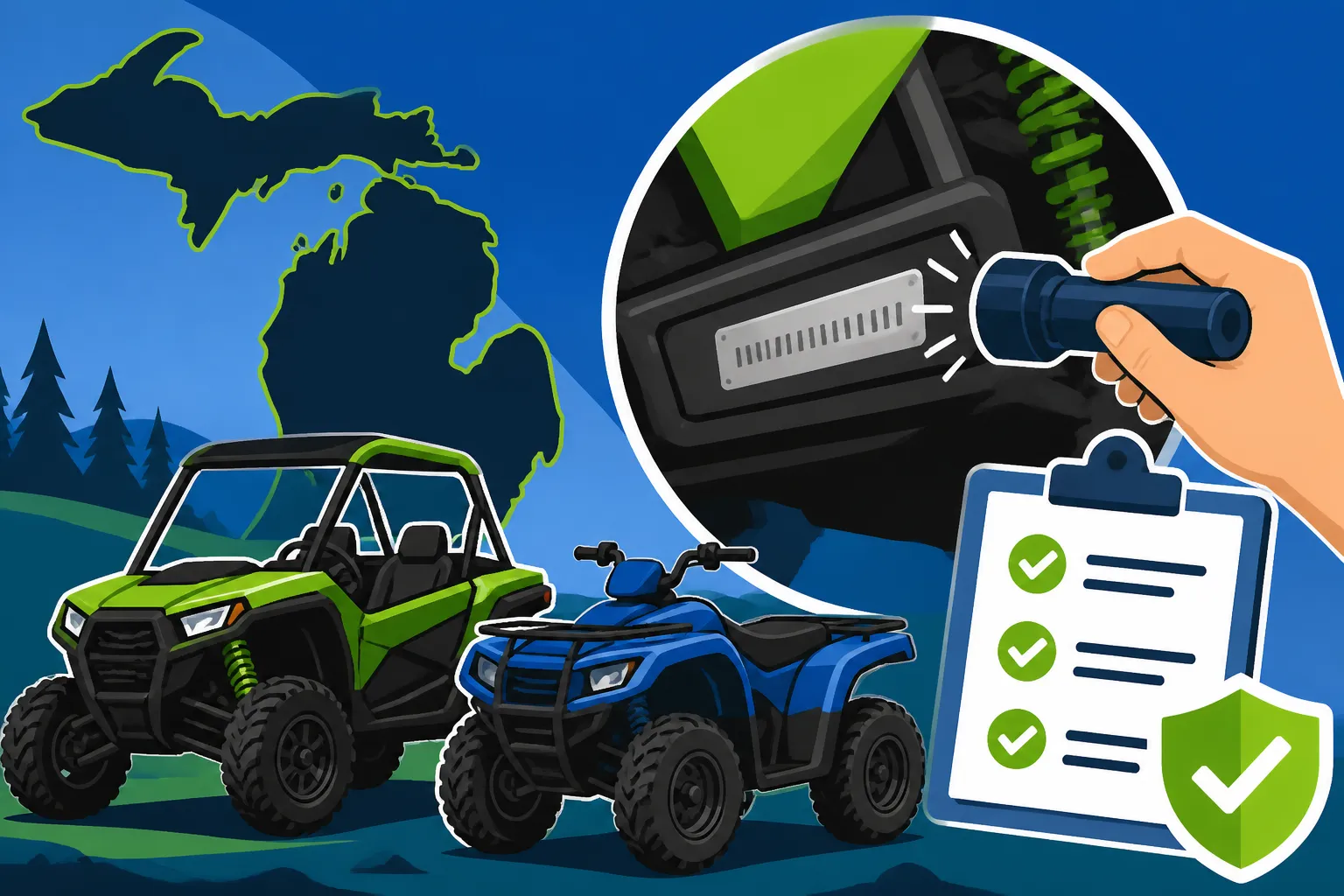
- Accessibility of the VIN: Know exactly where the VIN is located on your specific make and model. While ORVs generally have the VIN stamped on the frame (often near the front wheel, under the handlebars, or on the lower frame rail), the exact spot can vary. Be prepared to point it out to the inspector. Remove any accessories, covers, or debris that might block access to the VIN. You can find general information on this in [Where the VIN Is Stamped on an ATV or UTV].
- Operational Condition: While not always a pass/fail item for a VIN inspection, if the ORV is in extremely poor, non-functional condition, it might raise questions, especially for salvage or homemade inspections. Ensure it's in a state that reflects the documents you're presenting.
- Safety: Make sure the ORV can be safely moved or transported to the inspection site. If it needs to be ridden a short distance, ensure basic operational safety.
What Happens After the Inspection?
The outcome of your VIN inspection will depend on why it was required and what the inspector finds.
- Approval: If the ORV passes the inspection and all documentation is verified, the inspector will typically sign off on a specific form, often the TR-54 Application for Michigan Salvage Vehicle Inspection or a similar verification document. This signed document is what you'll take back to the Secretary of State branch to complete your titling process. This is the goal – the final step to getting your title!
- Rejection/Further Action: In some cases, an ORV might not pass the inspection. This could happen if:
- The inspector finds evidence of a tampered VIN.
- The ORV appears to be stolen.
- For a rebuilt/salvage inspection, the repairs are deemed unsafe or inadequate, or you lack proper receipts for major components.
- There are significant discrepancies that can't be reconciled.
If your ORV fails, the inspector will explain why and what, if any, steps you can take to rectify the situation. This might involve additional repairs, further investigation, or even legal action if criminal activity is suspected. Facing a rejection can be incredibly disheartening, but it's important to understand the reasons and what your options are. In such cases, you might be dealing with [Michigan ORV Title Problems and How to Clear Them].
Once you have that signed inspection form, you're ready for the final step: heading back to the Secretary of State to submit all your documents and pay the necessary fees to finally get your Michigan ORV title.
Here's a quick summary of common scenarios:
| Scenario | VIN Inspection Likely Needed? | Type of Inspection & Notes |
|---|---|---|
| New ORV from Dealer with MCO | No | MCO is usually sufficient proof of VIN. |
| Used ORV with Clean, Clear Michigan Title | No | Title transfer is usually straightforward if VIN matches documents. |
| Missing/Illegible/Damaged VIN | Yes | Law enforcement inspection required to verify original VIN or assign new one. |
| Rebuilt or Homemade ORV | Yes | Law enforcement inspection to assign new VIN and ensure safety/origin. |
| Salvage Titled ORV | Yes | Specialized Michigan State Police inspection to verify repairs and origin of parts. |
| Out-of-State Title with Discrepancies | Yes | Law enforcement or SOS visual check depending on discrepancy; needed to reconcile info. |
| ORV with No Previous Title | Yes | Law enforcement inspection to verify machine isn't stolen and to assign a VIN if none exists. |
| Court Order for Ownership | Likely Yes | Often part of the process to confirm the physical machine matches court documents. |
| Minor VIN Typo/Smudge on Document | Sometimes | Secretary of State visual check can often resolve this quickly if the ORV is present. |
Disclaimer
This article is for general informational purposes only and does not constitute professional advice. Laws, prices and regulations vary by location and change over time. Consult a qualified professional for guidance on your specific situation.